If God Had Chosen Quarantine by P.M. Gilmer

If God Had Chosen Quarantine

What if God had chosen to quarantine

Himself (as the agnostics would have us

believe)? To be isolated from

the virus of man, to keep a social

and moral and holy distance from

Heaven to earth, (six feet, six miles–it

may as well be a million of either),

then what would have happened to all mankind?     


For in the beginning we were

separated by a great gulf of sin–

by a rebellion caused by pride.

We listened to Another and

chose to believe we could be

wiser than our Creator and King.


What if God had chosen then to

quarantine Himself from us? To keep

His distance and His face covered and

His voice silenced and His heart closed?


How could our feet be cleansed that we

might stand on holy ground? And who

would wash our hands that we might

lift them to praise and worship

our Creator and our Savior


For we walk in this world where

communicable diseases of sin

brush up against us and cling to us.

They touch our eyes, our ears, our hands,

our feet, and our minds. How can we not

be touched daily by the virus of sin?                         


What if the Veil had not been torn?

If a mask still covered the face of God?

A mask that keeps the breath of God

from reaching us? A mask that keeps                                     

us from his mercy, his grace, his goodness?


But the God of the universe risked

contamination and broke the quarantine.

He came down to us and the Veil

was torn, the mask ripped away

to reveal the face of a merciful God.

 

He that would not be quarantined.

He did not keep himself apart from us,

but came down and bridged that sinful

distance, and cleanses us with his blood

and daily washes our feet and hands.

P.M. Gilmer

Soli Deo Gloria

 

National Poetry Month 2020

Today is the last day of National Poetry Month, and I hope you’ve spent some time reading poetry during this unusually stressful month. I have been dipping into several authors including: Malcolm Guite, Jeanne Murray Walker, Edward Clarke, George Herbert, and Luci Shaw. I have also been reading the book of Isaiah, taking more notice of the poetry in that book and comparing several translations.

From Isaiah 26–The path of the righteous is level; you make level the way of the righteous. In the path of your judgments, O LORD, we wait for you; your name and remembrance are the desire of our soul. My soul yearns for you in the night; my spirit within me earnestly seeks you.

In my reading, I came across a tradition of English poetry known as “the metrical psalms.” Starting during the Renaissance, many English poets began to put certain psalms of the Old Testament in the form of English poetry. These poems usually rhyme and have a way of making the reader see something familiar with a fresh eye. The first one I read was George Herbert’s The Twenty-Third Psalm. Herbert never published in his lifetime, keeping his work “private” because he wrote for God. Fortunately, The Temple (a book which contains most of his more well-known poetry) was published in 1633, the year of his death.

Though our language has changed since 1633, I hope you will enjoy Herbert’s “spin” (as one commentator put it) on psalm 23 and recognize how he, just as David did in the original some thousands of years ago, wrote this as worship and adoration to God.

The Twenty-Third Psalm

The God of Love my shepherd is, And he that doth me feed; While he is mine, and I am his, What can I want or need?

He leads me to the tender grass, Where I both feed and rest; Then to the streams that gently pass; In both I have the best.

Of if I stray, he doth convert And bring my mind in frame; And all this not for my desert, But for his holy name.

Yea, in death’s shady black abode Well may I walk, not fear; For thou art with me, and thy rod To guide, thy staff to bear.

Nay, thou dost make me sit and dine, Even in my enemies’ sight; My head with oil, my cup with wine Runs over day and night.

Surely thy sweet and wondrous love Shall measure all my days; And as it never shall remove, So neither shall my praise.


His Boundless Word

In these days of quarantine, social distancing, stay-at-home, and always wash your hands–we can feel stifled, closed in, and bound. Not bound by the laws of health only but by our fears and worries as well. In the midst of these concerns, how blessed I was to read these words:

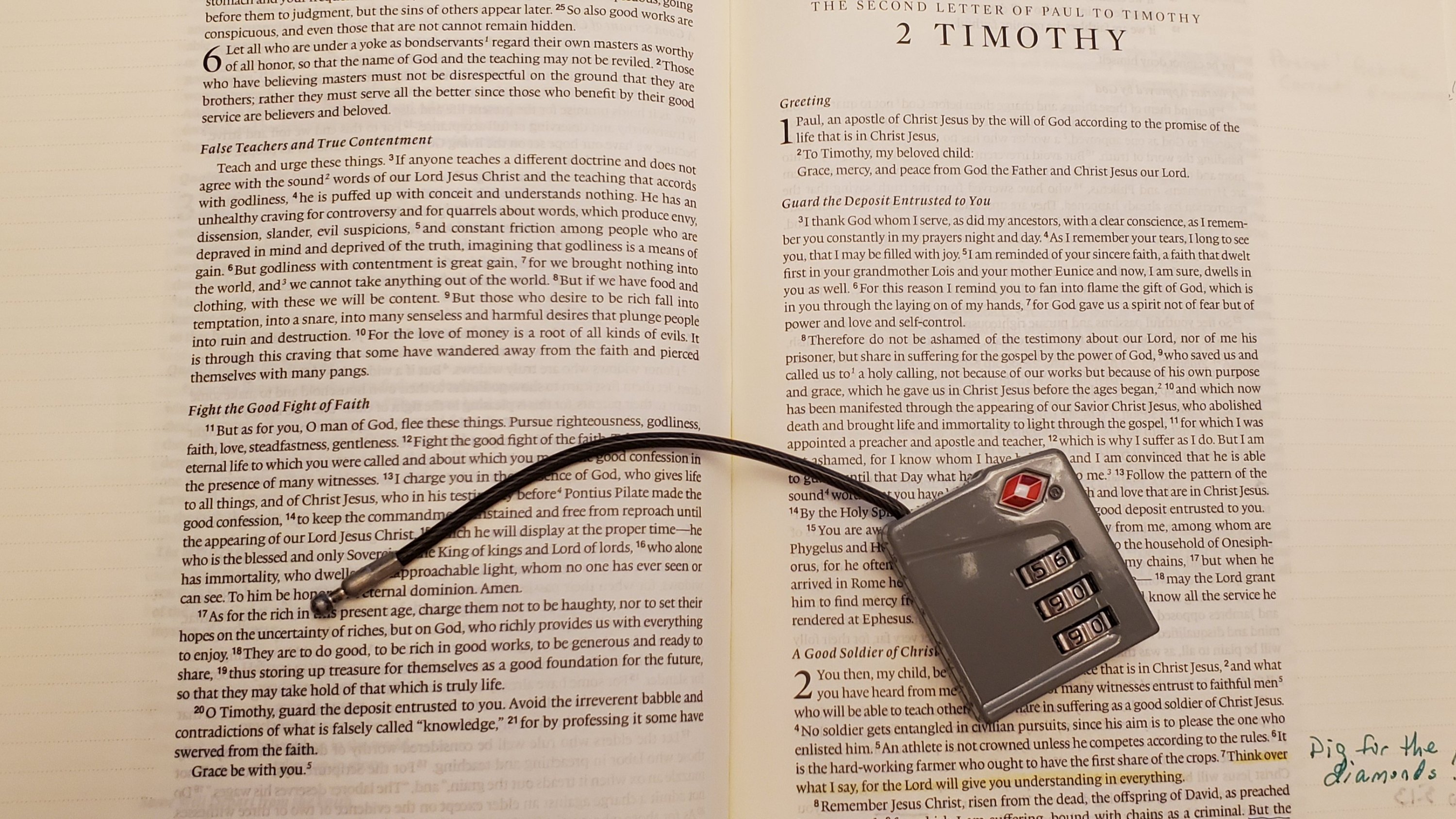
Remember Jesus Christ, risen from the dead, the offspring of David, as preached in my gospel, for which I am suffering, bound with chains as a criminal. But the word of God is not bound! Therefore I endure everything for the sake of the elect, that they also may obtain the salvation that is in Christ Jesus with eternal glory.  2 Timothy 2:8-10

Paul wrote many of his letters from prison. Sometimes, under house arrest (as many of us feel we are now), but he reminds his readers that though he may be in chains, the Word of God is never bound! Never in chains, never closed in, never kept at a distance, and never limited to “only two verses, please.” We are free to study the Word of God, share it, memorize it, and know that it will always be working. His Word is free and boundless.


Frances Ridley Havergal Her Death

Like a river glorious, is God’s perfect peace; Over all victorious, in its bright increase.

In a previous post, I wrote of the accomplishments of Frances Havergal and the way she sought to glorify the Lord in all she did. Now, I will recount some of the account concerning her death. Havergal suffered ill health for much of her life. At the age of 42, she went on holiday with her family to South Wales. While there, she developed a very severe cold which soon led to an inflammation of the lungs.

Perfect yet it floweth, Fuller every day, Perfect yet it groweth Deeper all the way.

When Havergal was told that her life was in danger, her response was: “If I am really going, it is too good to be true!” Should that not be the response of all Christians–no matter, their age, their goals, their plans? To learn that we may soon be with the One we claim to love? For this was Havergal’s ultimate desire–to be with the One for whom she wrote her poems and hymns.

Hidden in the hollow of his blessed hand–never foe can follow, never traitor stand.

Later she said, “Splendid! To be so near the gates of heaven.” Closer to the end, her sister reported that she sang one of her hymns, “Jesus, I will trust Thee, Trust Thee with my Soul.” Though she was weak and her voice faint, the words were clear to all.

Not a surge of worry, Not a shade of care, Not a blast of hurry, Touch the spirit there.

“She looked up steadfastly, as if she saw the Lord; and surely nothing less heavenly could have reflected such a glorious radiance upon her face. For ten minutes we watched that almost visible meeting with her king, and her countenance was so glad, as if she were already talking to Him! Then she tried to sing; but after one sweet high note, her voice failed, and as her brother commended her soul into the Redeemer’s hand, she passed away.”

Stayed upon Jehovah, Hearts are fully blest, finding as He promised, Perfect peace and rest.

“I should have liked my death to be like Samson’s doing more for God’s glory than by my life; but He wills it otherwise.” Though Havergal could not see it, I believe her death did give glory to God, not only to those who were with her as she went home, but also for those of us who continue to read her words years later.


Quotes taken from Memorials of Frances Ridley Havergal by her sister, M. V. G. H. (Maria V. G. Havergal), April 1880

Praise is the Highway

“I feel sure that the great majority of people do like singing. It helps to build up an audience–even if you preach a dry sermon. If you have singing that reaches the heart, it will fill the church every time. There is more said in the Bible about praise than prayer, and music and song have not only accompanied all scriptural revivals, but are essential in deepening spiritual life. Singing does at least as much as preaching to impress the Word of God upon people’s minds. Ever since God first called me, the importance of praise expressed in song has grown upon me.” D. L. Moody

How Firm a Foundation

April is National Poetry Month and though I don’t read as much poetry as I would like–between studying the Psalms and some hymns, I have been reading more poetry than usual.

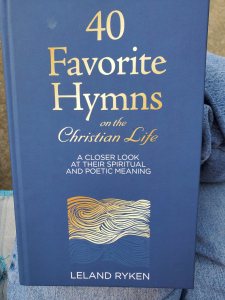
We don’t often think of hymns as poetry, but when we take the time to read  and hear the words, we often find beautiful phrases with some deep theology woven in. Leland Ryken, a literary editor of the ESV Bible and a professor of English at Wheaton College for almost fifty years, writes in 40 Favorite Hymns on the Christian Life: “Much of the beauty that we experience when we sing hymns is the beauty of the music. Experiencing hymns as poems puts the focus on the verbal beauty of the words and phrases. The great hymns of Christian tradition are an untapped source of devotional poetry, just waiting to be made available for the pleasure and edification of Christians.”

In my familarity with hymns, I have too often sung through the words, not appreciating their depth of feeling and theology. I would like to challenge you to read through some of your favorite hymns and consider the words and what the writer may have been going through or trying to convey.

For today, I want to look at the hymn, “How Firm a Foundation.” The opening stanza contains words of comfort and assurance. A reminder that since God has given us His Word to live our lives by, how could we have a more firm foundation?

“How firm a foundation, ye saints of the Lord, Is laid for your faith in his excellent Word! What more can he say than to you he hath said, To you who for refuge to Jesus have fled?”

What more can He say? Nothing–though, of course, we need to read His Word to know what He has said. The next four stanzas are written as if God were speaking, reminding us of the promises from His Word.

In the second stanza: “Fear not, I am with thee, O be not dismayed. . . . I’ll strengthen thee, help thee, and cause thee to stand.” (Isaiah 41:10)

Third stanza: “When through the deep waters I call thee to go,” I will be with thee. (Isaiah 43:2)

Fourth stanza: “When through fiery trials they pathway shall lie”–His grace is sufficient. (2 Co 12:9; 1 Peter 4:12-13)

Fifth stanza: “The soul that on Jesus hath leaned for repose”–He will never forsake. No, Never! (Deuteronomy 31:6)

Though written in 1787, the words are no less true or relevant for our lives. Enjoy and worship this hymn written with the ancient truths of God’s Word.


Doxology and the Power of Praise

A few weeks ago, I was visiting a church on a Sunday evening, and we closed the service by singing the doxology. I began singing, almost without thinking, but then I wondered, “When did I learn the doxology, and how did this short song become known as ‘the doxology’?”

I mostly grew up in Baptist churches, graduated from a Methodist college, and frequently visit a nearby Reformed Presbyterian church. In all of these, I have sung the doxology, usually either to begin or end a service. I don’t remember learning it, and assume I picked it up through repetition.

So, who wrote the doxology, where did it come from, and why do so many different denominations include it as a matter of course? And what does doxology mean anyway?

The word doxology comes from the Greek word doxologia meaning a short hymn of praise to God. Different religions have their own doxology hymns, so my search will focus on the doxology I’m familiar with which was written by the Anglican priest, Thomas Ken.

Thomas Ken was ordained in 1662 after obtaining degrees from Oxford. He would eventually serve as chaplain to Princess Mary of York, then royal chaplain to King Charles II before serving James II (who would lock Ken and six other bishops in the Tower of London for refusing to publish the king’s Declaration of Indulgences). Before his royal commissions, however, he spent ten years at Winchester College.

Ken felt it was important for his students to spend time in private worship, so in 1674 he published A Manual of Prayers For the Use of the Scholars of Winchester College. This pamphlet included two long hymns: “Awake, My Soul and with the Sun” and “Glory to Thee, My God, This Night.”  Both these hymns ended with what we now sing as the doxology as their final stanza. The manual remained in private circulation as the hymns could not be sung publicly for fear of “adding to the Word.” In fact, hymns were not officially approved by the Church of England until 1820. Apparently, Ken disagreed with the thought that hymns could be dangerous as he instructed his students to “be sure to sing the Morning and Evening Hymn in your chamber devoutly.”

Skipping ahead almost two hundred years, a story from across the ocean demonstrates the power of praise through the doxology. At Libby Prison in Richmond, Virginia, (a Confederate prison during the Civil War), a group of new prisoners was marched to the door about ten o’clock one night then left outside until arrangments could be made for them. In the company, was “a young Baptist minister, whose heart almost fainted when he looked on those cold walls and thought of the suffering inside. Tired and weary, he sat down, put his face in his hands, and wept. Just then a lone voice sang out from an upper window. ‘Praise God, from whom all blessings flow’; a dozen joined in the second line, more than a score in the third line, and the words, ‘Praise Father, Son, and Holy Ghost,’ were sung by nearly all the prisoners. As the song died away on the still night, the young man arose and sang, ‘Prisons would palaces prove, If Jesus dwell with me there.'” (From One Hundred and One Hymn Stories by Carl F. Price)

That the words written by the Englishman Thomas Ken for his students in 1674 ended up on the lips of a group of Americans in the middle of a war in the nineteenth century and are now sung in countless congregations across the world amazes me. How even more remarkable is it that lines which could originally only be sung in private are now known and sung in different denominations throughout the world in public worship and praise.

O For A Thousand Tongues Charles Wesley

Charles Wesley, hymn writer extraordinaire, is credited with writing thousands of hymns and for the hymn, “O For a Thousand Tongues to Sing”, he wrote eighteen stanzas.

Wesley was inspired to write the hymn by a comment made by Peter Boehler. “If I had a thousand tongues, I would praise Christ with them all.” He wrote the hymn to celebrate his first year anniversary of being saved. The line that eventually became the title was actually the first line of the seventh stanza in its original form.

Though his brother, John, was the preacher and organizeer behind the Methodist movement, it was the hymns of Charles which gave the Methodists their reputation for being “overly exuberant” in their worship. The Anglican church the two men grew up in did not sing hymns during their services, and they certainly didn’t express themselves in an “exuberant” way. Salvation changed, not only the hearts of Charles and John, but the way they wanted to worship.

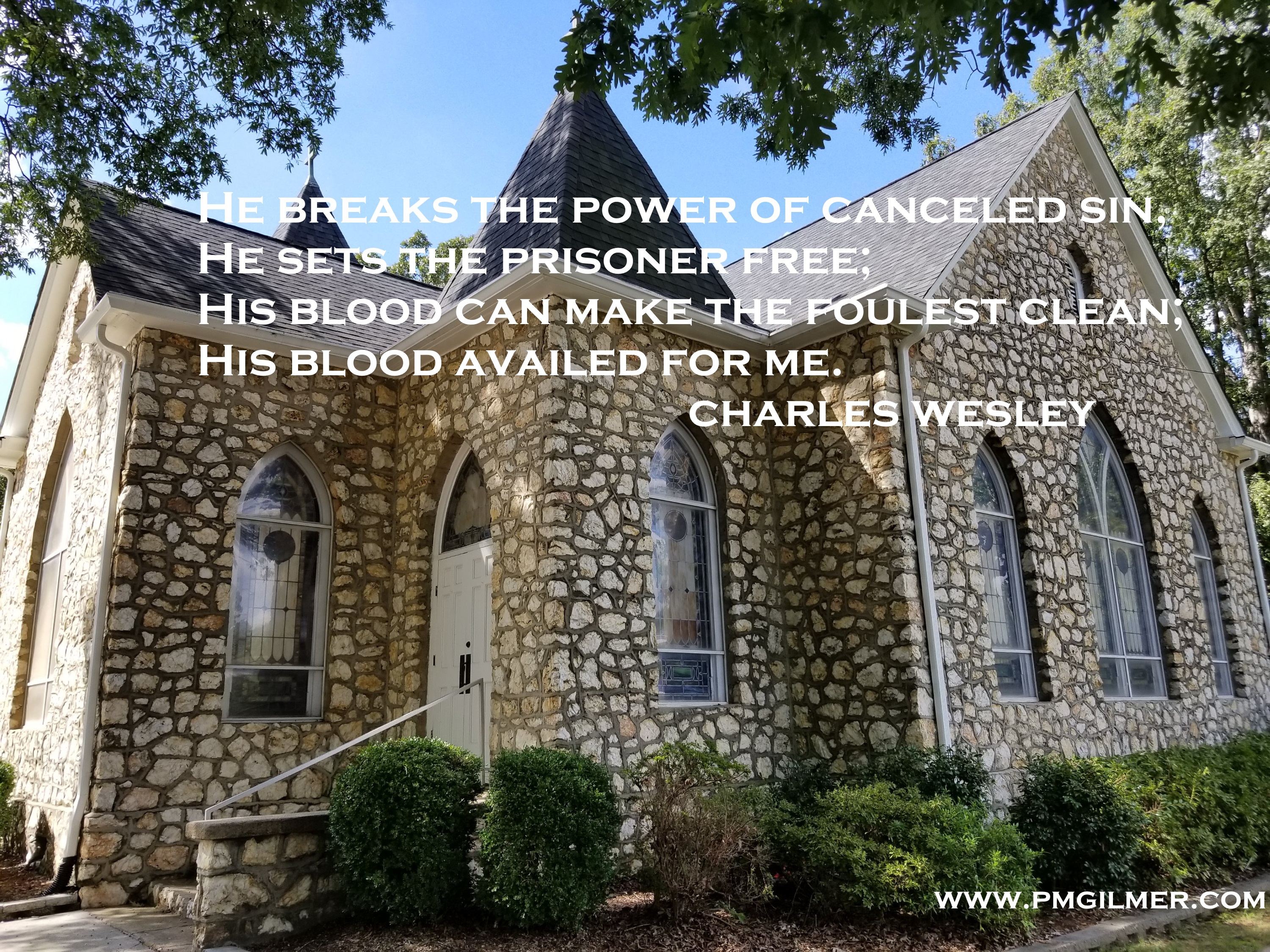
Though there are many great lines in this hymn, the line “He breaks the power of canceled sin” recently caught my attention in an interview with Richard Foster concerning spiritual formation. Understanding that at salvation, Jesus’ blood has washed away my all my sin and thus canceled them, what kind of power can “canceled sin” have in my life?

Have you ever doubted? About God’s love? God’s power? God’s forgiveness? Have you ever thought God couldn’t use you because of past sin in your life? You say you believe He forgave you, but . . .But? If you do, then how can that forgiven, that canceled, sin have power over you? If that “canceled sin” is keeping you from doing what God intends for you, if it is keeping you from walking in faith, if it is keeping you from sleep–it has power over you.

The good news is: He does have power over canceled sin. We receive that power through sanctification, by walking and growing in grace. As Foster says: “The idea is that it’s possible for sin to be canceled and yet still have power. In the life that is with God, Christ breaks that power so that we are growing in grace, as Peter puts it in 2 Peter 3:18. Some people have a tough time with a verse like that because they only think of grace as unmerited favor.” (Christianity Today, October 2018, p. 64).

So, celebrate, O Christian! He does have the power over canceled sin. He sets the prisoner free!

Remember not the sins of my youth or my transgressions; according to your steadfast love remember me, for the sake of your goodness, O LORD! Psalm 25:7