Listening to Books

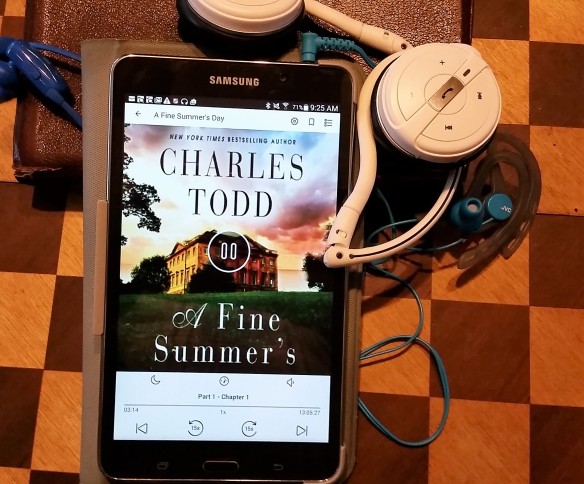
20170224_092523

In the past few years, I have been listening to audio books more and more. I first began listening to them on my daily walk as it was rather dangerous to try and read a book while walking. Since I discovered bluetooth headphones, I can listen even more while cooking or performing those necessary evils known as “housework”. Last year I began to listen to them as I’m driving. I had tried to listen in the car at different times, but found my mind wandering too much to keep up with what was happening and thoughts of “where did that character come from?” were occurring too often. Then my son broke his leg, and I was spending more time on the road making daily trips to and from his school, so I decided to try listening again and was soon hooked.

I’m not sure why “listening” to books took some getting used to since, after all, that is how I was first introduced to reading. As with most people, my first introduction to the world of books was my mother reading stories to me. I also remember listening to books on a record player (you know, LPs or what are now known as “vinyl”) at school. I heard the books of both Wrinkle in Time and The Hobbit when I was in fourth and sixth grades. Though I have since read the print version of both these books, the memory of hearing them while sitting at a desk (breaking into my usual daydreaming) makes them more special than most.

I don’t believe audio books will ever replace the written word for me, but I am glad to have found a place for them. Anyone that enjoys listening quickly learns that finding a narrator you like is as important as finding favorite authors. Also some books just are easier to listen to than others. For me, those with a great deal of description tend to put me to sleep. Others are harder to keep track of the characters and the scenes without being able to go back and review. But, I’m getting better.

The most entertaining books (for me) are those in a series. Once you’re in a series and are familiar with the characters, it seems easier to stay focused. Another plus is having a narrator with whom you’re already familiar (change the narrator in the middle of the series and fans will complain loudly). A young adult, scifi series I’ve enjoyed over the past few years is Marissa Meyer’s Lunar Chronicles.  For historical mysteries, I’ve listened to several books from Jacqueline Winspear’s Maisie Dobbs series as well as books from the two series by Charles Todd. Simone St. James writes historical mysteries with paranormal aspects. Others I’ve enjoyed include: Stella Bain by Anita Shreve; Bone Gap by Laura Ruby; and The Sun is Also a Star by Nicola Yoon.  I found The Sun is Also a Star enjoyable as an audio because there were multiple narrators. Some books have put me off when a male tries a female voice and vice versa; but, not always.

Every year awards are given by the Audio Publishers Association (APA) which “recognizes distinction in audiobooks and spoken word entertainment”. Looking these up, as well as past winners, is a good way to find books you might enjoy listening to. For a list of the recently released finalists of 2017, check out AudioFile’s webpage: http://www.audiofilemagazine.com/audies/?utm_source=email&utm_medium=20170222-nl3feb-audiestxt1

What about you? Have you jumped on the audio book bandwagon yet? Any favorite books? Narrators? Most people listen to audio books while performing other tasks. What else do you do while you’re listening?


Valentine Reads: Christian Romance

20170214_122302-3Though I admit, “romance” books are not the genre I usually list as a favorite, I do have a few favorite authors and several books on my to-read list.  I mostly enjoy some historical romance, romantic suspense, and even fantasy romance. And what better time to look these over than on this day of love? So, quiet your inner cynic, grab some chocolate and look over this list and see if you can’t find something you might enjoy to take you through the rest of this winter month.

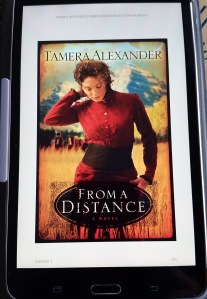
Tamera Alexander: She has several different series, all historical. I recently read the first two in her Timber Ridge Reflections series: From a Distance  and Beyond this Moment. Both take place shortly after the Civil War in Colorado. Interesting history (concerning both photography and the time of Colorado shortly before it became a state), and suspense in these books.

Lori Benton: I have read her first book: Burning Sky set in colonial times. Looking forward 20170214_121054-2to reading soon: The Wood’s Edge, (also set in colonial times) Christy Award winner for Book of the Year and Historical and First Novel.

20170214_122302-3Laura Frantz: Frantz has several different series and these also take place during the colonial period of the U.S. Two I have read and highly recommend: Love’s Reckoning and The Colonel’s Lady.


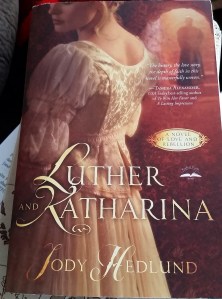
Jody Hedlund: Also has several different series, but two of her books I have on my to read-list: Luther & Katharine (winner of ECPA Christian Book Award & Christy Award for Historical Romance) and Newton & Polly (recently long listed for INSPY). As you might be able to guess, these are based on the real-life relationships of Martin Luther and his wife; and Amazing Grace writer, John Newton and his wife.20170214_121203-2

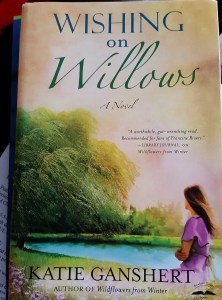
For more contemporary romance, Katie Ganshert is becoming a favorite as well as Beth Wiseman and Pepper Basham. What about you? Reading any romance today?

20170214_121508-2

Research: An Ongoing Process

20170210_105319

Writing a book of historical fiction obviously requires quite a bit of research which I enjoy, but can also find challenging. I know some writers feel they should do all their research before they put pen to paper or finger to keyboard. Of course, you need to do some research to make sure you have your timeline in decent order, but because I have characters that tend to show up unannounced or do things I wasn’t expecting, research is an ongoing process for me. To give you more of an idea of what I have been writing about, I decided to share a few of those areas of research.

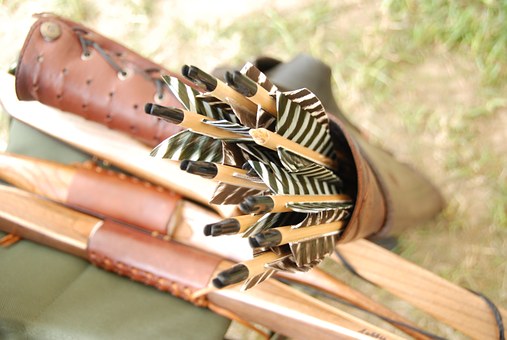
archery-847876__340In one case, the brothers (sons of David) are practicing their archery, and all I know about archery is that it requires a bow, some arrows, and, hopefully, some targets. I know these young men didn’t run down to their local sporting goods stores for their equipment, so where did they get it? How did they make it? And how far advanced would they have been at this time? Was archery even a thing for the sons of David? (I know they must have learned to use a sling at some point. Surely, their father taught them that!)

In another scene, I picture Bathsheba coming into the palace garden, a small dog trotting at her side. Wait a minute! Did the Israelites have dogs as pets? Did they even have dogs at all? (They didn’t, but I cleverly worked around that).

Much of my book revolves around horses and chariots. This was not in my original game plan, and not knowing much about either, I’ve had to work at learning more about these two subjects. Having the internet is a wonderful thing for both finding the exact information you need or pointing you to books and articles that can deepen your understanding.

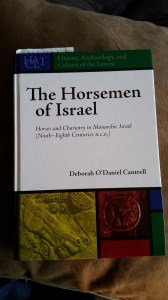
After writing most of my manuscript, I found a book, The Horsemen of Israel: Horses and Chariotry 20170210_105239in Monarchic Israel (Ninth-Eighth Centuries B.C.E.).  At first, I read most of this book online, but was eventually able to find it at a reasonable “used” price (looks brand-new). After reading through several chapters, I needed to go back and change quite a bit of what I had written and was also able to add interesting details about the way horses were trained and first introduced to Israel. I have found this book helpful on several levels and plan to give you a more comprehensive review in the future.

Then there is that trip to Egypt Solomon takes with two of his brothers. Not in my original outline, but it has been interesting to do some studying in that area.

Knowing more about the people and the way they lived helps me to better understand Bible characters who are familiar, yet can seem so distant. Of course, not every detail I uncover will end up in the finished manuscript (or it would be a few thousand pages), but every one that does enhances the story and makes the characters come alive, both for myself and my future readers.

You don’t need to be writing a book to do research. Every time you “google” something, you’re doing some type of research. What about you? What are the kinds of information you enjoy finding? Does it help you on your job? Your personal Bible study? Or are there certain areas (science, history, etc.) that you just enjoy learning about?

Spurgeon on Psalm 25:1

20160530_111007Psalm 25:1–To You, O LORD, I lift up my soul.

“See how the holy soul flies to its God like a dove to its cote. When the storm winds are out, the Lord’s vessels put about and make for their well-remembered harbour of refuge. What a mercy that the LORD will condescend to hear our cries in time of trouble, although we may have almost forgotten Him in our hours of fancied prosperity.

Unto Thee, O Jehovah, do I lift up my soul. It is but a mockery to uplift the hands and the eyes unless we also bring our souls into our devotions.” Charles Spurgeon

The Women in the Castle Jessica Shattuck

20170127_155658I’ve read many books of historical fiction that take place during World War II, but few that are from the vantage point of German characters. (One exception that comes to mind is the excellent The Book Thief by Markus Zusak). The Women in the Castle is a new book of historical fiction coming out in April, and it is a story of three German women whose husbands were involved in an attempt to assassinate Hitler during the war. What happens to these women during and after the war because of this (obviously, unsuccessful) attempt creates a story that examines good and evil in the choices that people make. How do our choices affect, not only ourselves, but also those we love and want to protect?

In spite of the inevitable sadness running through this book, I was easily caught up into the story and could commiserate with each character and the hard choices they were forced to make. The three women were distinct with their own personalities.  They came from different backgrounds with secrets to hide, children to protect, and the need to find their way through a new world after their old one was destroyed.

Shattuck was able to write her story because of the memories and recollections of others, among them her own grandmother, mother, and aunt. There really was a German resistance and because of the research Shattuck has done, we can learn much of what people endured and why they may have made some of the decisions that they did.

Lovely writing and intriguing characters set in a difficult, but important time in history. Highly recommended!


Books on Writing

I read several books on writing last year and have quotes from these scribbled in notebooks and other various places. In all of them, I have found some kind of encouragement (in spite of the inevitably dark humor; most be a writing thing?), as well as helpful suggestions.
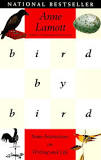
bird-by-birdThe first I read was Anne Lamott’s Bird by Bird: Some Instructions on Writing and Life. I’ve had this book for awhile and read bits of it here and there, but when I decided to get serious about writing again, I got it out and read straight through. On plot: “Plot grows out of character. If you focus on who the people in your story are, if you sit and write about two people you know and are getting to know better day by day, something is bound to happen.” This resonates with me, not only as a writer, but also as a reader. I have found myself bored in the middle of book, not because of the plot or the story idea, but because I could not care about the characters. Character is king.

Then I finally read Stephen King’s On Writing: A Memoir of the Craft. Another one that I started once upon a time, but never finished. Sentences and paragraphs to quote abound but two of my top ones: “Amateurs sit and wait for inspiration, the rest of us just get up and go to work.” And, “In many cases when a reader puts a story aside because it ‘got boring’, the boredom arose because the writer grew enchanted with his powers of description and lost sight of his priority, which is to keep the ball rolling.” I struggle with adding description to my stories, preferring to “keep the ball rolling”, so this one amuses me.

art-of-war-for-writersNext was a book by James Scott Bell, The Art of War for Writers: Fiction Writing Strategies, Tactics, and Exercises. (Something else I’ve noticed about many of these writing books is their rather wordy titles. Authors trying to get their word-count in? Or, perhaps, writers are just naturally loquacious?) Bell has several books out on writing, and I feel I need to be collecting these.

I reviewed Betsy Lerner’s The Forest for the Trees: An Editor’s Advice to Writers in a previous forest for the treespost. (September) This book is unique as Lerner has been an agent, an editor, and a writer, so she is able to share her perspective from all three of these roles. I shared several quotes from this book already, but here’s another one: “For the writer who truly loves language, a trip to the copy editor is like a week at a spa. You come out looking younger, trimmer, and standing straighter.” Not sure we all feel that way, but I get the point.

My most recent read was by Bret Lott, Letters and Life: On Being a Writer, on Being a Christian. More quotes on the importance of characters rather than lengthy descriptions. “I saw, suddenly and fully, that a story was about the people involved. I bret-lottsaw that embellishment brought to the table an unwanted intruder: the author.”

And: “What I saw in his (Raymond Carver) work was that in my own, I had to be the last one heard from in this pile of words I was arranging, and that humility was the most valuable tool I could have, because the people about whom I wanted to write mattered so very much more than the paltry desires of the writer himself. They mattered so very much more than me. My job was to get out of the way.”

I have several more writing books on my tbr list and just picked up a new one from the library. How about you? Read any good books on writing lately? Which ones have inspired you or just made you laugh? Which would you recommend?


Sixteen of My Favorite Books from 2016

I probably should have worked on this post last week, but better late than never. I did take a few days away from writing during the holidays, but I spent the last few days of 2016 trying to start my next book which I suppose I should call “The Continuing Saga of Solomon”. Well, it’s just a working title.

So, I’ve been reading blog posts on everyone’s favorite books of 2016, so thought I would go to goodreads and find out what were my favorite books this past year. All of the books I’m going to mention were either four or five star for me but that does not mean there weren’t a few others that hit that mark. Trying to keep it down to sixteen was a challenge. Sometimes, though, I think I’m too generous with my stars (especially if I’m struggling with my own writing and feel that any writer who actually finished writing a book should receive at least two stars for that accomplishment alone), but, regardless, I will only mention books today that were either my top favorites or were by a new author for me.

For my top fiction, one of the first books I read in 2016 was Kate Morton’s The Lake the-lake-houseHouse. I loved it and wonder why I still haven’t read more of her books. But I will.

Looking over the fiction books I read, I noticed I read several books which are the first in a mystery series. This makes these books even more special as it means there are more books by these authors that can I look forward to in 2017. (And I actually have already read the second in a few of these series). These books (in no certain order): What Angels Fear by C.S. Harris; The Anatomist’s Wife by Anna Lee Huber; Raven Black by Ann Cleeves; The Merchant’s House by Kate Ellis; and The Lewis Man by Peter May. I also read two by Tana French (the second and third in her series). I don’t think you can go wrong with her. Looking forward to reading the next in her series soon.what-angels-fear-240h

the_anatomists_wife_book_cover_medium

raven-black

I’m doing a reread of Robin Hobb’s Farseer series. I read both Assassin’s Apprentice and Royal Assassin in 2016. She is an amazing writer and though her books are fantasy, I feel can learn a lot about writing historical fiction from her writings. She is great at both setting and characters.

Other favorites in fiction: The Marriage of elephant-whisperer Opposites by Alice Hoffman; The Architect’s Apprentice by Elif Shafak; Plainsong by Kent Haruf; and Beneath a Golden Veil by Melanie Dobson.

Not counting the two by Tana French, that’s twelve. Since the Robin Hobb books are rereads, maybe I shouldn’t count those, but didn’t want to leave her out.

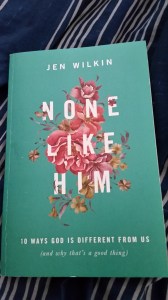
Obviously, I can easily mention more than sixteen, but I will round this out with my top four non-fiction: None Like Him by Jen Wilkin; An Editor’s Advice by Betty Lerner; The Elephant Whisperer by Lawrence Anthony; and A Woman of Contentment by Dee Brestin.

How about you? Any books that stood out for you in 2016? Have you set any reading forest for the treesgoals for 2017 yet?

woman-of-contentment
20160925_165321


The Ophel Inscription–Writing from the time of King David

Half the fun of writing historical fiction is the research. Sometimes I can’t find what I’m looking for (or scholars disagree on certain findings) and that can be frustrating, but more often I run across “fun facts” that I had not even considered (which makes it sound like most of my research is serendipitous and maybe it is). I may not always be able to add these “fun facts” or details to my story, but learning more about the culture of my characters helps me, as the author, to know my characters in a more rounded way.

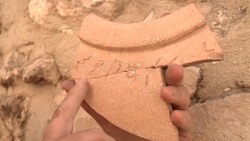
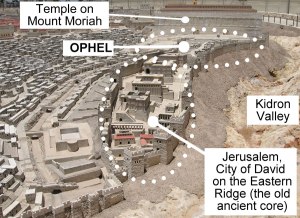
As most of you know, I’m writing a story about Solomon during the time of King David, so I was intrigued when I ran across an article concerning a find in 2012 by Israeli archaeologist, Dr. Eilat Mazar. From the Ophel mound between the Temple Mount and the old city of David, a pottery shard was found containing seven letters. Now known as the Ophel Inscription, there is still quite a bit of debate about those letters and what it all means, but there are those who have concluded that the letters are Hebrew, making the find highly significant concerning the kingdoms of David and Solomon.

potterykd


Hebrew letters on a 3,000 year old pot gives credence, not only to the existence of King David living in Jerusalem at that time, but also suggests that the written language was not just for the rich and their rulers.

I have no problem believing the Bible concerning the existence of King David and that he ruled in Jerusalem, but have wondered about how literate were the people of that time. After all, David was not raised as a royal son, yet he wrote psalms from an early age, so one must believe that both reading and writing were more common than some may assume.

ophel-labeled-2


From one article (link to follow): “The Ophel inscription–though untranslated–joins the Khirbet Qeiyafa ostracon as part of a growing body of archaeological evidence supporting the biblical truth that ancient Hebrews were literate. Rather than inventing a post-dated history, they had the linguistic and cultural tools in place to record it from the earliest days that Israel was recognized among other monarchies of the ancient world.”

https://answersingenesis.org/archaeology/shard-shows-written-language-at-jerusalem-when-david-ruled/

Studying the history of the Bible and reading more of different archaeological finds continues to make the characters of the Bible more alive to me. My prayer as I write of stories in the Bible–specifically, Solomon and imagining what his life may have been like as he was growing up in the court of King David–that the Bible will also become more alive to others who will one day read my stories.


Beneath a Golden Veil by Melanie Dobson

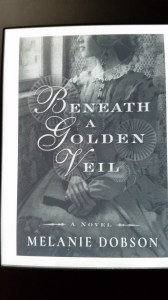
20161207_114254In Sacramento in 1853, the gold rush is on and people are coming from all over the country to try their luck. Isabelle runs a hotel and seems to be successfully overcoming a secret in her past, in spite of the loss of her beloved aunt. When a man enters her hotel in search of his slave, Isabelle becomes involved in helping and hiding slaves in this state which has no clear laws on the issues of slavery.

From Virginia, comes Alden with a twelve year old slave, Isaac. Isabelle recognizes Alden from her past, but he does not recognize her. Soon, another man from Isabelle’s past arrives in Sacramento, and Isabelle has no doubt that this man means her harm. Isabelle becomes caught between wanting to help others who are trapped in slavery and needing to save herself. Her aunt taught her to trust in God, but can she trust Him to deliver her from this evil?

This is my first book by Melanie Dobson though I have read good things about her books and have had a couple of them on my TBR for awhile. Receiving this Kindle edition gave me my excuse to read Dobson’s newest book, and I was not disappointed. I don’t remember ever reading before of California’s stance during the time of slavery or hearing of their own underground railroad, so I found the history interesting and appreciated the details Dobson brings to her story. There is romance, suspense, and colorful characters–all helping to bring together an entertaining story. I gave this book five stars on Goodreads.

Though I received a free Kindle copy through Goodreads, the review is my own.

Writing Contests: For Better or Worse

20161102_102413-2

In the past few months, I have entered two different writing contests. Though, of course, I hoped to win (or at least be a finalist), I mostly entered these contests in order to receive feedback from those in the industry (other writers, publishers, editors, etc.) Well, I got my feedback.

I did not win. I did not place. I did not even impress.

When I received my scores, I already knew I was not a finalist, but it was still painful. Looking at the first judge’s scores, I saw 4’s and 5’s and hoped that meant the scores were from “1” to “5”. Since the next judge had some 7’s and 8’s, I knew it must be out of 10.

In both contests, I received comments from three different judges (anonymous so as to protect them from irate and sensitive writers). In both contests, the first judge dislikes my story and has little (if anything) good to say. In the first contest, the second judge was a bit more middle of the road with her/his comments, and the third had at least a few good things to say. In the second contest, both the second and third judges had encouraging things to say, even though they weren’t totally sold. I had to wonder if they were doing a bad judge/good judge routine.

My first thoughts upon reading the comments was to want to throw my beloved “work in progress” into the deepest sea. But, from following a recent online discussion among members of ACFW (American Christian Fiction Writers), I know that receiving such a wide range of comments is not unusual, and that I am not the only one that might feel a bit confused by the seemingly inconsistencies of the judges. (One person said they had received a 67 and a 98 from two different judges in the same contest). None of us enjoy receiving criticism, but it would seem to be more helpful if the comments were more consistent across the board. But, judges are human and they do not all like the same kind of stories.

Takeaway: Though I have struggled at accepting the comments, I have been able to go back through them and find what is helpful and what is just one person’s opinion. After I sent in my last entry, I changed a few things and have a few other areas marked to be either omitted or rewritten. So, if I had been a judge myself, I have to admit, I would have been of the same opinion in several ways. Will I enter more contests? Yes; definitely. Overall, it has been helpful and has made me work harder to perfect my writing before sending it to an agent.

Are you wondering about the shells? All are olive shells found on the same beach (Myrtle Beach, S.C.), but none of them are the same. Basically the same shape, but different colors and sizes. I picked up the shells that attracted me and wanted to keep. So are our stories and those works in progress. Not everyone will be interested enough in what I write to even desire to pick it up. Some may be interested (even when I finally get it right), but maybe not enough to read it through. But, I will work at polishing my stories and finding the readers who will be interested for their enjoyment.

Any writers out there that have been entering contests? Have you found them helpful? Worth the submission fee or not? Not every contest is for every writer, so it’s important to find some that will benefit you and will be worth that entry fee.