Have you ever thought about the conversations between Jesus and Satan when Jesus was living in a physical body on this earth? We get some hints of what this may have been like from the book of Job where a conversation between God and Satan is recorded, but other than knowing that Jesus was indeed tempted, we don’t have much to go on. Some years ago, I wrote an epic tale of the Christ and his struggle with his Adversary, Satan. And, yes, I used The Odyssey as a model for my format (not the content). Divided into “Books” (the first being an introduction) the second Book is entitled The Wilderness Temptations. Here is an excerpt which I hope you will both enjoy and will provoke some thought concerning the Christ and his earthly life.
The First Temptation
On that forty-first day, the God-Man woke
to hunger pangs and discovered his body
had become weak from that month-plus trial.
As his eyes focused to face the day,
he saw his Adversary standing at
his feet, smiling a crooked smile and shining
bright as the desert sun. “Good morning,
old friend,” he said. “Surprised to see me? But
didn’t I promise to come back? You will
find that I, unlike some others, keep all
my promises and will never forget
you or leave you for too long, for I am
concerned about you and how you’re spending
your life and squandering your potential.
I suppose with all this time to think and
consider, you’ve come to realize that you
could not possibly be the Son of God?
Since I am the one who has come to check
on you and see if your needs are being
met, it is obvious,” and his eyes swept
the horizon and the God-Man’s surroundings
and came back with a look of distaste, “that
your Heavenly Father,” and he spat the
two words out, “has not been by or if He has,”
and he smiled a sinister smile, “He has
done nothing to secure your belief that
you are His Son, has He?” Unperturbed, the
God-Man rose to his feet and answered, “Quite the
contrary. He has been here in many
wonderful ways–ways you could never see
or understand–and He has only confirmed
my belief and my profession that I Am
His Son and His Chosen.” Satan attempted
to mask the furious anger that welled up
within him with a strained smile which truly
appeared as a grimace. Then with eyes ablaze,
he said in a voice dipped in honey,
“Of course, you are. Whoever said you weren’t?
But, tell me, have you had breakfast yet?” As
if in answer, the God-Man’s fleshly insides
began to grumble, bringing delight to
his Antagonist though he tried to cover
this with a false look of concern and
pity as he waited for an answer. “No,
there’s been no breakfast here. Only rocks and
dust, as you can see.” And Satan nodded as
if in sympathy but then he appeared
to have an idea and said with great
enthusiasm, “But you are the Son
of God, remember? If you are the Son
of God, you should have no problem coming
up with a substantial meal and then we
can talk over some business.” Eyebrow arched,
the God-Man gazed at his rival and said,
“I was not aware we had any business
to discuss.” And Satan again smiled that
patient smile. “Of course, but how can you think
on an empty stomach? An empty
stomach causes the head to be light and
the heart to be weak. Come, you say you are
the Son of God, let us see you come up
with some breakfast. The Son of God shouldn’t
be out here in this wilderness where the
wild beasts are quite well-fed, yet here he is,
his guts crying out in torment, as he
stands by, as if helpless. You say you
are the Son of God but for thirty years
you have lived in practical poverty
submitting yourself to the surroundings
into which you have been thrust and now you bow
to the elements. To the things which you,
yourself, claim to have created. How can
you possibly allow yourself to be
subdued by the works of your own hands? Come,
if you are the Son of God, tell these stones
here to become bread for your breakfast. They
will be glad to be of service to their
Master, for isn’t that why they were formed?
To serve their Master and obey his commands?
In fact, I daresay that your creation
has been watching you in wonder and has
been speculating as to why you have
not called on them earlier. Can you not
see their eagerness to serve you? Come, Son
of God, call on them; exercise your power
and authority. You say God has now
anointed you to be King, so be King.
Prepare your breakfast so we can discuss
deeper matters.” Folding his arms, Satan
stood back and waited, his impatience
obvious, but the God-Man refused to
make a hasty decision knowing well
this was not as simple a matter as
his Adversary portrayed it. He
also knew the power he possessed had
been given to him by his Father, so
consideration of his Father’s will
must be made. But he was hungry and his
insides churned once more as if to remind
him of his responsibility to
them, too. He gazed on the stones and easily
imagined them as loaves and could almost
smell them baking in the sun and taste
their flaky crusts and their soft middle–
He shook his head to clear his thoughts. His
Adversary watched him intently, though
he tried to appear both nonchalant
and impatient. Impatient as in:
‘This is no big deal, you know, get on
with it.’ And nonchalant as in: ‘But then
again, it is no matter to me, one
way or the other.’ A faint smile played on
the God-Man’s lips as he read all this in
his Opponent’s face which caused that angel
to simmer. He managed to keep his
temper in check and gazed calmly back at
his prey as he waited for an answer,
a decision to be made. Then Satan recalled
another king he had tempted, that first
king of Israel whom he convinced that
waiting for God’s provisions and living
strictly by His rules was not only
unnecessary but also senseless
when you could take care of the matter
yourself. So, Israel’s first king bent the rules
of a God of no compromise–not once
but twice–and he who was to be a
great king and leader was instead a
failure and died a scorned and rejected
king and man. Satan knew he did not need
to lead this present and final king
to compromise more than once for once
would be enough. Now he almost became
excited before the deed was done, smelling
the sweet smell of such a victory, and he
trembled but caught himself when he saw the
curious look from his prey. “Come on,”
he snapped. “What’s taking you so long? You act as
if you faced a monumental decision.
I only want you to eat, so we can talk.
Sustain yourself, my friend,” he added
more gently, his words becoming
like honey at his command, causing
the God-Man to once more remember his
hunger. Again, he looked at the stones, but
this time they brought to mind days of old,
and he saw the children of Israel
led into a similar desert and
led into a similar temptation
to be taught . . . what? Obedience. Yes, that
was it–obedience. Now he recalled
they had failed their test and he reflected
on why. He remembered their grumbling
and identified their discontent as
an expression of their lack of trust
and confidence in God as their provider.
Knowing himself to be the new Israel,
he realized if he treated himself to
breakfast (as his Adversary had so
artfully suggested), he would be
expressing the same lack of confidence.
So, summoning up the Scriptures in his mind,
he recalled God’s word on it all: ‘Remember
how the Lord your God led you all the way
in the desert these forty years, to humble
you and to test you in order to know
what was in your heart, whether or not you
would keep his commands. He humbled you, causing
you to hunger and then feeding you with
manna, which neither you nor your fathers
had known, to teach you that–‘ and he stopped and
smiled as the answer was there and the
clarity in his mind shone on his face,
and Satan inwardly recoiled as he
caught a whiff of the air of defeat.
But stiffly he waited and then it came
as in a clear and steady voice the God-Man
said in his new-found strength, “It is written:
‘Man does not live on bread alone but on
every word that comes from the mouth of the Lord.'”
I read two books from Mexico in the past few weeks for the #readtheworld21 challenge, but I am only going to review one here (I did write about both on Goodreads). The first one I enjoyed; the second I wanted to throw against the wall when I finished. I refrain from reviewing books I don’t like because I’m not interested in reading reviews of books not recommended by the reviewer. I find that a waste of time. This book has been popular and even made into a movie, so I’m doing it no harm in not recommending it.
Now on to my recommended read.
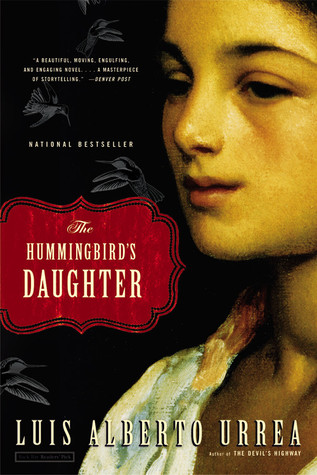
The Hummingbird’s Daughter by Luis Alberto Urrea is a story of legend combing historical fiction and magical realism. Urrea heard stories of his ancestor, Teresita Urrea, while growing up; the fantastical stories of her life and miracles. How much was true and how much legend, he set out to discover and spent some twenty years researching and writing her story.
Teresita was the illegitimate daughter of a young girl called Hummingbird and wealthy rancher, Tomas Urrea, during the late nineteenth century in Mexico, a time of unrest and the beginnings of a civil war. Abandoned by her mother, Teresita brought herself to the attention of Urrea and Huila, a curandero. Seeing Teresita’s gifts and potential, Huila teaches Teresita of herbs and healing and promises to help her cultivate her gifts. What leads to Teresita becoming the Saint of Cabora is told in dramatic fashion. Don’t be like me and miss the family tree in the front of the book until you’ve almost finished the book. I would have find this more helpful at the beginning when I was trying to keep names straight but somehow overlooked it.
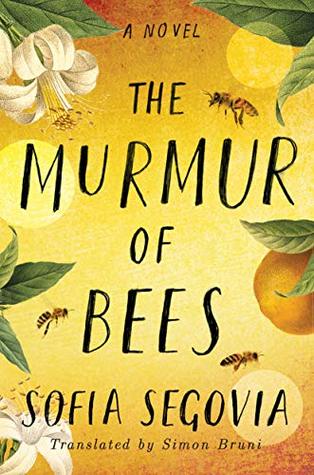
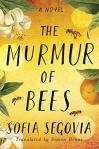
In lieu of the book, I can’t recommend, let me do a repeat and make a case for one that was on my favorites’ list of 2020–The Murmur of Bees by Sofia Segovia, translated by Simon Bruni. Another story of magical realism and family, the tale begins when Nana Reja finds an abandoned baby under a bridge, covered in a blanket of bees. Though some are horrified both by the bees and the baby’s disfigured face, Simonopio is adopted by landowners who love him as their own. Simonopio soon becomes special, not only to his family but to the whole town. This one is also historical fiction taking place during the Mexican Revolution as well as the influenza of 1918.
I’m sure there are many books about and from Mexico that I need to add to my TBR. If you have any suggestions, please share!
Much has been written about the hobbies people have started while in quarantine– everything from raising chickens to baking to bringing home a new puppy. Few of these hobbies are anything new and maybe some of us would have started them at some point in our lives anyway. We just needed a nudge to make us use our imaginations That many people will continue with these hobbies–finding a new joy or way of entertainment that doesn’t involve a screen–is one of the pluses of being forced to entertain ourselves. Much like when our parents told us to go outside and play, we found we could actually find something new thing to do without someone giving us a script.
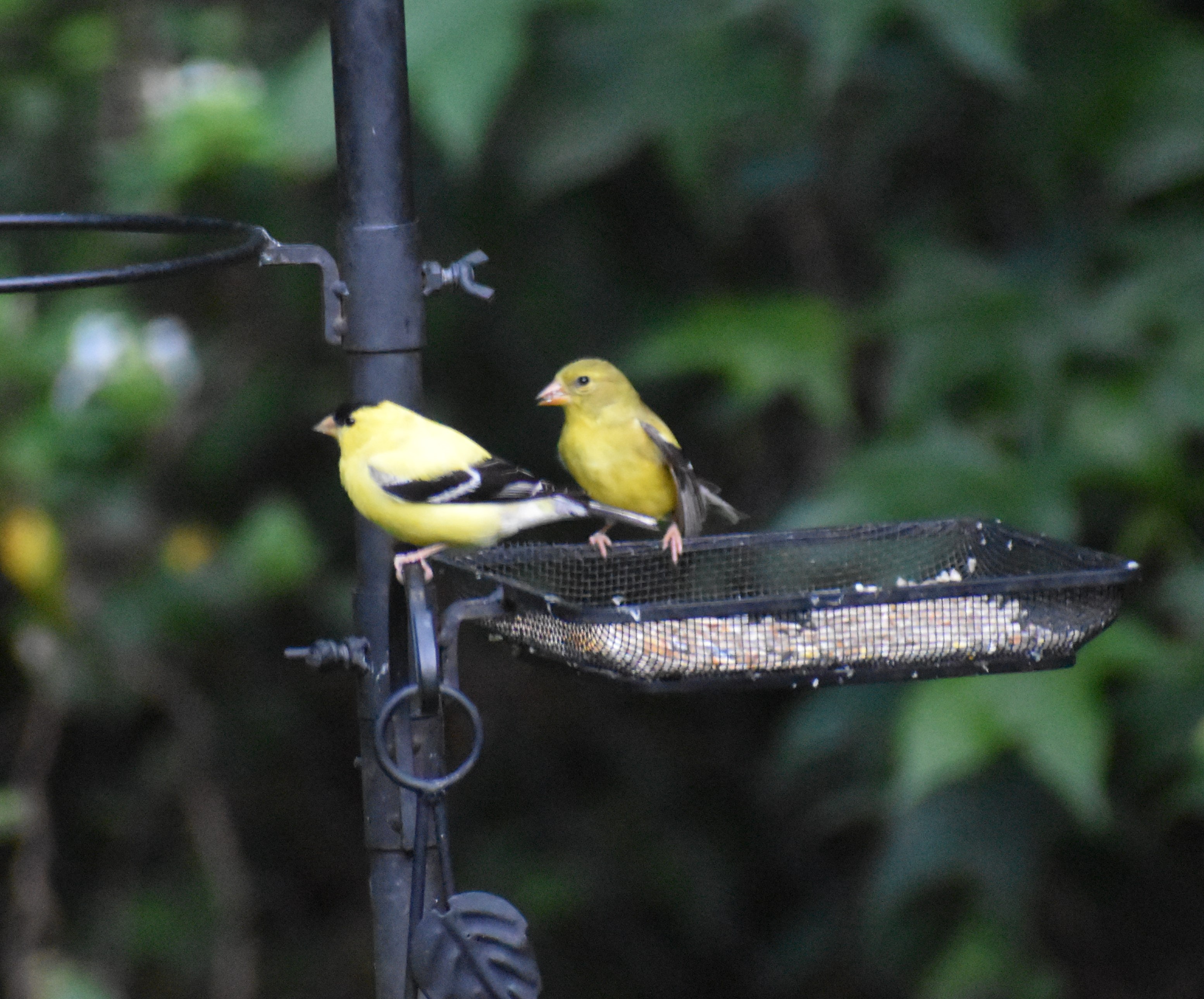
male and female American goldfinch
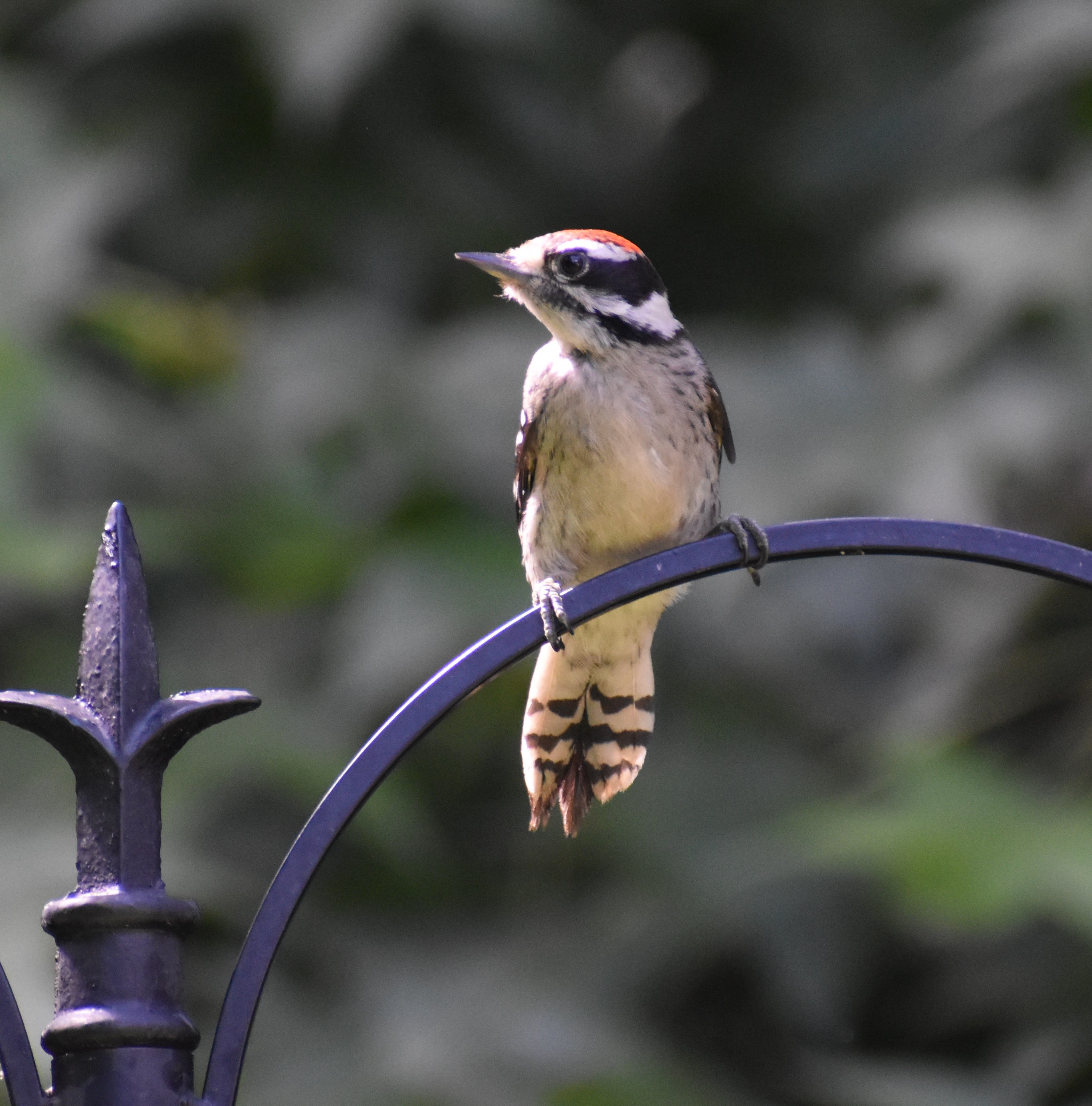
Whether because of the enforced quarantine or because my kids are mostly grown and out of the house, I have been baking more (with some success and not a few disasters), and also have picked up birdwatching as a daily obsession. Last summer I bought a pair of binoculars and a North Carolina birdbook and began observing more closely all those feathered creatures around me. I could recognize a robin and a cardinal; knew the difference between a bluebird and a bluejay; but who knew there were several types of woodpeckers living nearby? And why had I never seen a goldfinch (which according to my birdbook is fairly common)? How could I have missed such a bright yellow color?
Male & Female Cardinals
Besides gazing with my binoculars and snapping some pictures, I’ve also been enjoying a few books (of course!) concerning birdwatching. I recently finished A Guide to the Birds of East Africa by Nicholas Drayson, a charming work of fiction that had me googling different birds (in Kenya) as two men had a contest on who could identify the most birds in a certain period. The winner would be able to ask a certain lady to a dance. I’m now reading a memoir, Field Notes From an Unintentional Birder by Julia Zarankin. Long before Covid, Zarankin discovered birdwatching in the midst of some other life-changing events. Though at first reluctant to align herself with this strange group of people who all seem to wear shirts decorated with birds as well as multi-pocketed vests and have an abnormal interest in the various optics of binoculars, Zarankin soon enough found herself enthralled with learning about the birds around her and what they could teach her about herself and her own migratory habits.
In my own backyard, we have several trees, but there is also an empty lot next door, our own little forest. But, as progress would have it, the lot has been sold and now trees are coming down. Trees which surely house some of these birds I’ve been watching and feeding. Yes, I know. I’m living in a house on land that also once held a small forest, and I go to stores where a forest along with its birds and other animals used to live, so I’m trying not to be hypocritical here. But I have learned a few things both in my birdwatching and hearing the crunch and crash of trees. I’m learning to be more observant of my surroundings and more aware of the details in God’s creation. After all, they’re not my birds or trees; they are His.
I’ve also enjoyed observing the response of these birds as parts of their world comes crashing in. At first, they were quiet and out of sight, but soon, even with a bulldozer ramming its way through, they continue to come to the feeders; first the courageous chickadees and titmice, followed by the downy woodpeckers and then even the hummingbirds. A chickadee even put up a vocal protest, chirping above the crunching of branches before he grabbed his share of seeds and flew off.
So, post quarantine, I will continue to watch and observe the birds around me, and I will even try another new baking project.
“Look at the birds of the air; they do not sow or reap or store away in barns, and yet your Heavenly Father feeds them. Are you not much more valuable than they? Can any of you by worrying add a single hour to your life?” (Jesus in Matthew 6:26-27)
In February, #readtheworld21 took me to southeast Africa which includes several countries. The countries I read from were Kenya, South Africa, and Ethiopia.
First published in 1959, The Flame Trees of Thika is a memoir by Elspeth Huxley who moved to Kenya in 1913 with her parents. Huxley’s unusual childhood with her optimistic and idealistic parents is described with the eyes of a child though also with the benefit of an adult’s hindsight. Her parents’ attempts to make a go of a coffee farm was interrupted by war with Germany, but before that Elspeth grew to love the country and it became her home. She learns about the different groups of people–their customs and bits of their history–and makes friends as a child in an adult world. Huxley’s beautiful descriptions of this country, its people, and the nature surrounding them made this a classic book.
“. . . when the present stung her, she sought her antidote in the future, which was as sure to hold achievement as the dying flower to hold the fruit when its petals wither.”
Born a Crime by Trevor Noah is another memoir. Noah was born during Apartheid in South Africa. Having a white father and a black mother made his existence a crime, hence the name. I listened to Noah read the audio and found it an excellent read. I had heard this was pretty funny (he is a comedian by trade), and there is humor (I love the way he mimics his mother and grandmother), but the story is much more than humor. It is about growing up poor in a country undergoing growing pains of its own. It’s about the fierce love of a mother who works hard and does not put up with anything including Noah’s many antics.
“My mom did what school didn’t. She taught me how to think.”
“Comfort can be dangerous. Comfort provides a floor but also a ceiling.”
Cutting for Stone by Abraham Verghese is one of those books where you become invested in the characters, their lives and how they interact with each other and to their surroundings. I loved everything about this book which takes place in Ethiopia during a time of unrest and revolution. The story begins in 1954 when twin boys are born in a missionary hospital (known as Missing) to a British surgeon father and a mother who is a nun and a nurse from India. Their mother dies and their father disappears but the boys (Marion and Shiva) are raised in love by two other doctors and they both become fascinated with medicine. When Marion is betrayed by both his brother and the girl he loves and then is accused of a terrorist act, he flees to America where he studies medicine but also runs into his biological father. Not someone he had ever wanted to meet but life does not always take you where you want to go.
“You are an instrument of God. Don’t leave the instrument sitting in its case, my son. Play! Leave no part of your instrument unexplored. Why settle for ‘Three Blind Mice’ when you can play the ‘Gloria’? No, not Bach’s ‘Gloria.’ Yours! Your ‘Gloria’ lives within you. The greatest sin is not finding it, ignoring what God made possible in you.”
On deck: The Shadow King by Maaza Mengiste (Ethiopia) and A Guide to the Birds of East Africa by Nicholas Drayson (Kenya).
Though traveling is at a minimum these days, traveling through books is still a great way to view and learn of other cultures. This year I’ve been making a conscious effort to read books around the world by jumping into the #readtheworld21 challenge.
January was #JanuaryinJapan. I’ve read three books from Japan and have several more on my TBR. In fact, at this point, I could have just made the whole year “reading in Japan.” However, I have been trying to keep up with the other months as well, which I will discuss in future posts.
For Japan, I’ve read Before the Coffee Gets Cold, The Housekeeper and the Professor, and The Great Passage.
Before the Coffee Gets Cold by Toshikazu Kawaguchi takes place in a cafe where if you sit in a certain chair, you can go back in time to a certain time of your choosing. You will be poured a cup of coffee before you leave and you must come back before the coffee gets cold. Also, you must understand that you can change nothing. So, why go back? Four different people with four different reasons take the challenge to see someone one more time even if nothing can be changed by it.
“I was so absorbed in the things that I couldn’t change, I forgot the most important thing.”
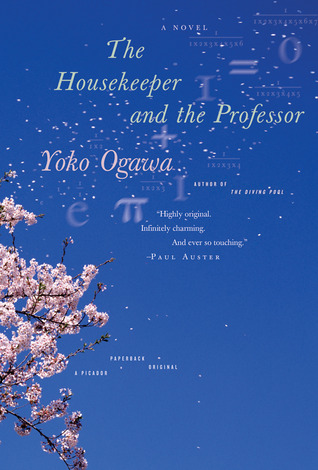
The Housekeeper and the Professor by Yoko Ogawa is a small but beautiful book of how a housekeeper and her son care for a mathematics professor whose memory has been impaired by an accident. After eighty minutes, his mind “refreshes,” so every day the housekeeper has to reintroduce herself to the professor who always asked her for her birthday and tells her the importance of that number. Though he keeps sticky notes on his jacket to remind him of important facts (like the name of his housekeeper), it is a constant challenge to both of them. The professor becomes very fond of the housekeeper’s son, calling him “Root” because his flat head reminds him of a square root. They both love baseball, so there’s the added bonus of reading about baseball as well as prime numbers.
“he seemed convinced that children’s questions were much more important than those of an adult. He preferred smart questions to smart answers.”
In The Great Passage, Araki has been working on a new dictionary (not for the faint of heart!) and is about to retire, so when he hears about the odd man in sales who sounds like the perfect man to help him continue his project, he snatches him up. Majime, who never seems to fit in with his love for antiquarian books and his linguistic background, finds that working on a dictionary is exactly where he needs to be.
You will not be bogged down with the details of making a dictionary though there are some interesting insights into what goes into tracking down words and their meanings. And what if you leave out a word? Disaster is always just around the corner. But it’s the characters, their relationships, and how they come together in spite of their differences that make this an enjoyable story.
“Any dictionary, no matter how well made, was destined to go out of date. Words were living things.”
“Reading the dictionary could awaken you to new meanings of commongly used words, meanings of surprising breadth and depth.”
This is just a small slice of Japanese literature. What these three books have in common (besides their Japanese culture) are their quirky and charming characters who are going about every day tasks and learning more about themselves as well as others.
On deck: A Midsummer’s Equation by Keigo Higashino and Killing Commendatore by Haruki Murakami.
Any suggestions? What parts of the world would you like to travel to?
In spite of all the craziness of this year, reading never stopped for me and continued to be an escape as well as a part of learning and growing. I had several favorites but wasn’t sure I would list twenty, but why not? These are my favorites from 2020 in no particular order of preference though most were published earlier.
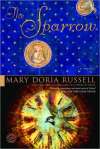
1. The Sparrow by Mary Doria Russell (1996). I started the year reading this first book from Russell and though science fiction is not my usual genre, I did enjoy this one. A listening post in Puerto Rico picks up some music from another planet and a group of scientists and Jesuits set off to find this planet. Only one returns. Why? What happened to the rest of them?
2. Daughter of Fortune by Isabel Allende, translated by Margaret Sayers Peden, (1998). Allende, a Chilean/American, writes historical fiction with a touch of magical realism. In Daughter of Fortune, Eliza Sommers is raised in a British colony in Chile, falls in love with an unsuitable servant, and when the servant leaves for the goldrush of 1849 in California, Eliza manages to secretly follow him. I loved the beautiful writing of this book as well as the descriptions of the historical places and events.
3. TheLost Queen by Signe Pike (2018). Pike read a book which traces the origins of the real Merlin who had a twin sister who became a strong Scottish queen. From that, Pike writes an entertaining and compelling first book of a coming trilogy.
3. The Historian Elizabeth Kostova (2005) This book is long, slow-paced, rich in description, and a bit creepy. A father and his daughter are on a quest to learn more about Vlad the Impaler and what, if anything, he has to do with the legend of Dracula. Again, not my usual genre, (horror) but I enjoyed this one.
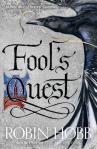
4. Fool’s Quest by Robin Hobb (2015)What would my year be like without reading a Robin Hobb book? Hobb is my favorite fantasy writer, and I have spent years following Fitz and his adventures or misadventures.
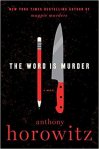
5. Anthony Horowitz The Word is Murder (2018) If you’re looking for a good murder mystery, look no further than Anthony Horowitz. He always delivers and this mystery within a mystery is no exception.
6. The Murmur of Bees by Sofia Segovia; translator Simon Bruni. Historical fiction, magical realism, this tells the story of a family during the Mexican revolution and the influenza of 1918. I loved it!
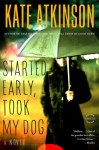
7. Started Early, Took My Dog Kate Atkinson (2010). This is the fourth of the Jackson Brodie books. I recently reread the first (Case Histories) for a library group meeting next week. I enjoy Atkinson’s rather dark humor and the way she weaves several story lines together.
9. Summer Queen Elizabeth Chadwick (2013). I’ve been reading Chadwick for years. One of my favorites for historical fiction. This is the first of a trilogy about Eleanor of Aquitane. She married King Louis of France at the age of 13 in 1137.
10. A Gentleman in Moscow Amor Towles (2019). A count is put under house arrest by the Bolsheviks in Moscow in 1922. Consequently, he spends the rest of his life in a hotel. If this premise doesn’t sound fascinating to you, you’ll just have to trust me (and hundreds of other readers) who found this book full of charming characters, humor, and great descriptions.
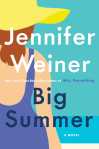
11. Big Summer by Jennifer Weiner (2020). “Unforgettable novel about friendship and forgiveness set during a disastrous wedding on picturesque Cape Cod.” Though I did enjoy this (more than I thought I would), unforgettable is a bit of a stretch but maybe that’s just my age. Still, this was a fun read covering some serious issues concerning friendship.
Audio These are my four top audiobooks. All fiction as I rarely listen to nonfiction.
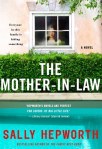
12. The Mother-in-Law Sally Hepworth (2019). A woman’s complicated relationship with her mother-in-law ends in suicide; or murder? This was so good, going back and forth with the different viewpoints and the ending totally surprised me.
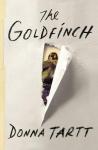
13. The Goldfinch Donna Tartt (2013). This book won the Pulitzer for fiction in 2014. A young boy is with his mother in a museum when a bomb goes off. His mother is killed and he takes a priceless picture away with him. Both of these events haunt him for the rest of his childhood and into adulthood. Parts of this book I loved. The audio was excellent and I became attached to Theo and his friend Boris. Other parts were tiresome (drug use, language, etc.), but overall, a book that kept me entertained for many hours.
14. The Tidelands Philippa Gregory (2019). In England 1648, Alinor is a woman skilled with herbs and suspected of witchcraft. Her husband is missing and believed to be dead, so Alinor must use her wits and skills to provide for herself and her children. Another long one that kept me enthralled and ready for the next in the series.
15. All We Ever Wanted Emily Giffin (2018) Set in Nashville and told with three different viewpoints (with different narrators), a girl’s picture is taken at a high school party and spread over the internet. Not only is the girl half clothed, a racial slur has been inserted. One boy is accused but is he guilty? A story of entitlement, family drama, and the dangers of social media. Excellent!
Nonfiction Yes, I do read some nonfiction.
16. Owls of the Eastern Ice Jonathan C. Slaght (2020). Slaght, a field scientist and conservationist, saw his first fish owl in Primorye, Russia. Though they have a wingspan of over six feet and a height of over two feet, they are elusive and little has been known about them. Slaght spent five years with other scientists in the wilds of Russia tracking, capturing, and learning about these fish owls and what they need to survive.
17. Isaiah by the Day Alec Motyer (2014) This is a translation by the Biblical scholar Alec Motyer along with a daily devotional. A friend and I have been studying Isaiah together and this book along with Motyer’s commentary has been a tremendous help and blessing to us. Highly recommended for anyone serious about studying the book of Isaiah.
18. Proverbs Eric Lane (2007). I used this book in a Bible study and though it was listed on my goodreads as the least favorite of my books for 2020 (meaning not many people listed it on goodreads), I found this to be a good study tool with intelligent questions.
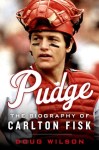
19. Pudge: the Biography of Carlton Fisk Doug Wilson (2015). I’ve been a baseball fan since I was a kid, and I found this biography interesting both in telling about the life of Fisk and the history of baseball during the 70’s and 80’s.
20. The Prodigal Prophet and the Mystery of God’s Mercy Timothy Keller (2018). An excellent study on the book of Jonah though I don’t think I’ve read anything by Keller I didn’t enjoy and learn from.
Those are my favorites from 2020. Looking forward to another year of reading. How about you? Any highlights from 2020?
I posted this story last year in three parts. I wanted to repost but decided to put it all together & hope you will all read to the end. I pray it will be a blessing and a time to reflect on what it must have been like on that first Christmas night–to be the first to hear the Good News.
One Starry Night
A long day finally over, the sheep
now settled to sleep. The weary shepherds
found places to rest–some to lay their heads;
others to keep watch over their flocks (many
of them destined to be a sacrifice
for man’s sins) alert for any dangers
that might be lurking or for any sheep
that might decide to take a midnight stroll.
Under a clear sky with stars so bright,
the night air took on a chill, causing the
sheep to huddle together and the shepherds
to wrap their cloaks around themselves and most
stayed near one of the fires kept burning throughout
the night. The men on the first watch neither
saw nor heard anything to make them believe
this night would be any different than hundreds
of others. When their time was ended, they
went to wake their companions for the second
watch. Before they could rouse the slumbering
shepherds, a light so bright filled the sky and
caused the poor shepherds to gasp and cover
their faces. Some fell to their knees and one
even stumbled into the companion
he had come to waken causing a stir
amongst the others whose dreams had just been
shattered. But when they tried to open their
eyes and grumble at their rude awakening,
they too were blinded by the light and covered
their faces in fear. Barely able to
think or breathe, they heard a Voice speak from–
where? The Light? The sky? It seemed to fill the
the very air. “Do not be afraid!” the voice
cried out. Though still they trembled, they slowly
lowered their arms and their hands from
their faces; and their eyes began to make
out a form. A form so majestic they
knew it was no ordinary being
and had to have come from Heaven. “Behold!”
the Being proclaimed and as he continued
to speak, the shepherds ceased their trembling and
stared and listened in awe. Even the sheep
had shaken off their drowsiness and seemed
to be listening as well. “I bring you
good news that will bring great joy to all
people. Today in Bethlehem, the city
of David, a Savior has been born to
you. He is the Christ, the Messiah, the
Lord. And this will be a sign for you: you
will find a baby wrapped in cloths and
lying in a manger.” Before the shepherds
could marvel at these words, the Messenger
Being was, in an instant, joined by a
whole host of more of these Heavenly Beings.
They began to sing in voices so sweet,
the shepherds stood entranced and the sheep
bleated softly as if in accord with
their song. “Glory to God in the highest
of heavens, and peace on earth among all
those who delight Him.” And as suddenly
as they had appeared, the messenger choir
was gone, leaving the shepherds to stare up
into the star-filled sky as if waiting
for more miracles to appear. The sheep,
however, knew the heavenly show
was over, and so settled themselves to
return to their peaceful slumber.
The shepherds all gathered together to
discuss this news that had been given to
them. “Could this be true?” one old grizzled
veteran shepherd asked. “A baby who
is the Christ?” “Did you ever hear such
singing?” asked another, his eyes still on
the sky and his ears still ringing with the
fading heavenly melody. “What should
we do?” worried a third. “Go and see!”
exclaimed an eager shepherd. This shepherd
put on his sandals, grabbed his cloak and staff,
and made ready to leave for Bethlehem,
not caring if anyone joined him
or not. He wanted to see this baby
whose birth had launched a choir of heavenly
messengers. “Now, wait,” the old shepherd
cautioned. “We can’t just run off and leave our
sheep, especially when we’re not sure who
those creatures were or even where they came
from.” The rest of the shepherds looked at him
aghast. “Why, they surely came from heaven.
Where else could they be from?” “They were angels,
I be certain,” declared another. “And
I am with Reuben. To Bethlehem, I
am bound.” And he, too, put on his sandals
and took up his sack and staff. Soon, they were
all picking up their things, murmuring with
excitement. “A message from heaven, did
you ever hear of such a thing?” “No,” said
the old shepherd. “I never have and neither
have any of you. Why would someone from
heaven want to speak to the likes of us?”
Reuben placed a hand on the old man’s shoulder.
“Good news for all people. Come with us, Asa,
and see if this baby is where the
Messenger said he would be. Our sheep will
be fine until we return.” The old shepherd
considered his companions, shrugged, and fell
in line. A trip to Bethlehem in the
middle of the night seemed like madness to
the old shepherd, but this whole night had been
unlike any he had ever encountered
in his eighty some years. A messenger
from heaven? Or a demon to mislead
and taunt them? His friends seemed certain the word
came from Heaven, but he had experienced
more of the latter than the former. Still,
a surge of hope went through him as he
tottered after his fellow shepherds,
listening to their excited chatter
as they made their way along the moon-lit
road to Bethlehem, the city of David.
They entered through the gates of Bethlehem,
(How did those shepherds know which way to go?)
and walked unerringly through the darkened
streets. Shops were closed and houses still, but from
One of the reading challenges I have participated in this year is the 2020 #mmdchallenge (The Modern Mrs. Darcy, aka Anne Bogel) which includes twenty-four different challenges. One of these challenges is to read a book by a local author. Bogel, a Kentucky native, posted a list of Kentucky authors a few weeks ago, so I am going to present a list of North Carolina authors. Though not exhaustive (we have quite a few writers to be proud of), here’s a few of my favorites.
The book I intend to read for this challenge is Down the River by John Hart. This will be my first book by Hart though he has written several thrillers set in North Carolina. Born in Durham, Hart is also one of the many lawyers turned writer who are putting out books today. This particular book was a Barry Award nominee and an Edgar Award winner in 2008.
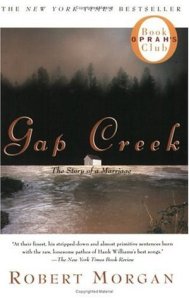
Robert Morgan is a poet and author with many books and awards to his credit. I’ve read Gap Creek twice which won the North Carolina Literature Award as well as the James G. Hanes Poetry Prize. This “story of a marriage” takes place in the mountains at the end of the 19th century. Julie Harmon works hard–“hard as a man” and she needs to in order for the couple to survive. Morgan is a wonderful storyteller, and two other books I can recommend are The Road from Gap Creek and Brave Enemies.
Wiley Cash has written several best-sellers and serves as writer-in-residence at UNC-Asheville. I wrote a review of The Last Balladhttps://pmgilmer.com/2018/01/04/wiley-cash-the-last-ballad/ a couple of years ago. The Last Ballad is also a book I’ve read twice–the second time when my library group selected it for that month’s read. The book tells the true story of woman, Ella May Wiggins, who tried to help form unions for the textile industry in 1929. Her courage and determination to help herself, her family, and others like her makes for a gripping read.
A native of Asheville, Sarah Addison Allen writes sweet, romantic family dramas with a bit of magical realism. Her first book, Garden Spells, tells the story of the Waverly women who are guardians of an apple tree that contains strange and magical properties. Drawing on her grandmother’s culinary traditions, Claire has built a successful catering business. When her sister returns home, her young daughter in tow, Claire’s quiet, ordered life is turned around–but in a good way.
I’ve loved the characters and relationships in all of Allen’s books. This quote from First Frost is a good example of their personalities. “Oh, please. Everyonein this town always says that like you have to be born here to understand things. I understand plenty. You’re only as weird as you want to be.”
Charles Frazier is best known for his first novel, Cold Mountain, the story of a Confederate soldier making his way home after the war. That story was based on stories from Frazier’s great-great-great grandfather as well as local stories and legends. It’s been several years since I read this one, but I remember the capitivating narrative told in a beautiful way.
Another book I enjoyed by Frazier was Thirteen Moons. As a “bound” boy, twelve-year old Will Cooper is sent to run an trading post in Cherokee territory. He becomes friends with Bear, a Cherokee chief, and is adopted into his tribe. Frazier writes descriptively of the time period, the scenery, and the growth and adventures of Will.
“What I wanted to do was slap him down a bit with wit and word. Grammar and vocabulary as a weapon. But what kind of world would it be if we all took every opportunity presented to us to assault the weak?”
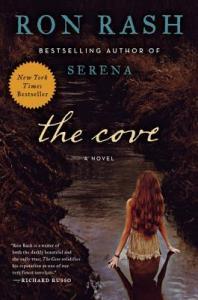
One more author I will mention–Ron Rash, a poet, short-story writer, and novelist who was born in South Carolina and teaches at Western Carolina University. I’ve read several poems and stories by Rash as well as his novel The Cove though he is better known for his novel, Serena, which was also made into a movie.
The Cove takes place near the town of Mars Hill in the Appalachian mountains of North Carolina during the time of the Great War (or WWI). A young woman, Laurel, lives with her brother, Hank, who has recently returned from fighting in France. Laurel finds a man in the woods nearly dead from yellow jacket stings. Mute, the man carries only a silver flute and a note saying his name is Walter and he is on his way to New York. Walter also carries a secret which may prove a threat to Laurel and Hank as the war in Europe is coming to an end.
As with Frasier and Cash, Rash is able to bring you back in time and to another place and helping you to understand a little part of history.
Any other North Carolina writers you would like to recommend? Or your favorite one from another state?

















 T