Dorothy L. Sayers: Apologist and Mystery Writer

“I always have a quotation for everything; it saves original thinking.” Dorothy Sayers.
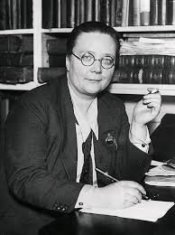
Dorothy Sayers (1893-1957) wore many hats, but it is the labeling her as “apologist and mystery writer” by one article which makes me smile, and I believe would amuse her as well.

Born at Oxford, the only child of the Rev. Henry Sayers, she won a scholarship to Somerville College (a college of Oxford, started specifically for women). She graduated in 1915 with first class honors in modern languages.

She wrote her first “Lord Peter Wimsey” mystery, Whose Body?, while working at a London advertising firm. She went on to write several novels and short stories featuring Lord Peter Wimsey. The books are still being published today and many of her readers are unaware of her many other accomplishments.

Sayers considered her best work her translation of Dante’s Divine Comedy. Sayers was 51 when she first read the Divine Comedy, and she became consumed with it. “I bolted my meals, neglected my sleep, work, and correspondence, drove my friends crazy . . .” Deciding to make a fresh translation of his work, she learned the Italian necessary, and the translation remains in print.

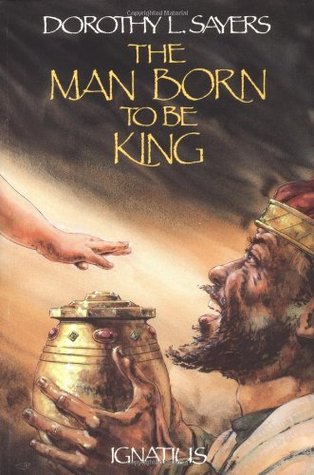
Of all her writings, it is concerning a particular play–The Man Born to be King–I want to write about today. She wrote her first play, The Zeal of Thy House, for the Canterbury Festival. She then wrote six more plays including The Man Born to be King. I read this play over ten years ago, and have decided to reread it this year as part of my “Christmas reading.”

This play was originally written for the BBC for broadcasting in the children’s hour. Sayers’ depiction of Christ has him speaking in modern English (since her audience would hardly know Greek) which caused a great outcry of protests. Didn’t she know Jesus (and all those around him) spoke in King James English? One newspaper editor put it this way: “In quoting the Bible we must take the Authorized Version, and not the interpretation of scholars, however wise.” Sayers response: “Of this singular piece of idolatry I will only say that it imposes difficulties upon the English playwright from which the Greek tragic poets are free.” She further explains that as the Incarnation really happened–meaning God became a man and lived among common, ordinary people–he, consequently, spoke a common, ordinary language.
This speaks to me as a writer as I have been wrestling with criticism concerning some of my dialogue. Some say my dialogue sounds too modern, and I wonder if they’re expecting King James English (the Authorized Version) as well? I understand the characters shouldn’t sound like 21st century Americans, but I do not know the Hebrew language and do not believe my characters spoke in any superior sort of way. The whole point of writing about Biblical characters is to remind us that they were real people and not merely “characters.” The sons of King David, though sons of a king, were also shepherds and warriors. Yes, David was a poet and a song writer, but does anyone really think he went around speaking poetically to his sons? Or that Solomon spoke in proverbs in his every day life?

When Sayers wrote her play, she wanted her audience to remember also that these characters did not know what they were doing. “We are so much accustomed to viewing the whole story from a post-Resurrection, . . .point of view, that we are apt, without realising it, to attribute to all the New Testament characters the same kind of detailed theological awareness which we have ourselves. We judge their behavior as though all of them–disciples, Pharisees, Romans, and men-in-the-street–had known with Whom they were dealing . . . But they did not know it.”

Sayers goes on to explain that when we show how real the people were who “made vulgar jokes about Him, called Him filthy names, taunted Him, . . .”, we are shocked, and we should be. However, when we pretty up the language and think of it all as in a culture and people far removed from us, we are not quite as shocked and do not see ourselves as those very people (as we should). “It is curious that people who are filled with horrified indignation whenever a cat kills a sparrow can hear that story of the killing of God told Sunday after Sunday and not experience any shock at all.”

In the same way, I wish for people who read my stories to see themselves in these Bible characters. To understand that we are just as sinful, just as fallen, and just as in need of a Savior. If a reader does not relate to the characters as people like themselves, they will only view the stories as just that–stories.

I’m looking forward to rereading these plays with a new eye than when I read them before. If you want to join along, please comment and let me know!

“The only Christian work is good work, well done.” Dorothy L. Sayers


Six Audio books of Different Genres For Your Listening Pleasure

As I’ve mentioned in a previous post (https://pmgilmer.com/2017/02/), listening to audio books is both a new and an old kind of reading for me. I started listening to some while walking, then tried while driving. When I first tried to listen while driving, I would find my mind wandering and lose track of the story. I now find myself frustrated if I don’t have a good book to listen to while driving. A few weeks ago, I started three different ones without even finishing the first disc. Having to drive with nothing but the radio (which I had done for years, after all) drove me crazy until I finally settled on a book I could enjoy.

Since I know there are a few others of you out there who enjoy audio books, I thought I would share some that have held my interest enough to make me want to take a long road trip to finish them. These books are of different genres as I get bored reading books of the same genre.

First, a children’s book, The War that Saved My Life by Kimberly Brubaker Bradley. Though I listen to Young Adult books on occasion, listening to this one made me realize I may have been overlooking some fun and entertaining books by not listening to more children’s books. Nine-year old Ada is never allowed to leave her one-room apartment because her mother is embarrassed by her clubfoot. When her brother and other children of the neighborhood are gathered to send them out of London to protect them from the coming war, Ada escapes to join them. They are taken in, rather reluctantly, by Susan Smith who treats Ada like a normal child for the first time in her life. As Ada learns to read and ride a pony, she also learns about love and trust. But, the war can’t last forever. Will she have to go back to her mother? And shouldn’t she want to?

For suspense: Behind Closed Doors, by B. A. Paris. When Grace meets Jack–a handsome, successful lawyer–she believes she’s found the perfect man. She can hardly believe he wants to marry her and willingly accepts her sister with Down’s Syndrome as part of their family. To the outside world, Jack and Grace seem to be the perfect couple. Except–why doesn’t Grace ever answer the phone? Or go out on her own? And why are bars on their bedroom windows? Honestly, not the type of book I usually read because it totally creeps me out. Which is also the reason I couldn’t quit listening.

Historical fiction: The Tea Girl of Hummingbird Lane by Lisa See. I’ve listened to several books by Lisa See and this is my favorite so far. See tells of a Chinese ethnic minority, the Akha, who raise tea in a very secluded environment. Their culture and traditions make a fascinating read, but it is the characters who make the story. Li-Yan receives an education that few are granted in her world and becomes an interpreter for her people. When she becomes pregnant out of wedlock, she manages to hide her baby (rather than kill her as her culture would dictate) and bring her to a city where she leaves her with a teacake. The baby is adopted by a wealthy California couple. Haley leads a happy life, but wonders about her origins. Meanwhile, Li-Yan goes on to learn more about the modern world and becomes a bridge between this new world and her old one. Through the world of tea, they both search and long for each other.

More historical fiction: The Alice Network by Kate Quinn. A difficult, but fascinating read about a woman, Eve, who was a spy against the Germans in WWI and now spends her days drunk, full of rage, fear and regret. In 1947, Charlie St. Clair, shows up at her door looking for her cousin. Though she finds Eve pathetic, she believes Eve can help her and eventually obtains her help. Along the way, she learns Eve’s story–about her grossly misshapen hands and the demons she tries to hide. This story is based on a true female spy network used in WWI.

Historical Mystery: A Study in Death by Anna Lee Huber. This is the fourth in the Lady Darby series, taking place in Scotland in 1831. I have listened to all four of these and look forward to the fifth book. (I reviewed the second book last year: https://wp.me/p1X6gd-fP) In this installment, Lady Darby has been commissioned to paint a portrait of Lady Drummond. When Lady Drummond is found dead, Lady Darby is appalled at Lord Drummond’s seeming lack of concern and suspects poison. She suspects Lord Drummond, too, but how can she prove it? He is a respected gentleman, and Lady Darby is still trying to overcome her past left her by her late husband.

Finally, the book I’m listening to now: Rise and Shine, Benedict Stone Phaedra Patrick. Benedict Stone, living in a quiet English village, finds himself stuck and his life falling apart. His marriage is in trouble and business at his jewelry store is almost non-existent. Then one night, a teen-age girl shows up on his doorstep. Gemma, the daughter of his long estranged brother who left for America years ago, has lost her passport and seems to be rather lost herself. Together, they learn about family and how to help and encourage one another.

How about you? If you listen to audio books, how do you find the ones you like? How important is the narrator to you?


Coal River by Ellen Marie Wiseman A Book Review

“On the last day of June, in the year when the rest of the world was reeling from the sinking of the Titantic, nineteen-year old Emma Malloy was given two choices: get on the next train to Coal River, Pennsylvania, or be sent to a Brooklyn poorhouse.”

First of all–great first sentence. Need to keep this one for future study.

Second–though I won this book in a goodreads giveaway (which means I had to enter to win it)–upon receiving it, I confess I was not overjoyed at the prospect of reading something which looked to be rather grim reading. I don’t know much about working in a coal mine, but I know enough to know it was (and is) a far from pleasant life–especially in 1912. So, I reluctantly began my reading, but was soon drawn into the story of Emma and her rather tragic life.

Wiseman tells a difficult story well and manages to make it entertaining. Emma is forced to live with her aunt and uncle when her parents die in a fire. Her relatives see her as a burden, (though her free labor is a bonus), but that is not the worst part of Emma’s life. Seeing how the miners and their families are forced to live and how poorly they are treated by the owner of the mine as well as those under him (such as Emma’s uncle) tears at her heart and makes her determined to try to find a way to help them.

Doing what she can for the miners and their families, Emma puts herself in very dangerous situations as she not only tries to help them, but also to let the world know how the miners, especially the children, are being treated. In spite of laws having been passed to protect children and other workers, these laws are being ignored by the owner of the mine.

As ever when I read a book of historical fiction, I am interested in why the writer chose their subject and how much of it is based on fact and true events. Wiseman says she has long been “fascinated” by coal mining, but learning of the breaker boys made it “a story that needed to be told.” I agree and can highly recommend this book.

Wiseman has written three other books of historical fiction, and I look forward to checking them out. How about you? Have you read any of Wiseman’s books?

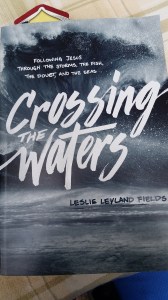
Crossing the Waters by Leslie Leyland Fields

What first grabbed me about Crossing the Waters is the subtitle: Following Jesus through the storms, the fish, the doubt, and the seas. Fields, originally from New Hampshire, married a fisherman in Alaska changing her life completely as they built a house on a small island, raised children and caught fish. Not sugar-coating anything, Fields shares her own struggles as a wife, mother, and a disciple of Jesus. She retells the stories of Jesus and the fishermen He called to be His disciples. Most of her experiences come from fishing in Alaska, but she also retraces Jesus’ steps around and on the Sea of Galilee.

Reading again of Jesus walking on the stormy water or waking from a deep sleep to calm the sea through the eyes of someone who has been on stormy waters, both literally and figuratively, gave me a new appreciation for the experiences of the disciples and the awesome power of our God.

Favorite quotes: “They are believing in their fear of the deep more than in Jesus. They do not yet know that he is with us wherever we are, that he will even walk on water in the middle of the night in a storm to come to us . . .”

“Jesus has not come to save them from the waters–death is not the enemy–but to save them from unbelief and their still small faith.”

Fields has written an enjoyable, thought-provoking book helping us to reconsider what Jesus meant when He said, “Come, follow me.” This is a book I highly recommend and am sure I will read again.


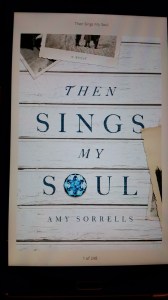
Book Review: “Then Sings My Soul” by Amy K. Sorrells

Nel Stewart hasn’t been home in years when her mother’s sudden death brings her back to Michigan from Arizona. Her father’s deep grief and oncoming dementia causes Nel to stay longer than she originally intended. Together, Nel and Jakob work through their present pain as well as learn to deal with their past griefs.

Using alternating story lines, Sorrells tells Jakob’s story of his escape from the Jewish pogroms in the Ukraine, a story Nel never knew. We also learn Nel’s story of why she left home and the significance of Jakob’s hobby of the lapidary arts.

I was immediately drawn into this book because of the historical descriptions of a time and place I know little about (the Ukraine and the Jewish pogroms). The use of the lapidary arts was also an interesting addition, giving insight to the characters–their backgrounds and their interests.

From the title, I thought it was going to be a book about the song, “How Great Thou Art”, but it’s not; exactly. The author explains the meaning behind the title at the end, so make sure you read that. Highly recommended!


Valentine Reads: Christian Romance

20170214_122302-3Though I admit, “romance” books are not the genre I usually list as a favorite, I do have a few favorite authors and several books on my to-read list.  I mostly enjoy some historical romance, romantic suspense, and even fantasy romance. And what better time to look these over than on this day of love? So, quiet your inner cynic, grab some chocolate and look over this list and see if you can’t find something you might enjoy to take you through the rest of this winter month.

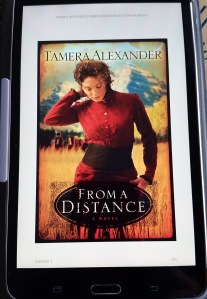
Tamera Alexander: She has several different series, all historical. I recently read the first two in her Timber Ridge Reflections series: From a Distance  and Beyond this Moment. Both take place shortly after the Civil War in Colorado. Interesting history (concerning both photography and the time of Colorado shortly before it became a state), and suspense in these books.

Lori Benton: I have read her first book: Burning Sky set in colonial times. Looking forward 20170214_121054-2to reading soon: The Wood’s Edge, (also set in colonial times) Christy Award winner for Book of the Year and Historical and First Novel.

20170214_122302-3Laura Frantz: Frantz has several different series and these also take place during the colonial period of the U.S. Two I have read and highly recommend: Love’s Reckoning and The Colonel’s Lady.


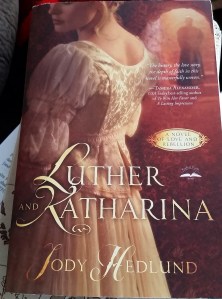
Jody Hedlund: Also has several different series, but two of her books I have on my to read-list: Luther & Katharine (winner of ECPA Christian Book Award & Christy Award for Historical Romance) and Newton & Polly (recently long listed for INSPY). As you might be able to guess, these are based on the real-life relationships of Martin Luther and his wife; and Amazing Grace writer, John Newton and his wife.20170214_121203-2

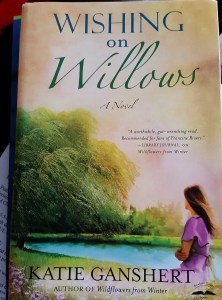
For more contemporary romance, Katie Ganshert is becoming a favorite as well as Beth Wiseman and Pepper Basham. What about you? Reading any romance today?

20170214_121508-2

The Women in the Castle Jessica Shattuck

20170127_155658I’ve read many books of historical fiction that take place during World War II, but few that are from the vantage point of German characters. (One exception that comes to mind is the excellent The Book Thief by Markus Zusak). The Women in the Castle is a new book of historical fiction coming out in April, and it is a story of three German women whose husbands were involved in an attempt to assassinate Hitler during the war. What happens to these women during and after the war because of this (obviously, unsuccessful) attempt creates a story that examines good and evil in the choices that people make. How do our choices affect, not only ourselves, but also those we love and want to protect?

In spite of the inevitable sadness running through this book, I was easily caught up into the story and could commiserate with each character and the hard choices they were forced to make. The three women were distinct with their own personalities.  They came from different backgrounds with secrets to hide, children to protect, and the need to find their way through a new world after their old one was destroyed.

Shattuck was able to write her story because of the memories and recollections of others, among them her own grandmother, mother, and aunt. There really was a German resistance and because of the research Shattuck has done, we can learn much of what people endured and why they may have made some of the decisions that they did.

Lovely writing and intriguing characters set in a difficult, but important time in history. Highly recommended!


Books on Writing

I read several books on writing last year and have quotes from these scribbled in notebooks and other various places. In all of them, I have found some kind of encouragement (in spite of the inevitably dark humor; most be a writing thing?), as well as helpful suggestions.

bird-by-birdThe first I read was Anne Lamott’s Bird by Bird: Some Instructions on Writing and Life. I’ve had this book for awhile and read bits of it here and there, but when I decided to get serious about writing again, I got it out and read straight through. On plot: “Plot grows out of character. If you focus on who the people in your story are, if you sit and write about two people you know and are getting to know better day by day, something is bound to happen.” This resonates with me, not only as a writer, but also as a reader. I have found myself bored in the middle of book, not because of the plot or the story idea, but because I could not care about the characters. Character is king.

Then I finally read Stephen King’s On Writing: A Memoir of the Craft. Another one that I started once upon a time, but never finished. Sentences and paragraphs to quote abound but two of my top ones: “Amateurs sit and wait for inspiration, the rest of us just get up and go to work.” And, “In many cases when a reader puts a story aside because it ‘got boring’, the boredom arose because the writer grew enchanted with his powers of description and lost sight of his priority, which is to keep the ball rolling.” I struggle with adding description to my stories, preferring to “keep the ball rolling”, so this one amuses me.

art-of-war-for-writersNext was a book by James Scott Bell, The Art of War for Writers: Fiction Writing Strategies, Tactics, and Exercises. (Something else I’ve noticed about many of these writing books is their rather wordy titles. Authors trying to get their word-count in? Or, perhaps, writers are just naturally loquacious?) Bell has several books out on writing, and I feel I need to be collecting these.

I reviewed Betsy Lerner’s The Forest for the Trees: An Editor’s Advice to Writers in a previous forest for the treespost. (September) This book is unique as Lerner has been an agent, an editor, and a writer, so she is able to share her perspective from all three of these roles. I shared several quotes from this book already, but here’s another one: “For the writer who truly loves language, a trip to the copy editor is like a week at a spa. You come out looking younger, trimmer, and standing straighter.” Not sure we all feel that way, but I get the point.

My most recent read was by Bret Lott, Letters and Life: On Being a Writer, on Being a Christian. More quotes on the importance of characters rather than lengthy descriptions. “I saw, suddenly and fully, that a story was about the people involved. I bret-lottsaw that embellishment brought to the table an unwanted intruder: the author.”

And: “What I saw in his (Raymond Carver) work was that in my own, I had to be the last one heard from in this pile of words I was arranging, and that humility was the most valuable tool I could have, because the people about whom I wanted to write mattered so very much more than the paltry desires of the writer himself. They mattered so very much more than me. My job was to get out of the way.”

I have several more writing books on my tbr list and just picked up a new one from the library. How about you? Read any good books on writing lately? Which ones have inspired you or just made you laugh? Which would you recommend?


Sixteen of My Favorite Books from 2016

I probably should have worked on this post last week, but better late than never. I did take a few days away from writing during the holidays, but I spent the last few days of 2016 trying to start my next book which I suppose I should call “The Continuing Saga of Solomon”. Well, it’s just a working title.

So, I’ve been reading blog posts on everyone’s favorite books of 2016, so thought I would go to goodreads and find out what were my favorite books this past year. All of the books I’m going to mention were either four or five star for me but that does not mean there weren’t a few others that hit that mark. Trying to keep it down to sixteen was a challenge. Sometimes, though, I think I’m too generous with my stars (especially if I’m struggling with my own writing and feel that any writer who actually finished writing a book should receive at least two stars for that accomplishment alone), but, regardless, I will only mention books today that were either my top favorites or were by a new author for me.

For my top fiction, one of the first books I read in 2016 was Kate Morton’s The Lake the-lake-houseHouse. I loved it and wonder why I still haven’t read more of her books. But I will.

Looking over the fiction books I read, I noticed I read several books which are the first in a mystery series. This makes these books even more special as it means there are more books by these authors that can I look forward to in 2017. (And I actually have already read the second in a few of these series). These books (in no certain order): What Angels Fear by C.S. Harris; The Anatomist’s Wife by Anna Lee Huber; Raven Black by Ann Cleeves; The Merchant’s House by Kate Ellis; and The Lewis Man by Peter May. I also read two by Tana French (the second and third in her series). I don’t think you can go wrong with her. Looking forward to reading the next in her series soon.what-angels-fear-240h

the_anatomists_wife_book_cover_medium

raven-black

I’m doing a reread of Robin Hobb’s Farseer series. I read both Assassin’s Apprentice and Royal Assassin in 2016. She is an amazing writer and though her books are fantasy, I feel can learn a lot about writing historical fiction from her writings. She is great at both setting and characters.

Other favorites in fiction: The Marriage of elephant-whisperer Opposites by Alice Hoffman; The Architect’s Apprentice by Elif Shafak; Plainsong by Kent Haruf; and Beneath a Golden Veil by Melanie Dobson.

Not counting the two by Tana French, that’s twelve. Since the Robin Hobb books are rereads, maybe I shouldn’t count those, but didn’t want to leave her out.

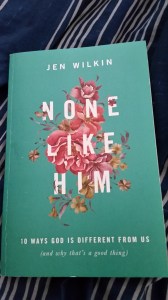
Obviously, I can easily mention more than sixteen, but I will round this out with my top four non-fiction: None Like Him by Jen Wilkin; An Editor’s Advice by Betty Lerner; The Elephant Whisperer by Lawrence Anthony; and A Woman of Contentment by Dee Brestin.

How about you? Any books that stood out for you in 2016? Have you set any reading forest for the treesgoals for 2017 yet?

woman-of-contentment
20160925_165321


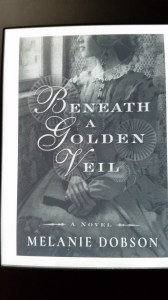
Beneath a Golden Veil by Melanie Dobson

20161207_114254In Sacramento in 1853, the gold rush is on and people are coming from all over the country to try their luck. Isabelle runs a hotel and seems to be successfully overcoming a secret in her past, in spite of the loss of her beloved aunt. When a man enters her hotel in search of his slave, Isabelle becomes involved in helping and hiding slaves in this state which has no clear laws on the issues of slavery.

From Virginia, comes Alden with a twelve year old slave, Isaac. Isabelle recognizes Alden from her past, but he does not recognize her. Soon, another man from Isabelle’s past arrives in Sacramento, and Isabelle has no doubt that this man means her harm. Isabelle becomes caught between wanting to help others who are trapped in slavery and needing to save herself. Her aunt taught her to trust in God, but can she trust Him to deliver her from this evil?

This is my first book by Melanie Dobson though I have read good things about her books and have had a couple of them on my TBR for awhile. Receiving this Kindle edition gave me my excuse to read Dobson’s newest book, and I was not disappointed. I don’t remember ever reading before of California’s stance during the time of slavery or hearing of their own underground railroad, so I found the history interesting and appreciated the details Dobson brings to her story. There is romance, suspense, and colorful characters–all helping to bring together an entertaining story. I gave this book five stars on Goodreads.

Though I received a free Kindle copy through Goodreads, the review is my own.