Favorite Reads of December ’23

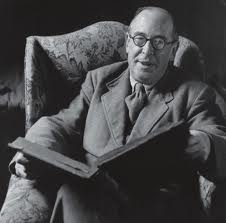
“Those of us who have been true readers all our life seldom fully realise the enormous extension of our being which we owe to authors. We realise it best when we talk with an unliterary friend. He may be full of goodness and good sense but he inhabits a tiny world. In it, we should be suffocated. The man who is contented to be only himself, and therefore less a self, is in prison. My own eyes are not enough for me, I will see through those of others. Reality, even seen through the eyes of many, is not enough. I will see what others have invented. Even the eyes of all humanity are not enough. I regret that the brutes cannot write books. Very gladly would I learn what face things present to a mouse or a bee; more gladly still would I perceive the olfactory world charged with all the information and emotion it carries for a dog.” C.S. Lewis
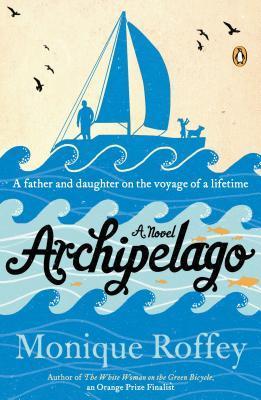
Archipelago Monique Roffey. This is my third novel by the Trinidadian writer, Roffey, and though they are all quite different, I have enjoyed each one. In this one, Gavin has lost his home and baby son because of a flood. In despair, he takes his young daughter, Ocean, and their dog, Susie, on a trip in his boat which he hasn’t used in some time. In his younger days, he and a friend had dreams of traveling to the Galapagos and now he decides to make that trip; or go as far as he can. Their journey takes them to many different places where they face challenges and meet other people who encourage them and give them hope. 4 stars

The Wager David Grann. This is the true story of the British vessel, The Wager, which left England in 1740 on a secret mission having to do with their war with Spain. In January 1742, a ramshackle boat landed on the coast of Brazil with thirty emaciated men, telling a tale of being shipwrecked on a desolate island. They were greeted as heroes, but six months later another boat landed on the coast of Chile with three castaways telling a very different tale than the first men. They claimed the first men were mutineers and had left them to die. Who was telling the truth and what really happened to The Wager and its crew? 4 stars

Howard’s End is on the Landing Susan Hill. “It began like this. I went to the shelves on the landing to look for a book I knew was there. It was not. But plenty of others were and among them I noticed at least a dozen I realized I had never read.” So, begins Hill’s year of reading only the books on her shelves, both discovering and re-discovering authors and books. Put together as a group of essays, Hill gives us a glimpse into her reading life and the books she wants to keep and reread. 4 stars
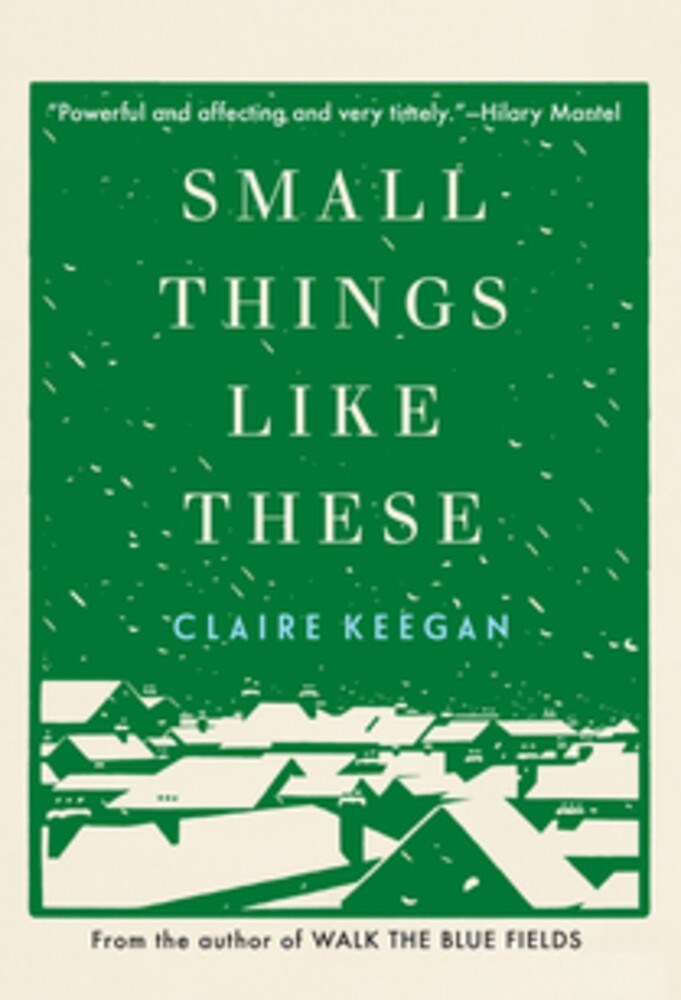
Small Things Like These Claire Keegan. Keegan, an Irish writer, tells the story of Bill Furlong, a coal merchant in 1985. While delivering coal one morning to the local convent, he makes a startling discovery about the treatment of some young women there. Furlong has five daughters and works hard to provide a good life for his family. Should he get involved or mind his own business? I had never heard of the Magdalen Laundries, so I had to do a little research to find out more about the truth of this story. 4 stars
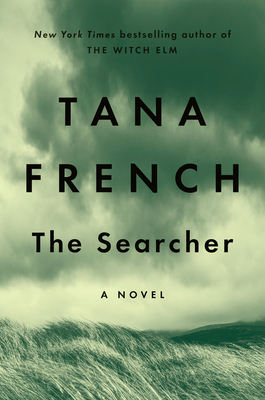
The Searcher Tana French (Cal Hooper #1). Retired detective Cal Hooper moves from Chicago to a small village in Ireland. He buys a run-down cottage he plans to restore and wants to spend his time working on this project, fishing, and walking the mountains. His time as a detective are over. When a young boy begins spying on him and finally comes out to seek his help, he can’t help but begin an investigative search for the boy’s missing brother. All off the record, of course. Tana French is an automatic read for me as her books never disappoint. This one seemed different from her others to me, but what remains the same are a complex plot, interesting characters, and suspense that keeps you turning the pages. I was happy to hear that her new book coming out in 2024 will also feature Cal Hooper. 4 stars
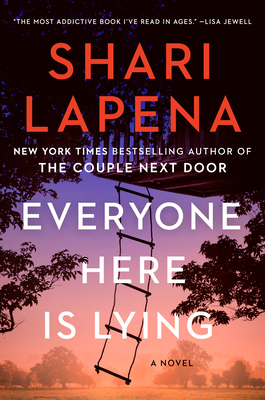
Everyone Here is Lying Shari Lapena (audio—Renee Dorian and Teddy Hamilton). First of all, I loved this title. With some books, it takes more than the half of the book to understand the title (if you ever do), but not with this one. It starts with two people meeting in a motel room who are, of course, married to other people, and escalates from there. When William’s (the good doctor) lover tells him it’s over, he goes home in an ill frame of mind only to find his troublesome nine-year old daughter, Avery, home early from school. He loses his temper with her, leaves, and no one knows what happened to Avery after that. Well, someone knows if only the police can find the truth amidst all the lies and accusations. 5 stars

Apples Never Fall Liane Moriarty. I love Moriarty’s writing—her family relationships and her twisted plot lines. In this one, the Delaney family are a well-known tennis family in their community. The parents, Stan and Joy, have recently sold their tennis school and are having a hard time adjusting to retirement. Their four children, though all played tennis and showed promise, are now out of the game and living their own lives. One night a stranger, Savannah, knocks on the door of Stan and Joy. She tells them she fled from her boyfriend and has nowhere to go. Needing a project, Joy immediately takes her in. When Savannah moves in and seems to have no intention of leaving, Stan and Joy’s children are all suspicious and not happy with the arrangement. Later, Joy goes missing and no one knows what happened to Savannah. Where is Joy? Was Stan and Joy’s marriage as strong and happy as it seemed? What really happened on Valentine’s Day?  4 stars

Harbour Street Ann Cleeves (Vera Stanhope #6). It’s Christmas time and Detective Joe Ashworth and his daughter, Jessie, are on the crowded metro. When they have to stop because of the snow, one lady remains in our seat even after everyone else has gotten off. To Jessie’s horror, she discovers the woman is dead. Because the woman was stabbed, DI Vera Stanhope is called in and soon she and Joe are off to Mardle where Margaret lived to begin their investigation. Nothing is simple or straightforward about this investigation. Margaret had a secret past and Vera is convinced that learning all about her, even things that happened years ago, will reveal the killer. 4 stars

The Matzah Ball Jean Meltzer (audio). Rachel Rubenstein-Goldblatt is a rabbi’s daughter with a couple of secrets. One of them is that she loves Christmas and is a successful Christmas romance novelist (using a pen name). When her publisher wants her to write a Hanukkah romance, she panics, not seeing anything magical about Hanukkah. When she hears about a Matzah Ball being planned, she decides to go for inspiration. Unfortunately, there are no tickets left and really, unfortunately, the man in charge of the ball is her summer camp enemy, Jacob Greenberg. Can she convince Jacob to give her a ticket? And is he really the jerk she remembers from when they were twelve? 4 stars
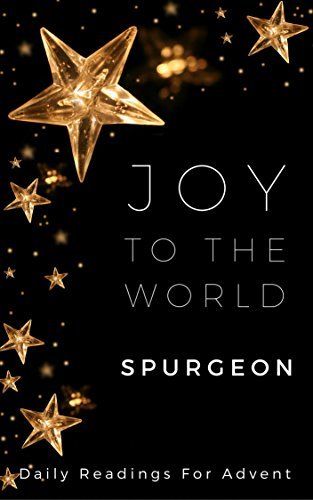
Joy to the World: Daily Readings for Advent. Charles Haddon Spurgeon. Just as the title states, these are readings for advent written by the prince of preachers, Charles Spurgeon. In a sermon preached by Spurgeon on December 23, 1855, he stated, “This is the season of the year when, whether we wish it or not, we are compelled to think of the birth of Christ.” He went on to say it was not a religious necessity to celebrate Christmas. “However, I wish there were ten or a dozen Christmas-days in the year” (as an opportunity to preach Christ). In these readings, Spurgeon begins with Genesis 3:15, the first promise of Christ and leads us to Bethlehem to prepare our hearts for His coming. 5 stars

Happy New Year & Happy Reading!

Getting Back to Normal?

How many times have you heard, thought, or said the words, “When things get back to normal–“? Are you hoping things will change before you start a new project? Are you just sitting back and waiting for things to get back to normal before you make any new commitments? Though we may be living with limitations we’re not accustomed to, we could be waiting for some far-off (and possibly non-existent) future, and besides, what is normal anyway?

In 1939, when Britain was on the edge of war (a war that would soon change their lives dramatically), C. S. Lewis preached a sermon, “Learning in War-Time.” A professor at Oxford, Lewis wanted to assure his students that learning was always important, no matter the world situation, and we can never have any guarantees of “normalcy.”

“The war (or virus or riots or civil unrest) creates no absolutely new situation: it simply aggravates the permanent human situation so that we can no longer ignore it. Human life has always been lived on the edge of a precipice. Human culture has always had to exist under the shadow of something infinitely more important than itself. If men had postponed the search for knowledge and beauty until they were secure the search would never have begun. We are mistaken when we compare war with ‘normal llife’. Life has never been normal.”

If life has never been normal, then why does it seem so extraordinary now? And how are we live our lives?

Lewis told his students it is important to remember to do whatever God has given them to do, no matter what the circumstances. “The work of a Beethoven, and the work of a charwoman, become spiritual on precisely the same condition, that of being offered to God, of being done humbly ‘as to the Lord’ . . . A man’s upbringing, his talents, his circumstances, are usually a tolerable index of his vocation. If our parents have sent us to Oxford, if our country allows us to remain there, this is prima facie evidence that the life which we, at any rate, can best lead to the glory of God at present is the learned life.”

The Apostle Paul addressed a similar situation at the church at Thessalonica. When times are normal or not so normal, we should always: “Stay calm; mind your own business; do your own job. You’ve heard all this from us before, but a reminder never hurts. We want you living in a way that will command the respect of outsiders, not lying around sponging off your friends.” 1 Thessalonians 4:11-12 (MSG)

We all need to be constant students of the Word. No need to wait for life to be “normal” to do what God has called us to do. I had decided this year to enter several writing contests with the various short stories and poems I have been working on. Sometimes this seems like a waste of time, but the words of Lewis and Paul remind me that I need to continue to do the works God has given me whether that means writing a blog post, sending out a story, studying His Word, praying for my children, or encouraging one of my sisters or brothers to carry on. Don’t wait for life to return to normal to do what God has called you to do. This is the time He has put you in to live for Him. Now, excuse me as I see a contest deadline looming ahead.

On ReReading

20150725_102305

I’ve been doing some rereading this summer, something I haven’t done much of since I was a teen and read The Outsiders a countless number of times. I’ve seen the subject discussed on goodreads, and recently read another blog on the subject, so I thought I would share my own recent experiences in rereading, including the rereading I have been doing this summer. I would love to hear from others on what they reread and why. I know most of you readers are like me and feel that with “so many books to read, so little time”, how can anyone possibly justify rereading? Well, there are several reasons, but read on for mine.

First, let me mention a legitimate fear in rereading and that is the possibility of returning to a book you enjoyed at an earlier time, but when you reread it, you’re disappointed and wonder ‘what in the world did I see in that book?’ Obviously, we are different people at different times and usually a book will mean different things to us at different times. However,the well-written book will stand the test of time, even if it means something different to us upon rereading.

A series of books I recently reread was the Harry Potter books. I know; almost a cliche. I don’t know how many times my five kids have reread those books. I read them the first time as they came out; before they were a cult, a fad, a part of our culture. I bought the first one for my oldest son (now 23) and began reading it to him; though a few chapters in, he took it upon himself to read it alone. A couple of years ago, I decided I wanted to see the movies because I had only seen a couple of them, (having stayed home with “the babies” when the first ones came out, and my husband took the oldest ones to see them). Now, with the “baby” being 13, I told him I wanted to watch the movies with him, but only after I read the books. So, we would reread a book, then watch the movie together. So, I reread this series for two reasons. One: I wanted to see the movies, but not without returning to the books first (and in most cases, I don’t know how you know what’s going on without reading the book first). Two: to spend time with my son doing something we both enjoyed.

This summer I find myself rereading several books in different genres for different reasons, though they all boil down to the simple reason of: I want to. I am currently rereading Lord of the Rings. I have read this several times, but probably not all three in over 20 years. It was just time. I’m rereading Gap Creek by Robert Morgan. I read this several years ago and enjoyed it for his beautiful writing and because I know the characters lived a lifestyle shared by my own grandparents and great-grandparents, and I find this fascinating. I have wanted to reread it for awhile, but having bought Morgan’s sequel The Road fro Gap Creek, I decided this was the time.

Two other books I am rereading this summer are about as different from each other as possible. The first is Bill Bryson’s A Walk Through the Woods. One of the few books that my husband and I have both read. We agreed it would be good to reread this before the movie comes out. Two chapters in, I am already laughing and glad I found a used copy on AbeBooks.

The other book is Mere Christianity by C.S. Lewis. I first read this in college and have probably read it a couple of times since. My apologetic skills are weak, so I knew this deserved a reread before I tackled some new books in that area.

For another view on rereading, check out Kelly Jensen’s blog: http://www.stackedbooks.org/2015/07/on-becoming-re-reader.html

What about you? Are you doing any rereading this summer?

C.S. Lewis Space Trilogy–ebook sale

“There are a dozen views about everything until you know the answer. Then there is never more than one.”  from: That Hideous Strength

space trilogyI have read C.S. Lewis’s space trilogy several times and am always amazed at the wisdom and insight he was able to put into these books. I wrote about the first–Out of the Silent Planet–about a year ago. I am getting ready to read it again with my 17 year old son as part of his assignment for literature. I had checked the price several weeks ago for an ebook, but didn’t want to pay what the cost was at that time. Happy to report that Harper One is having a holiday sale where each of the three books can be had for $1.99. If you have not read these books, this is a good time to get them on your ereader.

Perelandra, the second book in the series, has Ransom being sent on a mission to the planet, Perelandra. He does not know what his mission is until he gets there. He soon finds that this is a new world which has not yet fallen to the sin of mankind and earth, but that the Tempter is there already making plans. Ransom understands these plans, knowing the history  of his own world, but how can he convince the first lady of Perelandra that he wants to help and that Weston (remember the scientist in Out of the Silent Planet?) is bent for evil?  bbc7perelandra500

That Hideous Strength was published in 1945. Most futuristic books published so long ago would seem to be out of date, but this book fits in nicely with today’s popular dystopian books. It is much longer than the first two books and very different. The first time I read it, back in my college days, I felt a bit confused for the first 100 pages or so. Then things began to click and I was mesmerized and, as usual with any book by Lewis, amazed at his insight into man and into spiritual warfare.

Even if you don’t normally read science fiction, take a chance on any of these books and you will not be disappointed. I’m not sure exactly when this sale will end, but probably in less than a week, so pass on the news to any of your reading friends; especially those who may have gotten a new ereader for Christmas.

“Those who are enjoying something, or suffering something, together, are companions. Those who enjoy or suffer one another, are not.” That Hideous Strength

Happy Birthday, Jack!

“To have faith in Christ means, of course, trying to do all He says. There would be no sense in saying you trusted a person if you would not take his advice. Thus if you have really handed yourself over to Him, it must follow that you are trying to obey Him. But trying in a new way, a less worried way. Not doing these things in order to be saved, but because He has begun to save you already. Not hoping to get to Heaven as a reward for your actions, but inevitably wanting to act in a certain way because a first faint gleam of Heaven is already inside you.” C. S. Lewis Mere Christianity

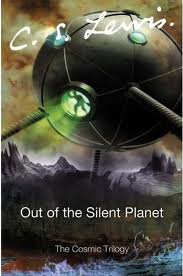
Out of the Silent Planet–C.S. Lewis

Today is the birthday of C.S. Lewis.  I wrote a little about Lewis last week and today want to talk about the first book in his space trilogy, Out of the Silent Planet.

I used this book while teaching literature to some high school students. There are themes running throughout the book such as the value of life, social Darwinism, and the spiritual battle of good & evil which make for very good discussion with this age.

In this trilogy, the main character, Ransom,  seems to be a lot like Lewis himself. He is a professor, an expert in languages and medieval literature, single, and was wounded in WWI, but Lewis always maintained that he fashioned Ransom after his good friend, J.R.R. Tolkien.

In Out of the Silent Planet, Ransom is kidnapped by some scientists who take him to another planet, Malacandra, believing they need him as a sacrifice. Ransom manages to escape after they land & begins to meet the inhabitants of this planet.  Though he is afraid of them at first, he soon learns that they have more intelligence, and certainly are more moral, than the scientists who have kidnapped him. He also discovers that Earth has been exiled from the rest of the solar system due to its fallen nature.

Ransom settles into a routine with these beings and has his ideas about life–mainly, religion and humanity–challenged and questioned. Before he can get too comfortable, though, he is summoned to meet the ruler of  Malacandra. Here, he is challenged still greater about his previous beliefs in God and his own planet, Earth.

Though Lewis was a genius at explaining God & theology in his non-fiction writings, his analogies and allegories are also amazing and thought-provoking throughout his fictional writings.

I used the literature guide from Progeny Press when I taught this book. I highly recommend all of their guides. They divide the book into readable sections with vocabulary and discussion questions. They have several others for books by C.S. Lewis including some of the Narnian Chronicles and The Screwtape Letters and are a Christian-based curriculum.

Happy Birthday, Professor Lewis!