Unknown's avatar

About pmgilmer

I am a happily married Christian woman with 5 kids that I homeschooled. I recently received my masters in library science from East Carolina University and am now writing some great stories that I trust will bless and encourage others in the near future. I read books of all genres, but my favorite is historical fiction. I am also writing historical fiction, so I will be posting reviews and news in that area. Happy reading!

Those Dual Story-Lines

Midnight RoseI recently finished reading Lucinda Riley’s The Midnight Rose, one of those dual timelines or two intersecting timelines, or (what I prefer) a dual story-line.

https://www.goodreads.com/review/show/879379687)

This got me to thinking about how many such books I have read lately and why these dual story-lines have become so popular, and can they really be considered historical fiction in the truest sense? And how different are these from the traditional plot/subplot?

For those of you who may be wondering what in the world is a dual story-line–it is two stories told in the same book or a story within a story. The stories usually take place in the same setting but with quite a few years (approximately a hundred seems rather popular) separating the two.

The Lake House by Kate Morton was one of the first books I read this year and I just loved it. This one moved back and forth between an unsolved mystery in Cornwall in the early 1900’s and then to a woman who was visiting her grandfather (in Cornwall) in 2003. This woman stumbled upon an abandoned house which had obviously been a rather magnificent house at one time, and decided to use her journalistic skills to solve the mystery of what had happened there almost a hundred years before. https://www.goodreads.com/review/show/1518062106?book_show_action=false

Then there was The Bookman’s Tale by Charlie Lovett. An antique bookseller from North Carolina moves to England and ends up in a familiar quest to prove Shakespeare’s authorship. This book’s dual timeline goes from Hay-on-Wye in 1995 to the time of Shakespeare and is complete with both book and art forgers. Another four star for me.

Two of my favorite authors who write the dual timeline quite well are Susan Meissner and Susanna Kearsley. My most recent reads from these two are: A Fall of Marigolds, (New York in Sept. 1911 and Sept. 2011) and A Desperate Fortune (London and Paris in 1732 and present day).

FallMarigolds_cover-184x300

These type of books are often listed as historical fiction, but I consider true historical fiction a work that is based on actual events and people. Both The Midnight Rose and The Lake House are totally fictional concerning their characters and events. I don’t enjoy them any less for that, and, of course, they are historical in the way they portray the ways people lived, the clothes they wore, the way they talked, used transportation, etc.

What do you think? What makes a book “historical fiction”? And, do you enjoy dual time-lines? Read any good ones lately?



Word Crutches and Other “Various” Words

20160726_114329

Reading through the first draft of my work in progress, a very kind friend noticed a few words that were a bit overused. One of them was the word “various”. I had “various” birds, “various” foods, “various” colors, “various” fish, and even “various” mothers. She even suggested (gently) that this word might be a crutch for me.

That kind of hurt, but in rereading another chapter, I found another overused word–“curious”. Curiously, I seemed to have had a hard time spelling that word, so, really, you would think I would have been looking for synonyms even before I realized I had used that same word four times in a single page.

Doing another read through some more chapters, I decided every time I saw the word “various” that I would circle it with a blue colored pencil. What was it about that word? It’s not even a great word. It’s actually kind of lame. Boring. “Various.” Really? What about diverse? Manifold? Miscellaneous? Sundry?(Now, there’s a good word). However, it’s become a bit of a game to me to see how many times and in how many various places I have been able to work that same word into a phrase. I mean, you would think I had entered a contest where the prize went to the writer who could find the most ways to use a certain word in many different (and various) ways.

On the other hand, there are other words I’m reluctant to use because it might seem like showing off. For example, this morning I used the word “quirk” twice in my current writing. You know, “he quirked a smile” or perhaps an eyebrow. Great word–quirk. Much more interesting than “various”. But, I don’t know. Does that fall under the rule of not using a “fancy” word when a more familiar one will do? Of course, if I use it enough times, won’t that make it more familiar? Or maybe it’s not really fancy at all. Just because I don’t use it in everyday conversation doesn’t mean it’s not commonplace in another place and time.

Another interesting fact about words is that they can run in cycles. Remember when everything was “awesome”? I like that word, but hesitate to use it after hearing that so many people had “awesome days”, own “awesome dogs”, make an “awesome grilled cheese”, or saw an “awesome sunset.” Still, I don’t want to throw it out the window just because of its overuse because it is, after all, an awesome word. But, I will proceed with some caution when I want to describe anything as “awesome”. For now, when I want to describe a new book, a new song, or anything else that touches my soul, I will probably call it “impressive”, “astonishing”, “breathtaking”, or downright “splendid”.  Any of those various words should do.

How about you? Any words you tend to use as crutches? Or are there some words that you would like to use but feel they have overplayed their hand?

Mist of Midnight by Sandra Byrd

Mistmidnight

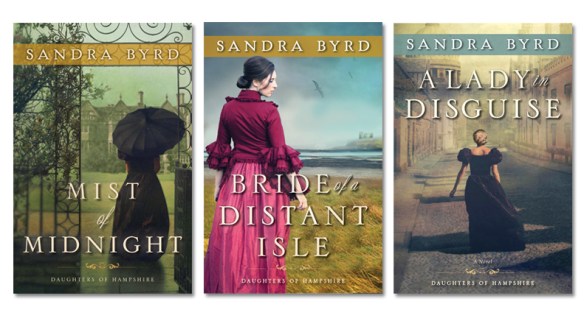
Mist of Midnight is the first in the series, Daughters of Hampshire, by Sandra Byrd. An historical romance, this book takes place in England in 1858. Rebecca Ravenshaw, daughter of missionaries to India, has returned home after the tragic death of her parents in the Indian Mutiny. Unfortunately, she has no time to grieve for her parents and to adjust to life in England as upon her arrival, she learns that someone else has been in her home claiming to be Rebecca. Having to prove that she is, indeed, Rebecca Ravenshaw and the true heir to Headbourne House is her first order of business. Dealing with identity theft in any century is both frustrating and scary. Besides clearing her name, she must learn who the imposter was, how she knew about her family, and what happened to her. Did she really commit suicide or was the cause of her death more sinister?

I enjoyed the suspense in this novel and the historic detail. I especially found interesting learning a little bit about missionaries in this time period. Leaving your home is never easy, but especially in a time when travel and communication were much slower and less reliable than we are accustomed to in the 21st century.

Though the first in a series, the book is a stand-alone. The second book, Bride of a Distant Isle, released earlier this year also takes place in Victorian England, but is a different story with different characters. The third book, A Lady in Disguise, is scheduled for release in 2017.

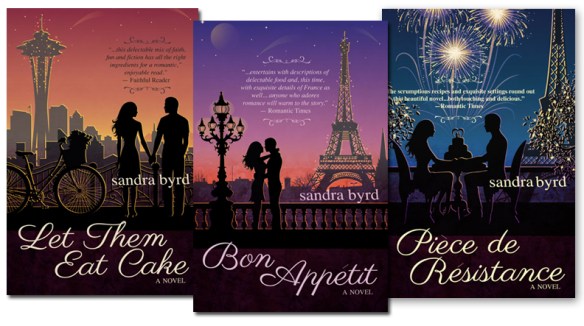
This is not the first book I have read by Byrd. She is a writer of different types of romance, and I have read her first two books in the French Twist series, which are contemporary romance. These books are fun and lighthearted romances, following the character of Lexi, who is learning to be a pastry chef. In the first book she is in Seattle and in the second book, she is able to follow her dream to study and work in France. French-Twist,

Sandra Byrd writes as a Christian writer, and for romance readers that means, you can expect some good, ‘clean’ fun. Anyone else read any books by Byrd? If you read romance, do you enjoy reading historicals or do you prefer stories set in more contemporary settings?


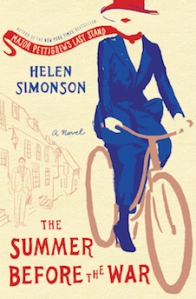
The Summer Before the War by Helen Simonson

Summer_10_14_redHat_BrokenLine.inddLately I have been reading several books of historical fiction from the era of WWI. I am currently listening to a Maisie Dobbs audio bookhave started a Bess Crawford book on Overdrive, and last night I finished up The Summer Before the War.

The Summer Before the War was a book that I felt improved and was more entertaining and engrossing as it went along. (So much better than one that starts out promising and then the ending disappoints.) It takes place in East Sussex in 1914, in the small village of Rye. The first major event of their summer is the arrival of Beatrice Nash who has come to apply for the position of Latin teacher. Many in the village do not approve of a young woman for this position; especially one that upon arrival turns out to be more attractive than expected.

Beatrice is championed by a prominent woman of the village, Agatha Kent, whose husband works for the Foreign Office. Agatha has two nephews, Hugh, a medical student, and Daniel, a promising poet. Hugh and Daniel have differing personalities but are close and are both adored by Agatha.

When Germany invades Belgium, Rye is quick to welcome refugees and, in spite of those who still believe war won’t come to England, the village prepares to support their country even if it means sending their young men off to war. Soon everyone in the village–the young the old, and all those in between–become caught up in a patriotic fervor. Of course, their young men do go off to war, and what happens to them and the ones who are left to wait for them makes up the rest of the story.

Part of what interests me in reading historical fiction is found at the end in the author’s notes or acknowledgements. Simonson tells of the books she read to immerse herself in this period, as well as the websites and libraries. I love that she was able to read newspapers of the time (and took the trouble to do so).

birds-of-a-feather-150For those of you unfamiliar with Maisie Dobbs or Bess Crawford, they are both heroines of their own historical mystery series. The Maisie Dobbs books are written by Jacqueline Winspear and Birds of a Feather is the second in the series. I’m always looking for audio books with good narrators and a story that I can follow as I drive, walk, or cook. So far, this book has delivered with the excellent narration done by Kim Hicks.

The Bess Crawford books are written by the mother/son team, Charles Todd. I have just started reading the second in that series, An Impartial Witness. A group I belong to on goodreads–Historical Mystery Lovers–will be reading a selection of your choice from Charles Todd during July, so I have a bit of a head start. If you’re on goodreads, check out the group and come read with us.cover-impartial-witness

Reading any WWI fiction or nonfiction? Let me know what you’ve read and can recommend.


The Blood of Caesar by Albert A. Bell, Jr.

albert bellBlood of CaesarSmPtThe Blood of Caesar, A Second Case from the Notebooks of Pliny the Younger is the second book in a series of historical mysteries taking place in the Roman Empire in the first century. This particular book is set in the summer of 83 A.D.

The author, Albert Bell has been a history professor, holds a PhD from UNC-Chapel Hill, as well as an MA from Duke, and MDiv from Southeastern Baptist Theological  Seminary. He has been writing since his high school years, first publishing in 1972.

Bell uses historical figures and events to set up his mysteries. The real Pliny the Younger wrote hundreds of letters which are still considered valuable for the time period. Pliny was also an eyewitness to the eruption of Vesuvius in 79 B.C., and Pliny the Elder lost his life there.

In this second book, Pliny is first asked by the emperor Domitian to trace references to an unknown heir of Augustus Caesar from a part of a letter. He is then asked by a friend to look after a young woman whom the friend claims is a relative, but he will give Pliny no details of her family or explain why her life is in danger. It is not long before Pliny’s own life is in danger as he attempts to unravel the two mysteries without offending the emperor.

I enjoy reading historical fiction from all time periods, and reading mysteries in these different eras and locations adds a certain spice to the reading. Working on my own book of historical fiction, I’ve been reading with an eye as to how authors are able to add both historical detail and locale descriptions without overwhelming, or just flat out boring, the reader. Bell does a good job of describing the city of Rome, as well as the surrounding countryside. He has created engaging characters that help a reader understand the time period in which they live. Pliny has a good friend, Tacitus, (another character from history) who provides some humor and serves as a foil to Pliny’s somewhat staid behavior.

I can also recommend the first book in the series, All Roads Lead to Murder.  roads_murder(1) There are three more books in the series, and I’m looking forward to finding them and reading them as well. For my local friends, these first two books are available at both Union County Public Library and Charlotte Mecklenburg Library.


The Scribe’s Daughter by Stephanie Churchill

scribe's daughterThe Scribe’s Daughter is listed as a fantasy, but not the type of fairies and dragons. It reads like historical fiction, but the lands and their people are the creation of the author.

This book tells the story of 17-year old Kassia, whose mother has died and whose father has been missing for some 3 years. Kassia and her older sister are doing what they can to survive and to keep the terrifying landlord from the door, so when a stranger appears and asks Kassia to take on some metalwork, she agrees though she knows this is beyond her qualifications.

Taking on this job leads to danger and Kassia finds herself involved in political intrigue and ends up fleeing for her life. She meets new friends who help her to safety and to discovering why she is of interest to anyone.

It took me a bit to get into the story, but I enjoyed getting to know the characters and learning of their various backgrounds. The book ends with a satisfactory conclusion yet gives hints of more to come; most specifically, learning what became of Kassia’s sister. I’m hoping that there is a sequel in the works.
https://www.goodreads.com/review/list/5518302-patricia”>View all my reviews</a>

John Claude Bemis

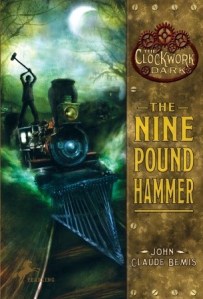
nine pound hammerJohn Claude Bemis is a writer from North Carolina who writes for children and middle grade readers. Growing up, Bemis enjoyed reading fantasy and stories that contained American folklore. As an adult, he taught third grade and noticed most of the fantasy books available for children (and even adults) were based on myths and legends from Europe, but couldn’t find any that contained American legends. So, he wrote his first book, The Nine Pound Hammer, taking several legends from American history, including that of John Henry. The book is a mix of fantasy and steampunk and is the first in a trilogy.

I was recently able to hear Bemis speak a couple of months ago at a meeting for the Charlotte Writers’ Club. He read a bit from The Nine Pound Hammer. (I wanted to put my hands over my ears and scream, ‘spoiler alert’ as I had just checked the book of the library to read, but I refrained). He also introduced his newest book, Out of Abaton, The Wooden Prince. In this book, Bemis takes a well-known fairy tale, Pinocchio, and creates a new world, a fantastical Venice. (Pinocchio is known to many of us through a Disney movie, though the character is originally from an Italian book written in the 1800’s). In this tale, an automa named Pinocchio finds himself locked in a trunk and sent to a wanted criminal and alchemist by the name of Geppetto. Soon, Pinocchio begins having feelings and thoughts of his own; not the behavior of an automa. Before he and Geppetto can unravel what is happening to him, Pinocchio is kidnapped. He faces many dangers, meets new friends, and has several adventures before he can find Geppetto again.

The Wooden Prince

If you’re looking for some fun, adventurous stories for children and want to learn more about Bemis–his books and the workshops he offers–visit his website at: http://www.johnclaudebemis.com/

INSPY Shortlist 2016

The INSPY Shortlist for 2016 has been announced, and though some of these books are already on my TBR list, I can see I will need to add several more.

The INSPY awards were created by bloggers for the best literature “that grapples with expressions of the Christian faith”. The categories include: historical romance, debut fiction, speculative fiction, and literature for young adults.

20160505_105741I already have two books in the historical romance category that I am looking forward to reading. One by Jody Hedlund is Luther and Katharina, a story of a monk and a nun who fall in love in the 16th century. You’ve probably heard of the monk, Martin Luther. I’ve read a couple of Jody Hedlund’s books in her Beacons of Hope series and know that she is a skilled and entertaining writer.

The other I’m looking forward to reading is Lori Benton’s The Wood’s Edge.  I read her book, Burning Sky, last year and can highly recommend it. Several people in a group I belong to in Goodreads have already read The Wood’s Edge and can only rave about it.

20160505_105808

One more author I’ll recommend writes speculative fiction, (what I would call fantasy) Patrick Carr. I read A Cast of Stones and am ready to read the second in that series. His book that has been nominated for an INSPY is Shock of Night, the start of a new series.

To see the full list of nominations, go to: http://inspys.com/?page_id=2645 and have fun reading!