Biblical Fiction: Dead or Alive?

At the writers conference I attended in March, I had an opportunity to meet with someone who is the head of a Christian agency and well known in Christian publishing. I didn’t go with the plan of talking with him, so was pretty proud of myself for taking the plunge. I knew it would be a good experience, both to speak with him and to hear his thoughts on the book I’m writing. Now, I was not expecting much–no, I really didn’t think I would tell him about my story, he would respond with delight, and hand me a contract on the spot. The dream is there but I was feeling pretty realistic. However, I have spent a bit of time thinking over some of the things he said, and I have to admit, I am still puzzled by his attitude.

His first response to my pitch of “I’ve written an historical novel about Solomon growing up in King David’s palace,” was “People aren’t reading Biblical fiction. That just doesn’t sell, and no one is publishing it.”

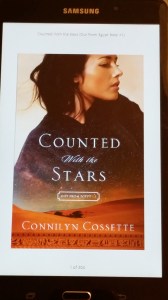
I was stunned and, yes, I’m a bit of a slow thinker, so it wasn’t until I was back in my hotel room that I thought: “What about Tessa Afshar? Ginger Garrett? Connilyn Cossette? Francine Rivers? Jill Eileen Smith? Stephanie Landsem? Mesu Andrews? These writers may not be on the New York Times bestseller list, but they are all publishing Biblical fiction and doing reasonably well. I am currently reading Tessa Afshar’s Land of Silence, am enjoying it, and believe it is very well written. 

Did I misunderstand him? No, the conversation went on from there as he explained the ups and downs of Biblical fiction and told me why no one was interested in that any more. Of course, I tried to tell him that my book was special and many people would be interested in it and love to read it. Well, I didn’t exactly say all that, but I did spend more time telling him of my story, but I did not leave with a positive impression.

Looking through the authors I mentioned above, I found they were published by six different publishers, so there seems to be quite a few publishers still interested in these books.

So, am I wrong, and is he right? Are people not interested in reading Biblical fiction? What about you? Have you read any of these authors lately? Have you any others to add and recommend?

My Takeaways from the Writing Conference

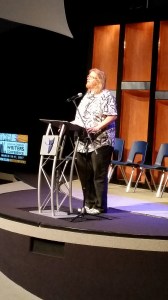
It’s already been a week since I attended my first Writers Conference. I’ve been busy correcting my manuscript (more on that shortly), and writing some flash fiction for a contest. But I want to take a few minutes to give you some highlights of my takeaway from the conference. First, it was exciting, disappointing, and fun. Exciting just to be there; disappointing to receive my critiqued manuscript full of red marks; and fun meeting and hearing from other writers.

I attended several workshops, heard from the faculty during two panel discussions, and listened to the main speaker, Torry Martin.

At one workshop led by Larry Leech, I learned about the importance of having an “adorable antagonist.” A villain is needed for conflict but should not be used just as a scapegoat. A villain should be likable in some way and the bigger (s)he is, the greater the victory for the protagonist.

From DiAnn Mills, I heard about creating good dialogue. A writer needs to know what motivates their characters, to understand their top emotions and what type of body language they would use to express themselves. Gestures and body language help to “show and not tell.”

During a panel discussion, the members of the faculty were asked to give and explain some of their pet peeves concerning writing. Among these were: exclamation points, misuse of pronouns, using the passive voice, run-on sentences, indefinite “it” beginning a sentence, and the overuse of being verbs. When I heard this last discussed, it struck home with me, and I had to wonder if my writing was guilty of this. I didn’t have to wonder long. When I received my critique the next day, the use of many “be” verbs was heavily marked.

The main speaker for the conference, Torry Martin, spoke on the importance of networking. He stated that we don’t need to be a “bon vivant” to network. (Always good to learn new words and how to use them). Since most writers (including myself) are introverts, this was good to know!  Torry had a lot of good advice on networking, and if you ever have a chance to hear him, I highly recommend taking the opportunity.  I particularly appreciated his way of looking at networking from a spiritual perspective. He quoted Philippians 2:3 (“Do nothing from rivalry or conceit, but in humility count others more significant than yourselves”) several times during his lecture, stating that all networking by Christians should be done with this verse in mind as we want to do all things under Christ’s leadership.

In all, I enjoyed hearing from different writers and having a chance to mingle for a couple of days. I know I have a great deal of work to do, but I left inspired and encouraged to keep at it.

Any conferences or workshops that you have attended lately? Or plan to in the near future? I hope this has encouraged you to check some out.

Going to a Writers Conference

writersconference2017headermoja

On Friday I will be attending my first writers’ conference–the Christian Writers Conference in Spartanburg, S.C. I’ve been pretty excited for several weeks now, but I can now add: scared, nervous, and a bit intimidated.  My first class will be on “How to Get the Most Out of the Conference.” That was an easy enough choice, but choosing the right class in the different workshops is a little more difficult, though it’s great to have so many interesting ones to choose from.

There are many writers conferences out there, and even though I haven’t yet been to one, I can already recommend that if you’re into writing at all, that you look for one that you can attend. Besides the classes that are available, attending a conference gives you the opportunity to meet other writers and others in the industry. I especially hope to connect with some writers who might live in my area.

Also, for any of you on facebook, I started an author’s page under the name–P.M. Gilmer. I’m posting and sharing news about reading and writing, so if you’re on facebook, check it out and give me a follow. I’ll be sharing some highlights from the conference on there (probably through Twitter) when I can, but I will definitely be sharing more right here when I get back.

How about you? Are you attending any writers’ conferences this year?

Research: An Ongoing Process

20170210_105319

Writing a book of historical fiction obviously requires quite a bit of research which I enjoy, but can also find challenging. I know some writers feel they should do all their research before they put pen to paper or finger to keyboard. Of course, you need to do some research to make sure you have your timeline in decent order, but because I have characters that tend to show up unannounced or do things I wasn’t expecting, research is an ongoing process for me. To give you more of an idea of what I have been writing about, I decided to share a few of those areas of research.

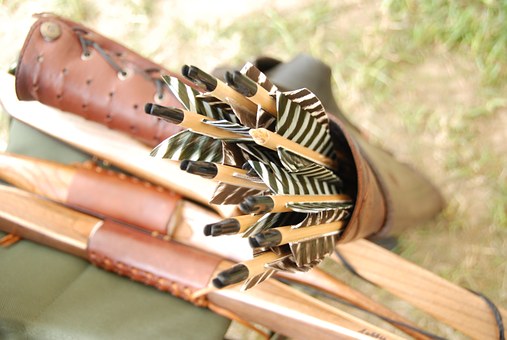
archery-847876__340In one case, the brothers (sons of David) are practicing their archery, and all I know about archery is that it requires a bow, some arrows, and, hopefully, some targets. I know these young men didn’t run down to their local sporting goods stores for their equipment, so where did they get it? How did they make it? And how far advanced would they have been at this time? Was archery even a thing for the sons of David? (I know they must have learned to use a sling at some point. Surely, their father taught them that!)

In another scene, I picture Bathsheba coming into the palace garden, a small dog trotting at her side. Wait a minute! Did the Israelites have dogs as pets? Did they even have dogs at all? (They didn’t, but I cleverly worked around that).

Much of my book revolves around horses and chariots. This was not in my original game plan, and not knowing much about either, I’ve had to work at learning more about these two subjects. Having the internet is a wonderful thing for both finding the exact information you need or pointing you to books and articles that can deepen your understanding.

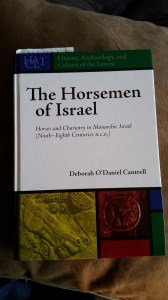
After writing most of my manuscript, I found a book, The Horsemen of Israel: Horses and Chariotry 20170210_105239in Monarchic Israel (Ninth-Eighth Centuries B.C.E.).  At first, I read most of this book online, but was eventually able to find it at a reasonable “used” price (looks brand-new). After reading through several chapters, I needed to go back and change quite a bit of what I had written and was also able to add interesting details about the way horses were trained and first introduced to Israel. I have found this book helpful on several levels and plan to give you a more comprehensive review in the future.

Then there is that trip to Egypt Solomon takes with two of his brothers. Not in my original outline, but it has been interesting to do some studying in that area.

Knowing more about the people and the way they lived helps me to better understand Bible characters who are familiar, yet can seem so distant. Of course, not every detail I uncover will end up in the finished manuscript (or it would be a few thousand pages), but every one that does enhances the story and makes the characters come alive, both for myself and my future readers.

You don’t need to be writing a book to do research. Every time you “google” something, you’re doing some type of research. What about you? What are the kinds of information you enjoy finding? Does it help you on your job? Your personal Bible study? Or are there certain areas (science, history, etc.) that you just enjoy learning about?

Books on Writing

I read several books on writing last year and have quotes from these scribbled in notebooks and other various places. In all of them, I have found some kind of encouragement (in spite of the inevitably dark humor; most be a writing thing?), as well as helpful suggestions.

bird-by-birdThe first I read was Anne Lamott’s Bird by Bird: Some Instructions on Writing and Life. I’ve had this book for awhile and read bits of it here and there, but when I decided to get serious about writing again, I got it out and read straight through. On plot: “Plot grows out of character. If you focus on who the people in your story are, if you sit and write about two people you know and are getting to know better day by day, something is bound to happen.” This resonates with me, not only as a writer, but also as a reader. I have found myself bored in the middle of book, not because of the plot or the story idea, but because I could not care about the characters. Character is king.

Then I finally read Stephen King’s On Writing: A Memoir of the Craft. Another one that I started once upon a time, but never finished. Sentences and paragraphs to quote abound but two of my top ones: “Amateurs sit and wait for inspiration, the rest of us just get up and go to work.” And, “In many cases when a reader puts a story aside because it ‘got boring’, the boredom arose because the writer grew enchanted with his powers of description and lost sight of his priority, which is to keep the ball rolling.” I struggle with adding description to my stories, preferring to “keep the ball rolling”, so this one amuses me.

art-of-war-for-writersNext was a book by James Scott Bell, The Art of War for Writers: Fiction Writing Strategies, Tactics, and Exercises. (Something else I’ve noticed about many of these writing books is their rather wordy titles. Authors trying to get their word-count in? Or, perhaps, writers are just naturally loquacious?) Bell has several books out on writing, and I feel I need to be collecting these.

I reviewed Betsy Lerner’s The Forest for the Trees: An Editor’s Advice to Writers in a previous forest for the treespost. (September) This book is unique as Lerner has been an agent, an editor, and a writer, so she is able to share her perspective from all three of these roles. I shared several quotes from this book already, but here’s another one: “For the writer who truly loves language, a trip to the copy editor is like a week at a spa. You come out looking younger, trimmer, and standing straighter.” Not sure we all feel that way, but I get the point.

My most recent read was by Bret Lott, Letters and Life: On Being a Writer, on Being a Christian. More quotes on the importance of characters rather than lengthy descriptions. “I saw, suddenly and fully, that a story was about the people involved. I bret-lottsaw that embellishment brought to the table an unwanted intruder: the author.”

And: “What I saw in his (Raymond Carver) work was that in my own, I had to be the last one heard from in this pile of words I was arranging, and that humility was the most valuable tool I could have, because the people about whom I wanted to write mattered so very much more than the paltry desires of the writer himself. They mattered so very much more than me. My job was to get out of the way.”

I have several more writing books on my tbr list and just picked up a new one from the library. How about you? Read any good books on writing lately? Which ones have inspired you or just made you laugh? Which would you recommend?


The Ophel Inscription–Writing from the time of King David

Half the fun of writing historical fiction is the research. Sometimes I can’t find what I’m looking for (or scholars disagree on certain findings) and that can be frustrating, but more often I run across “fun facts” that I had not even considered (which makes it sound like most of my research is serendipitous and maybe it is). I may not always be able to add these “fun facts” or details to my story, but learning more about the culture of my characters helps me, as the author, to know my characters in a more rounded way.

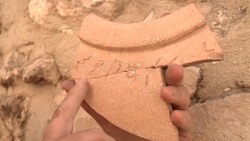
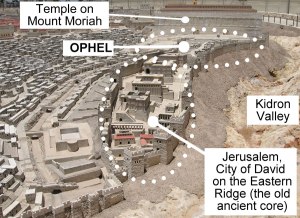
As most of you know, I’m writing a story about Solomon during the time of King David, so I was intrigued when I ran across an article concerning a find in 2012 by Israeli archaeologist, Dr. Eilat Mazar. From the Ophel mound between the Temple Mount and the old city of David, a pottery shard was found containing seven letters. Now known as the Ophel Inscription, there is still quite a bit of debate about those letters and what it all means, but there are those who have concluded that the letters are Hebrew, making the find highly significant concerning the kingdoms of David and Solomon.

potterykd


Hebrew letters on a 3,000 year old pot gives credence, not only to the existence of King David living in Jerusalem at that time, but also suggests that the written language was not just for the rich and their rulers.

I have no problem believing the Bible concerning the existence of King David and that he ruled in Jerusalem, but have wondered about how literate were the people of that time. After all, David was not raised as a royal son, yet he wrote psalms from an early age, so one must believe that both reading and writing were more common than some may assume.

ophel-labeled-2


From one article (link to follow): “The Ophel inscription–though untranslated–joins the Khirbet Qeiyafa ostracon as part of a growing body of archaeological evidence supporting the biblical truth that ancient Hebrews were literate. Rather than inventing a post-dated history, they had the linguistic and cultural tools in place to record it from the earliest days that Israel was recognized among other monarchies of the ancient world.”

https://answersingenesis.org/archaeology/shard-shows-written-language-at-jerusalem-when-david-ruled/

Studying the history of the Bible and reading more of different archaeological finds continues to make the characters of the Bible more alive to me. My prayer as I write of stories in the Bible–specifically, Solomon and imagining what his life may have been like as he was growing up in the court of King David–that the Bible will also become more alive to others who will one day read my stories.


Writing Contests: For Better or Worse

20161102_102413-2

In the past few months, I have entered two different writing contests. Though, of course, I hoped to win (or at least be a finalist), I mostly entered these contests in order to receive feedback from those in the industry (other writers, publishers, editors, etc.) Well, I got my feedback.

I did not win. I did not place. I did not even impress.

When I received my scores, I already knew I was not a finalist, but it was still painful. Looking at the first judge’s scores, I saw 4’s and 5’s and hoped that meant the scores were from “1” to “5”. Since the next judge had some 7’s and 8’s, I knew it must be out of 10.

In both contests, I received comments from three different judges (anonymous so as to protect them from irate and sensitive writers). In both contests, the first judge dislikes my story and has little (if anything) good to say. In the first contest, the second judge was a bit more middle of the road with her/his comments, and the third had at least a few good things to say. In the second contest, both the second and third judges had encouraging things to say, even though they weren’t totally sold. I had to wonder if they were doing a bad judge/good judge routine.

My first thoughts upon reading the comments was to want to throw my beloved “work in progress” into the deepest sea. But, from following a recent online discussion among members of ACFW (American Christian Fiction Writers), I know that receiving such a wide range of comments is not unusual, and that I am not the only one that might feel a bit confused by the seemingly inconsistencies of the judges. (One person said they had received a 67 and a 98 from two different judges in the same contest). None of us enjoy receiving criticism, but it would seem to be more helpful if the comments were more consistent across the board. But, judges are human and they do not all like the same kind of stories.

Takeaway: Though I have struggled at accepting the comments, I have been able to go back through them and find what is helpful and what is just one person’s opinion. After I sent in my last entry, I changed a few things and have a few other areas marked to be either omitted or rewritten. So, if I had been a judge myself, I have to admit, I would have been of the same opinion in several ways. Will I enter more contests? Yes; definitely. Overall, it has been helpful and has made me work harder to perfect my writing before sending it to an agent.

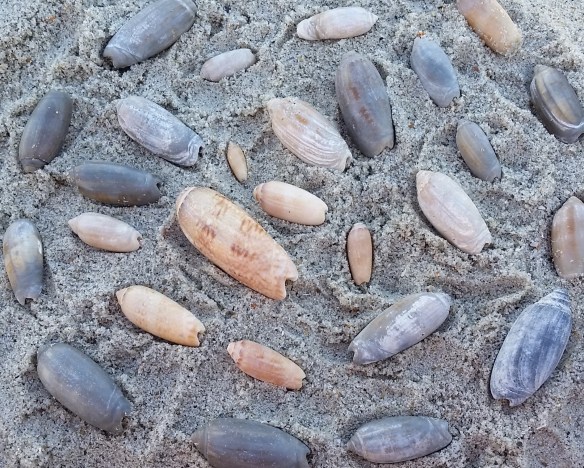
Are you wondering about the shells? All are olive shells found on the same beach (Myrtle Beach, S.C.), but none of them are the same. Basically the same shape, but different colors and sizes. I picked up the shells that attracted me and wanted to keep. So are our stories and those works in progress. Not everyone will be interested enough in what I write to even desire to pick it up. Some may be interested (even when I finally get it right), but maybe not enough to read it through. But, I will work at polishing my stories and finding the readers who will be interested for their enjoyment.

Any writers out there that have been entering contests? Have you found them helpful? Worth the submission fee or not? Not every contest is for every writer, so it’s important to find some that will benefit you and will be worth that entry fee.


The End! Or, at least, the Beginning of the End

3blackobelisk-of-shalmaneseriii-tewkes


I just came to the end of my book. Not one I am reading–the one I am writing. And like so much of this book, it was kind of unexpected.

Ok, I have some rough spots and a couple of places I know I want to rewrite, but I actually came to the end. I was planning on another chapter. Actually, have it started and sort of have an outline for that final chapter. (In my mind, that is, which is where most of my outlines actually live).  So, I was working on finishing up this chapter, started adding a bit, then realized as I completed the chapter that I really could end the book here. I’ve long since conceded that it is going to take another book to tell the story I want to tell. Since I have (gasp) 113, 308 words, perhaps it is time to wrap this up. But, I have so much more to say! You think because you’re the author that you’re in control, but, no, not really.

I want to tell the story of Solomon–growing up in the court of King David. What was it like to know you were the chosen prince? When exactly did he know that? What did his brothers (and others) think of that?

So, I started telling the story. And, along the way: Solomon’s brothers are fighting; Solomon wants his father to raise horses to drive chariots; Solomon’s mother seems to be the only one who really thinks he is special; and Solomon and two of his brothers take a trip to Egypt.

So, over 100,00 words and Solomon isn’t even king yet. But, he will be soon. I can’t wait to begin writing that story, but first–I need to work on my platform. Do any of you follow your favorite writers on facebook? Twitter? Why? What do you look for? Or what do you enjoy about what they do? I hope you will all stay with me as I begin to share more of what I’ve written and begin my search for an agent.


bibleplaces-sheep

Carolinas WordFest Saturday October 15, 2016

20161011_121008-1

Interested in reading and writing? Want to learn more about writing? Would you like to meet some local writers? This Saturday in uptown Charlotte will be the Carolinas WordFest. Being a new member of the Charlotte Writers’ Club, I am excited about this event and am looking forward to meeting others in our community who are also interested in writing.

From their flyer: “Writers are a creative lot. We appreciate how reading and creative writing can feed the soul, and about a year ago, we let loose our imaginations. The result: Carolinas WordFest. The festival is a celebration of some of North and South Carolina’s finest writers with free, interactive programming designed for all ages and literary tastes. It is a smorgasbord that invites you to become engaged, sample something new and enjoy something familiar. Come. Be inspired. Have fun!”

This is a free event for all ages. For example, I will be spending time at ImaginOn helping children put their stories down and creating their own books. There will also be musical story telling in the afternoon which kids of all ages should enjoy.  Other events will be held in First Ward Park, Spirit Square Knight Gallery, and in the Main Library. For a list of all events: https://carolinaswordfest.com/about/schedule-of-events/

There will also be a chance to hear and meet different authors from the Carolinas. For a detailed list of the authors: https://carolinaswordfest.com/writers/

What’s an event without food? A few food trucks will also be around, so come on out and have some fun with your local writers!


The Forest for the Trees: An Editor’s Advice to Writers–Betsy Lerner

forest for the trees

Writers, Agents, and Editors! Oh, my! Different animals that work together to bring forth stories, articles, and books.  As a writer, I know I need to understand what agents are looking for (as well as publishers) and how exactly editors can be helpful to my writing. It is easy when you are struggling to be noticed and published to see these animals as the enemy that must be overcome and appeased, but it is much better to look at them as those who are working in the same game that you are, and who are wanting to help you achieve excellence in writing.

In the July/August edition of Poets & Writers, I read an article by Betsy Lerner in which she discusses being a writer, an editor, and an agent (all titles she has held and can proudly claim). She discusses the three different occupations–their differences and yet how they work together.

Enjoying the article, I found her book, The Forest for the Trees at the library and brought it home. The chapter titles themselves were intriguing: “The Ambivalent Writer”, “The Self-Promoter”, and “The Neurotic”; to name a few.

Working as an editor for many years, Lerner has a great understanding of writers and their many neuroses and phobias. I found myself laughing at something in every chapter; and though she is probably using humor deliberately, I’m afraid she is also very serious.

Among my favorite quotes:

“Try to remember that the time before you publish is the only time you will ever work in complete freedom. After you’re published you will be forced to contend with the shockingly real voices of critics, agents, editors, and fans. You never get to be a virgin after the first time, and more to the point, you never again have the luxury of writing in total obscurity. But like the married person who bemoans the loss of freedom from her single days, the published author who longingly recalls her past obscurity is a little hard to sympathize with. Though you may suffer from loneliness after you’re married, it’s bad form to complain about it to your single friends.” (“The Ambivalent Writer”, p. 29).

“Some of the most gifted writers I’ve worked with were also the most self-sabotaging. Lack of discipline, desire for fame, and depression often thwart those whose talents appear most fertile, while those who struggle with every line persevere regardless.” (“The Natural”, p. 33).

“Whoever you are, whatever your bizarre behaviors, I say cultivate them; push the envelope. Becoming a writer never won anybody any popularity contests anyway. And most writers couldn’t win one if they tried.” (“The Neurotic”, p. 101).

“Like finding a tennis partner whose ability is a notch above your own, you will play better if your partner’s game challenges yours. All you really need during those long years when rejection may get the better of you is one friend with whom you can share your work, one fellow writer with whom you can have an honest exchange.” (“Rejection”, p. 169).

This is a book I know I need to read more than once–for enlightenment, wisdom, and encouragement. Not only does it help to give me a better understanding of myself as a writer (and my fellow writers), but even more it gives me insight on those creatures known as editors, publishers, and agents.