The Women in the Castle Jessica Shattuck

20170127_155658I’ve read many books of historical fiction that take place during World War II, but few that are from the vantage point of German characters. (One exception that comes to mind is the excellent The Book Thief by Markus Zusak). The Women in the Castle is a new book of historical fiction coming out in April, and it is a story of three German women whose husbands were involved in an attempt to assassinate Hitler during the war. What happens to these women during and after the war because of this (obviously, unsuccessful) attempt creates a story that examines good and evil in the choices that people make. How do our choices affect, not only ourselves, but also those we love and want to protect?

In spite of the inevitable sadness running through this book, I was easily caught up into the story and could commiserate with each character and the hard choices they were forced to make. The three women were distinct with their own personalities.  They came from different backgrounds with secrets to hide, children to protect, and the need to find their way through a new world after their old one was destroyed.

Shattuck was able to write her story because of the memories and recollections of others, among them her own grandmother, mother, and aunt. There really was a German resistance and because of the research Shattuck has done, we can learn much of what people endured and why they may have made some of the decisions that they did.

Lovely writing and intriguing characters set in a difficult, but important time in history. Highly recommended!


Books on Writing

I read several books on writing last year and have quotes from these scribbled in notebooks and other various places. In all of them, I have found some kind of encouragement (in spite of the inevitably dark humor; most be a writing thing?), as well as helpful suggestions.

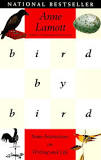
bird-by-birdThe first I read was Anne Lamott’s Bird by Bird: Some Instructions on Writing and Life. I’ve had this book for awhile and read bits of it here and there, but when I decided to get serious about writing again, I got it out and read straight through. On plot: “Plot grows out of character. If you focus on who the people in your story are, if you sit and write about two people you know and are getting to know better day by day, something is bound to happen.” This resonates with me, not only as a writer, but also as a reader. I have found myself bored in the middle of book, not because of the plot or the story idea, but because I could not care about the characters. Character is king.

Then I finally read Stephen King’s On Writing: A Memoir of the Craft. Another one that I started once upon a time, but never finished. Sentences and paragraphs to quote abound but two of my top ones: “Amateurs sit and wait for inspiration, the rest of us just get up and go to work.” And, “In many cases when a reader puts a story aside because it ‘got boring’, the boredom arose because the writer grew enchanted with his powers of description and lost sight of his priority, which is to keep the ball rolling.” I struggle with adding description to my stories, preferring to “keep the ball rolling”, so this one amuses me.

art-of-war-for-writersNext was a book by James Scott Bell, The Art of War for Writers: Fiction Writing Strategies, Tactics, and Exercises. (Something else I’ve noticed about many of these writing books is their rather wordy titles. Authors trying to get their word-count in? Or, perhaps, writers are just naturally loquacious?) Bell has several books out on writing, and I feel I need to be collecting these.

I reviewed Betsy Lerner’s The Forest for the Trees: An Editor’s Advice to Writers in a previous forest for the treespost. (September) This book is unique as Lerner has been an agent, an editor, and a writer, so she is able to share her perspective from all three of these roles. I shared several quotes from this book already, but here’s another one: “For the writer who truly loves language, a trip to the copy editor is like a week at a spa. You come out looking younger, trimmer, and standing straighter.” Not sure we all feel that way, but I get the point.

My most recent read was by Bret Lott, Letters and Life: On Being a Writer, on Being a Christian. More quotes on the importance of characters rather than lengthy descriptions. “I saw, suddenly and fully, that a story was about the people involved. I bret-lottsaw that embellishment brought to the table an unwanted intruder: the author.”

And: “What I saw in his (Raymond Carver) work was that in my own, I had to be the last one heard from in this pile of words I was arranging, and that humility was the most valuable tool I could have, because the people about whom I wanted to write mattered so very much more than the paltry desires of the writer himself. They mattered so very much more than me. My job was to get out of the way.”

I have several more writing books on my tbr list and just picked up a new one from the library. How about you? Read any good books on writing lately? Which ones have inspired you or just made you laugh? Which would you recommend?


Sixteen of My Favorite Books from 2016

I probably should have worked on this post last week, but better late than never. I did take a few days away from writing during the holidays, but I spent the last few days of 2016 trying to start my next book which I suppose I should call “The Continuing Saga of Solomon”. Well, it’s just a working title.

So, I’ve been reading blog posts on everyone’s favorite books of 2016, so thought I would go to goodreads and find out what were my favorite books this past year. All of the books I’m going to mention were either four or five star for me but that does not mean there weren’t a few others that hit that mark. Trying to keep it down to sixteen was a challenge. Sometimes, though, I think I’m too generous with my stars (especially if I’m struggling with my own writing and feel that any writer who actually finished writing a book should receive at least two stars for that accomplishment alone), but, regardless, I will only mention books today that were either my top favorites or were by a new author for me.

For my top fiction, one of the first books I read in 2016 was Kate Morton’s The Lake the-lake-houseHouse. I loved it and wonder why I still haven’t read more of her books. But I will.

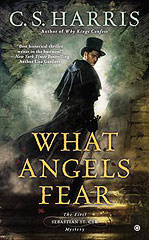
Looking over the fiction books I read, I noticed I read several books which are the first in a mystery series. This makes these books even more special as it means there are more books by these authors that can I look forward to in 2017. (And I actually have already read the second in a few of these series). These books (in no certain order): What Angels Fear by C.S. Harris; The Anatomist’s Wife by Anna Lee Huber; Raven Black by Ann Cleeves; The Merchant’s House by Kate Ellis; and The Lewis Man by Peter May. I also read two by Tana French (the second and third in her series). I don’t think you can go wrong with her. Looking forward to reading the next in her series soon.what-angels-fear-240h

the_anatomists_wife_book_cover_medium

raven-black

I’m doing a reread of Robin Hobb’s Farseer series. I read both Assassin’s Apprentice and Royal Assassin in 2016. She is an amazing writer and though her books are fantasy, I feel can learn a lot about writing historical fiction from her writings. She is great at both setting and characters.

Other favorites in fiction: The Marriage of elephant-whisperer Opposites by Alice Hoffman; The Architect’s Apprentice by Elif Shafak; Plainsong by Kent Haruf; and Beneath a Golden Veil by Melanie Dobson.

Not counting the two by Tana French, that’s twelve. Since the Robin Hobb books are rereads, maybe I shouldn’t count those, but didn’t want to leave her out.

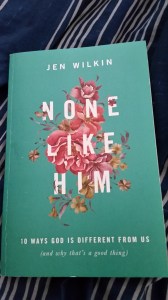
Obviously, I can easily mention more than sixteen, but I will round this out with my top four non-fiction: None Like Him by Jen Wilkin; An Editor’s Advice by Betty Lerner; The Elephant Whisperer by Lawrence Anthony; and A Woman of Contentment by Dee Brestin.

How about you? Any books that stood out for you in 2016? Have you set any reading forest for the treesgoals for 2017 yet?

woman-of-contentment
20160925_165321


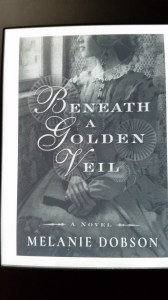
Beneath a Golden Veil by Melanie Dobson

20161207_114254In Sacramento in 1853, the gold rush is on and people are coming from all over the country to try their luck. Isabelle runs a hotel and seems to be successfully overcoming a secret in her past, in spite of the loss of her beloved aunt. When a man enters her hotel in search of his slave, Isabelle becomes involved in helping and hiding slaves in this state which has no clear laws on the issues of slavery.

From Virginia, comes Alden with a twelve year old slave, Isaac. Isabelle recognizes Alden from her past, but he does not recognize her. Soon, another man from Isabelle’s past arrives in Sacramento, and Isabelle has no doubt that this man means her harm. Isabelle becomes caught between wanting to help others who are trapped in slavery and needing to save herself. Her aunt taught her to trust in God, but can she trust Him to deliver her from this evil?

This is my first book by Melanie Dobson though I have read good things about her books and have had a couple of them on my TBR for awhile. Receiving this Kindle edition gave me my excuse to read Dobson’s newest book, and I was not disappointed. I don’t remember ever reading before of California’s stance during the time of slavery or hearing of their own underground railroad, so I found the history interesting and appreciated the details Dobson brings to her story. There is romance, suspense, and colorful characters–all helping to bring together an entertaining story. I gave this book five stars on Goodreads.

Though I received a free Kindle copy through Goodreads, the review is my own.

Dying in the Wool by Frances Brody/book review


20161106_075045As you all know, I enjoy historical mysteries, and thanks to goodreads and the historical mystery group I’m in, I have found another series to relish. Dying in the Wool is the first of eight mysteries set in England after WWI which introduce Kate Shackleton.

Kate’s husband went missing four years before during WWI, and though most presume him to be dead, Kate has not given up hope for his safe return. In the meantime, Kate is trying to establish herself as a photographer, and she has also solved several mysteries involving missing persons. When a good friend, who is soon to be married, asks her to look for her father who went missing several years before, (wanting him to be there at her wedding), Kate agrees and is soon involved in learning the secrets of a mill town in an otherwise quiet Yorkshire village.

I usually try to avoid comparisons with other books as they are often misleading and disappointing. I don’t like to be told a book or an author is like another and after reading it, discover it’s not in any shape, form, or fashion like the one it has been compared to. In fact, it can take away whatever enjoyment I might have had if my expectations had been different. However, I do believe readers of both Jacqueline Winspear and Charles Todd will find this series entertaining in a similar vein. Having only read the first book, I can’t say how well the series continues, but I hope to find out soon.

How about you? Reading any new mysteries? Or have any of you read anything else by Frances Brody?


Mortal Arts by Anna Lee Huber

mortal_arts_book_cover_mediumI greatly enjoy reading historical mysteries and having now read the second of the Lady Darby mysteries, I am excited to have found a new author to follow and read.

The Lady Darby mysteries are set in 1830’s Scotland and feature a young widow, Kiera, (Lady Darby) who has artistic talent and a cloud over her past. In this book, she is traveling to Edinburgh with her sister and her family when they make a stop at Dalmay House.

Kiera’s brother-in-law, Philip, has been asked by his aunt to join her family there because her daughter is engaged to be married to Michael, the owner and friend of Philip. His aunt does not approve  of the proposed marriage and desires Philip’s support. Kiera is happy to see Michael, a childhood friend of her own. His older brother, Will, served as an art tutor for Kiera when she was only 15. Since Will has been missing for over ten years,  Kiera has believed him to be dead. They are not long at Dalmay House, however, when she learns that Will is not only very much alive, but has been considered insane and dangerous. When a young woman who lives nearby goes missing, Will is the first to be suspected, and Kiera is determined to help her friend and to learn what is behind the insanity accusations.

Though this book can be read as a stand-alone, I do recommend starting with the first in the series: The Anatomist’s Wife. the_anatomists_wife_book_cover_mediumIn this book, you will learn more about Kiera’s background and be introduced to another character, Gage, whom Kiera assists in solving a murder, and also becomes attracted to. Of course, Gage appears in Mortal Arts as well and helps Kiera solve the mysteries surrounding Dalmay House.

What about you? What are some historical mysteries you have enjoyed and would recommend?


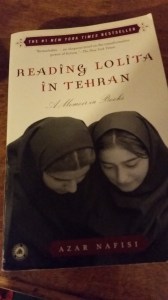
Reading Lolita in Tehran by Azar Nafisi


20161007_185518“A novel is not an allegory . . . It is the sensual experience of another world. If you don’t enter that world, hold your breath with the characters and become involved in their destiny, you won’t be able to empathize, and empathy is at the heart of the novel.” (p. 111)

From the subtitle: A Memoir in Books, this book would seem to be about someone’s life in books–and it is, but it is more. This is a book about a book club, about a country, a culture, about women, and about civil rights.

Azar Nafisi is a professor of literature and is passionate about teaching and sharing literature with her students. However, being a woman professor in Iran proves difficult when revolution begins in Iran with Islamic fundamentalists taking over the universities and “morality squads” are everywhere looking for anything that might be tainted by the West.

When Nafisi is eventually expelled for refusing to wear the veil on campus and in her classroom, she decides to invite seven young women to come to her home once a week to discuss literature. While recounting the story of the young women and the books they discuss, Nafisi also tells of Iran–its cultural and political upheavals and how these effect the lives of these women and their families.

The events in this book begins in the 70’s and goes through the 90’s. As a young person in the 70’s and 80’s, I had heard of some of these events as one hears the news about people far away. But I only vaguely knew where Iran is located and could not tell you the difference between that country and Iraq. So, for me, this was a history and a geography lesson, as well as a look into the lives of others who love literature.

“Banned Books Week” was recently celebrated? and the events in this book made real to me the idea of books being banned and one’s reading being carefully scrutinized. Sometimes with the “I read banned books” t-shirts, it seems we don’t take this possibility very seriously, but for many people it is very real and not ancient history. There are people in the world who are not free to read the books they might choose, so let’s never take for granted our opportunities to read. Read a book! For fun!

The Improbability of Love by Hannah Rothschild

The Improbability of Love by Hannah Mary Rothschild
The Improbability of Love
by Hannah Mary Rothschild

Patricia Gilmer‘s review

Sep 29, 2016  ·  edit
really liked it

bookshelves: library-book

Read from September 23 to 29, 2016


A many layered tale about a painting that a young chef, Annie, buys on a whim from a junk shop in London. Though she is working for two art dealers, she has no real interest in art, but is soon persuaded to try and find out the origins of the painting.
Meanwhile, a powerful art dealer, who built his family business as a German Jew who survived WWII, begins to desperately seek for a painting he had given a lover who unexpectedly died. Though his daughter doesn’t understand why this painting is so important to her father, she begins to search for the painting and begins to uncover the history of the painting, as well as that of her father.
Suspense, a bit of romance, an array of interesting characters, and the history of an 18th century French artist all add up to make an entertaining tale.

The Forest for the Trees: An Editor’s Advice to Writers–Betsy Lerner

forest for the trees

Writers, Agents, and Editors! Oh, my! Different animals that work together to bring forth stories, articles, and books.  As a writer, I know I need to understand what agents are looking for (as well as publishers) and how exactly editors can be helpful to my writing. It is easy when you are struggling to be noticed and published to see these animals as the enemy that must be overcome and appeased, but it is much better to look at them as those who are working in the same game that you are, and who are wanting to help you achieve excellence in writing.

In the July/August edition of Poets & Writers, I read an article by Betsy Lerner in which she discusses being a writer, an editor, and an agent (all titles she has held and can proudly claim). She discusses the three different occupations–their differences and yet how they work together.

Enjoying the article, I found her book, The Forest for the Trees at the library and brought it home. The chapter titles themselves were intriguing: “The Ambivalent Writer”, “The Self-Promoter”, and “The Neurotic”; to name a few.

Working as an editor for many years, Lerner has a great understanding of writers and their many neuroses and phobias. I found myself laughing at something in every chapter; and though she is probably using humor deliberately, I’m afraid she is also very serious.

Among my favorite quotes:

“Try to remember that the time before you publish is the only time you will ever work in complete freedom. After you’re published you will be forced to contend with the shockingly real voices of critics, agents, editors, and fans. You never get to be a virgin after the first time, and more to the point, you never again have the luxury of writing in total obscurity. But like the married person who bemoans the loss of freedom from her single days, the published author who longingly recalls her past obscurity is a little hard to sympathize with. Though you may suffer from loneliness after you’re married, it’s bad form to complain about it to your single friends.” (“The Ambivalent Writer”, p. 29).

“Some of the most gifted writers I’ve worked with were also the most self-sabotaging. Lack of discipline, desire for fame, and depression often thwart those whose talents appear most fertile, while those who struggle with every line persevere regardless.” (“The Natural”, p. 33).

“Whoever you are, whatever your bizarre behaviors, I say cultivate them; push the envelope. Becoming a writer never won anybody any popularity contests anyway. And most writers couldn’t win one if they tried.” (“The Neurotic”, p. 101).

“Like finding a tennis partner whose ability is a notch above your own, you will play better if your partner’s game challenges yours. All you really need during those long years when rejection may get the better of you is one friend with whom you can share your work, one fellow writer with whom you can have an honest exchange.” (“Rejection”, p. 169).

This is a book I know I need to read more than once–for enlightenment, wisdom, and encouragement. Not only does it help to give me a better understanding of myself as a writer (and my fellow writers), but even more it gives me insight on those creatures known as editors, publishers, and agents.


Those Dual Story-Lines

Midnight RoseI recently finished reading Lucinda Riley’s The Midnight Rose, one of those dual timelines or two intersecting timelines, or (what I prefer) a dual story-line.

https://www.goodreads.com/review/show/879379687)

This got me to thinking about how many such books I have read lately and why these dual story-lines have become so popular, and can they really be considered historical fiction in the truest sense? And how different are these from the traditional plot/subplot?

For those of you who may be wondering what in the world is a dual story-line–it is two stories told in the same book or a story within a story. The stories usually take place in the same setting but with quite a few years (approximately a hundred seems rather popular) separating the two.

The Lake House by Kate Morton was one of the first books I read this year and I just loved it. This one moved back and forth between an unsolved mystery in Cornwall in the early 1900’s and then to a woman who was visiting her grandfather (in Cornwall) in 2003. This woman stumbled upon an abandoned house which had obviously been a rather magnificent house at one time, and decided to use her journalistic skills to solve the mystery of what had happened there almost a hundred years before. https://www.goodreads.com/review/show/1518062106?book_show_action=false

Then there was The Bookman’s Tale by Charlie Lovett. An antique bookseller from North Carolina moves to England and ends up in a familiar quest to prove Shakespeare’s authorship. This book’s dual timeline goes from Hay-on-Wye in 1995 to the time of Shakespeare and is complete with both book and art forgers. Another four star for me.

Two of my favorite authors who write the dual timeline quite well are Susan Meissner and Susanna Kearsley. My most recent reads from these two are: A Fall of Marigolds, (New York in Sept. 1911 and Sept. 2011) and A Desperate Fortune (London and Paris in 1732 and present day).

FallMarigolds_cover-184x300

These type of books are often listed as historical fiction, but I consider true historical fiction a work that is based on actual events and people. Both The Midnight Rose and The Lake House are totally fictional concerning their characters and events. I don’t enjoy them any less for that, and, of course, they are historical in the way they portray the ways people lived, the clothes they wore, the way they talked, used transportation, etc.

What do you think? What makes a book “historical fiction”? And, do you enjoy dual time-lines? Read any good ones lately?