Dying in the Wool by Frances Brody/book review


20161106_075045As you all know, I enjoy historical mysteries, and thanks to goodreads and the historical mystery group I’m in, I have found another series to relish. Dying in the Wool is the first of eight mysteries set in England after WWI which introduce Kate Shackleton.

Kate’s husband went missing four years before during WWI, and though most presume him to be dead, Kate has not given up hope for his safe return. In the meantime, Kate is trying to establish herself as a photographer, and she has also solved several mysteries involving missing persons. When a good friend, who is soon to be married, asks her to look for her father who went missing several years before, (wanting him to be there at her wedding), Kate agrees and is soon involved in learning the secrets of a mill town in an otherwise quiet Yorkshire village.

I usually try to avoid comparisons with other books as they are often misleading and disappointing. I don’t like to be told a book or an author is like another and after reading it, discover it’s not in any shape, form, or fashion like the one it has been compared to. In fact, it can take away whatever enjoyment I might have had if my expectations had been different. However, I do believe readers of both Jacqueline Winspear and Charles Todd will find this series entertaining in a similar vein. Having only read the first book, I can’t say how well the series continues, but I hope to find out soon.

How about you? Reading any new mysteries? Or have any of you read anything else by Frances Brody?


Mortal Arts by Anna Lee Huber

mortal_arts_book_cover_mediumI greatly enjoy reading historical mysteries and having now read the second of the Lady Darby mysteries, I am excited to have found a new author to follow and read.

The Lady Darby mysteries are set in 1830’s Scotland and feature a young widow, Kiera, (Lady Darby) who has artistic talent and a cloud over her past. In this book, she is traveling to Edinburgh with her sister and her family when they make a stop at Dalmay House.

Kiera’s brother-in-law, Philip, has been asked by his aunt to join her family there because her daughter is engaged to be married to Michael, the owner and friend of Philip. His aunt does not approve  of the proposed marriage and desires Philip’s support. Kiera is happy to see Michael, a childhood friend of her own. His older brother, Will, served as an art tutor for Kiera when she was only 15. Since Will has been missing for over ten years,  Kiera has believed him to be dead. They are not long at Dalmay House, however, when she learns that Will is not only very much alive, but has been considered insane and dangerous. When a young woman who lives nearby goes missing, Will is the first to be suspected, and Kiera is determined to help her friend and to learn what is behind the insanity accusations.

Though this book can be read as a stand-alone, I do recommend starting with the first in the series: The Anatomist’s Wife. the_anatomists_wife_book_cover_mediumIn this book, you will learn more about Kiera’s background and be introduced to another character, Gage, whom Kiera assists in solving a murder, and also becomes attracted to. Of course, Gage appears in Mortal Arts as well and helps Kiera solve the mysteries surrounding Dalmay House.

What about you? What are some historical mysteries you have enjoyed and would recommend?


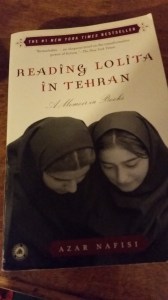
Reading Lolita in Tehran by Azar Nafisi


20161007_185518“A novel is not an allegory . . . It is the sensual experience of another world. If you don’t enter that world, hold your breath with the characters and become involved in their destiny, you won’t be able to empathize, and empathy is at the heart of the novel.” (p. 111)

From the subtitle: A Memoir in Books, this book would seem to be about someone’s life in books–and it is, but it is more. This is a book about a book club, about a country, a culture, about women, and about civil rights.

Azar Nafisi is a professor of literature and is passionate about teaching and sharing literature with her students. However, being a woman professor in Iran proves difficult when revolution begins in Iran with Islamic fundamentalists taking over the universities and “morality squads” are everywhere looking for anything that might be tainted by the West.

When Nafisi is eventually expelled for refusing to wear the veil on campus and in her classroom, she decides to invite seven young women to come to her home once a week to discuss literature. While recounting the story of the young women and the books they discuss, Nafisi also tells of Iran–its cultural and political upheavals and how these effect the lives of these women and their families.

The events in this book begins in the 70’s and goes through the 90’s. As a young person in the 70’s and 80’s, I had heard of some of these events as one hears the news about people far away. But I only vaguely knew where Iran is located and could not tell you the difference between that country and Iraq. So, for me, this was a history and a geography lesson, as well as a look into the lives of others who love literature.

“Banned Books Week” was recently celebrated? and the events in this book made real to me the idea of books being banned and one’s reading being carefully scrutinized. Sometimes with the “I read banned books” t-shirts, it seems we don’t take this possibility very seriously, but for many people it is very real and not ancient history. There are people in the world who are not free to read the books they might choose, so let’s never take for granted our opportunities to read. Read a book! For fun!

The Improbability of Love by Hannah Rothschild

The Improbability of Love by Hannah Mary Rothschild
The Improbability of Love
by Hannah Mary Rothschild

Patricia Gilmer‘s review

Sep 29, 2016  ·  edit
really liked it

bookshelves: library-book

Read from September 23 to 29, 2016


A many layered tale about a painting that a young chef, Annie, buys on a whim from a junk shop in London. Though she is working for two art dealers, she has no real interest in art, but is soon persuaded to try and find out the origins of the painting.
Meanwhile, a powerful art dealer, who built his family business as a German Jew who survived WWII, begins to desperately seek for a painting he had given a lover who unexpectedly died. Though his daughter doesn’t understand why this painting is so important to her father, she begins to search for the painting and begins to uncover the history of the painting, as well as that of her father.
Suspense, a bit of romance, an array of interesting characters, and the history of an 18th century French artist all add up to make an entertaining tale.

The Forest for the Trees: An Editor’s Advice to Writers–Betsy Lerner

forest for the trees

Writers, Agents, and Editors! Oh, my! Different animals that work together to bring forth stories, articles, and books.  As a writer, I know I need to understand what agents are looking for (as well as publishers) and how exactly editors can be helpful to my writing. It is easy when you are struggling to be noticed and published to see these animals as the enemy that must be overcome and appeased, but it is much better to look at them as those who are working in the same game that you are, and who are wanting to help you achieve excellence in writing.

In the July/August edition of Poets & Writers, I read an article by Betsy Lerner in which she discusses being a writer, an editor, and an agent (all titles she has held and can proudly claim). She discusses the three different occupations–their differences and yet how they work together.

Enjoying the article, I found her book, The Forest for the Trees at the library and brought it home. The chapter titles themselves were intriguing: “The Ambivalent Writer”, “The Self-Promoter”, and “The Neurotic”; to name a few.

Working as an editor for many years, Lerner has a great understanding of writers and their many neuroses and phobias. I found myself laughing at something in every chapter; and though she is probably using humor deliberately, I’m afraid she is also very serious.

Among my favorite quotes:

“Try to remember that the time before you publish is the only time you will ever work in complete freedom. After you’re published you will be forced to contend with the shockingly real voices of critics, agents, editors, and fans. You never get to be a virgin after the first time, and more to the point, you never again have the luxury of writing in total obscurity. But like the married person who bemoans the loss of freedom from her single days, the published author who longingly recalls her past obscurity is a little hard to sympathize with. Though you may suffer from loneliness after you’re married, it’s bad form to complain about it to your single friends.” (“The Ambivalent Writer”, p. 29).

“Some of the most gifted writers I’ve worked with were also the most self-sabotaging. Lack of discipline, desire for fame, and depression often thwart those whose talents appear most fertile, while those who struggle with every line persevere regardless.” (“The Natural”, p. 33).

“Whoever you are, whatever your bizarre behaviors, I say cultivate them; push the envelope. Becoming a writer never won anybody any popularity contests anyway. And most writers couldn’t win one if they tried.” (“The Neurotic”, p. 101).

“Like finding a tennis partner whose ability is a notch above your own, you will play better if your partner’s game challenges yours. All you really need during those long years when rejection may get the better of you is one friend with whom you can share your work, one fellow writer with whom you can have an honest exchange.” (“Rejection”, p. 169).

This is a book I know I need to read more than once–for enlightenment, wisdom, and encouragement. Not only does it help to give me a better understanding of myself as a writer (and my fellow writers), but even more it gives me insight on those creatures known as editors, publishers, and agents.


Those Dual Story-Lines

Midnight RoseI recently finished reading Lucinda Riley’s The Midnight Rose, one of those dual timelines or two intersecting timelines, or (what I prefer) a dual story-line.

https://www.goodreads.com/review/show/879379687)

This got me to thinking about how many such books I have read lately and why these dual story-lines have become so popular, and can they really be considered historical fiction in the truest sense? And how different are these from the traditional plot/subplot?

For those of you who may be wondering what in the world is a dual story-line–it is two stories told in the same book or a story within a story. The stories usually take place in the same setting but with quite a few years (approximately a hundred seems rather popular) separating the two.

The Lake House by Kate Morton was one of the first books I read this year and I just loved it. This one moved back and forth between an unsolved mystery in Cornwall in the early 1900’s and then to a woman who was visiting her grandfather (in Cornwall) in 2003. This woman stumbled upon an abandoned house which had obviously been a rather magnificent house at one time, and decided to use her journalistic skills to solve the mystery of what had happened there almost a hundred years before. https://www.goodreads.com/review/show/1518062106?book_show_action=false

Then there was The Bookman’s Tale by Charlie Lovett. An antique bookseller from North Carolina moves to England and ends up in a familiar quest to prove Shakespeare’s authorship. This book’s dual timeline goes from Hay-on-Wye in 1995 to the time of Shakespeare and is complete with both book and art forgers. Another four star for me.

Two of my favorite authors who write the dual timeline quite well are Susan Meissner and Susanna Kearsley. My most recent reads from these two are: A Fall of Marigolds, (New York in Sept. 1911 and Sept. 2011) and A Desperate Fortune (London and Paris in 1732 and present day).

FallMarigolds_cover-184x300

These type of books are often listed as historical fiction, but I consider true historical fiction a work that is based on actual events and people. Both The Midnight Rose and The Lake House are totally fictional concerning their characters and events. I don’t enjoy them any less for that, and, of course, they are historical in the way they portray the ways people lived, the clothes they wore, the way they talked, used transportation, etc.

What do you think? What makes a book “historical fiction”? And, do you enjoy dual time-lines? Read any good ones lately?


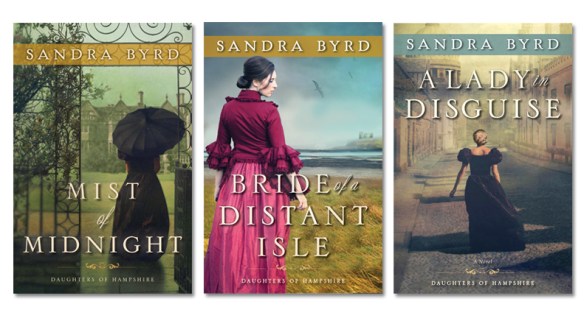
Mist of Midnight by Sandra Byrd

Mistmidnight

Mist of Midnight is the first in the series, Daughters of Hampshire, by Sandra Byrd. An historical romance, this book takes place in England in 1858. Rebecca Ravenshaw, daughter of missionaries to India, has returned home after the tragic death of her parents in the Indian Mutiny. Unfortunately, she has no time to grieve for her parents and to adjust to life in England as upon her arrival, she learns that someone else has been in her home claiming to be Rebecca. Having to prove that she is, indeed, Rebecca Ravenshaw and the true heir to Headbourne House is her first order of business. Dealing with identity theft in any century is both frustrating and scary. Besides clearing her name, she must learn who the imposter was, how she knew about her family, and what happened to her. Did she really commit suicide or was the cause of her death more sinister?

I enjoyed the suspense in this novel and the historic detail. I especially found interesting learning a little bit about missionaries in this time period. Leaving your home is never easy, but especially in a time when travel and communication were much slower and less reliable than we are accustomed to in the 21st century.

Though the first in a series, the book is a stand-alone. The second book, Bride of a Distant Isle, released earlier this year also takes place in Victorian England, but is a different story with different characters. The third book, A Lady in Disguise, is scheduled for release in 2017.

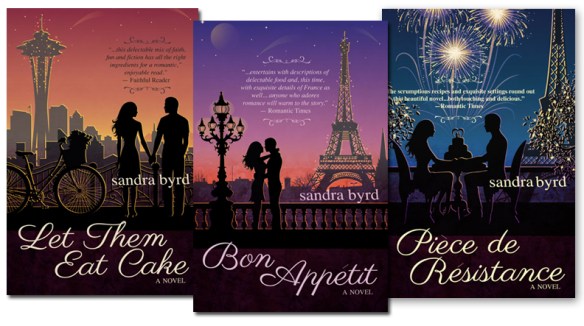
This is not the first book I have read by Byrd. She is a writer of different types of romance, and I have read her first two books in the French Twist series, which are contemporary romance. These books are fun and lighthearted romances, following the character of Lexi, who is learning to be a pastry chef. In the first book she is in Seattle and in the second book, she is able to follow her dream to study and work in France. French-Twist,

Sandra Byrd writes as a Christian writer, and for romance readers that means, you can expect some good, ‘clean’ fun. Anyone else read any books by Byrd? If you read romance, do you enjoy reading historicals or do you prefer stories set in more contemporary settings?


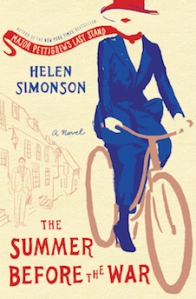
The Summer Before the War by Helen Simonson

Summer_10_14_redHat_BrokenLine.inddLately I have been reading several books of historical fiction from the era of WWI. I am currently listening to a Maisie Dobbs audio bookhave started a Bess Crawford book on Overdrive, and last night I finished up The Summer Before the War.

The Summer Before the War was a book that I felt improved and was more entertaining and engrossing as it went along. (So much better than one that starts out promising and then the ending disappoints.) It takes place in East Sussex in 1914, in the small village of Rye. The first major event of their summer is the arrival of Beatrice Nash who has come to apply for the position of Latin teacher. Many in the village do not approve of a young woman for this position; especially one that upon arrival turns out to be more attractive than expected.

Beatrice is championed by a prominent woman of the village, Agatha Kent, whose husband works for the Foreign Office. Agatha has two nephews, Hugh, a medical student, and Daniel, a promising poet. Hugh and Daniel have differing personalities but are close and are both adored by Agatha.

When Germany invades Belgium, Rye is quick to welcome refugees and, in spite of those who still believe war won’t come to England, the village prepares to support their country even if it means sending their young men off to war. Soon everyone in the village–the young the old, and all those in between–become caught up in a patriotic fervor. Of course, their young men do go off to war, and what happens to them and the ones who are left to wait for them makes up the rest of the story.

Part of what interests me in reading historical fiction is found at the end in the author’s notes or acknowledgements. Simonson tells of the books she read to immerse herself in this period, as well as the websites and libraries. I love that she was able to read newspapers of the time (and took the trouble to do so).

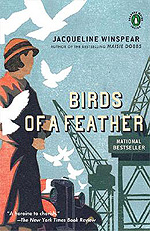
birds-of-a-feather-150For those of you unfamiliar with Maisie Dobbs or Bess Crawford, they are both heroines of their own historical mystery series. The Maisie Dobbs books are written by Jacqueline Winspear and Birds of a Feather is the second in the series. I’m always looking for audio books with good narrators and a story that I can follow as I drive, walk, or cook. So far, this book has delivered with the excellent narration done by Kim Hicks.

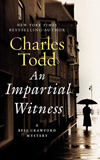
The Bess Crawford books are written by the mother/son team, Charles Todd. I have just started reading the second in that series, An Impartial Witness. A group I belong to on goodreads–Historical Mystery Lovers–will be reading a selection of your choice from Charles Todd during July, so I have a bit of a head start. If you’re on goodreads, check out the group and come read with us.cover-impartial-witness

Reading any WWI fiction or nonfiction? Let me know what you’ve read and can recommend.


The Blood of Caesar by Albert A. Bell, Jr.

albert bellBlood of CaesarSmPtThe Blood of Caesar, A Second Case from the Notebooks of Pliny the Younger is the second book in a series of historical mysteries taking place in the Roman Empire in the first century. This particular book is set in the summer of 83 A.D.

The author, Albert Bell has been a history professor, holds a PhD from UNC-Chapel Hill, as well as an MA from Duke, and MDiv from Southeastern Baptist Theological  Seminary. He has been writing since his high school years, first publishing in 1972.

Bell uses historical figures and events to set up his mysteries. The real Pliny the Younger wrote hundreds of letters which are still considered valuable for the time period. Pliny was also an eyewitness to the eruption of Vesuvius in 79 B.C., and Pliny the Elder lost his life there.

In this second book, Pliny is first asked by the emperor Domitian to trace references to an unknown heir of Augustus Caesar from a part of a letter. He is then asked by a friend to look after a young woman whom the friend claims is a relative, but he will give Pliny no details of her family or explain why her life is in danger. It is not long before Pliny’s own life is in danger as he attempts to unravel the two mysteries without offending the emperor.

I enjoy reading historical fiction from all time periods, and reading mysteries in these different eras and locations adds a certain spice to the reading. Working on my own book of historical fiction, I’ve been reading with an eye as to how authors are able to add both historical detail and locale descriptions without overwhelming, or just flat out boring, the reader. Bell does a good job of describing the city of Rome, as well as the surrounding countryside. He has created engaging characters that help a reader understand the time period in which they live. Pliny has a good friend, Tacitus, (another character from history) who provides some humor and serves as a foil to Pliny’s somewhat staid behavior.

I can also recommend the first book in the series, All Roads Lead to Murder.  roads_murder(1) There are three more books in the series, and I’m looking forward to finding them and reading them as well. For my local friends, these first two books are available at both Union County Public Library and Charlotte Mecklenburg Library.


The Scribe’s Daughter by Stephanie Churchill

scribe's daughterThe Scribe’s Daughter is listed as a fantasy, but not the type of fairies and dragons. It reads like historical fiction, but the lands and their people are the creation of the author.

This book tells the story of 17-year old Kassia, whose mother has died and whose father has been missing for some 3 years. Kassia and her older sister are doing what they can to survive and to keep the terrifying landlord from the door, so when a stranger appears and asks Kassia to take on some metalwork, she agrees though she knows this is beyond her qualifications.

Taking on this job leads to danger and Kassia finds herself involved in political intrigue and ends up fleeing for her life. She meets new friends who help her to safety and to discovering why she is of interest to anyone.

It took me a bit to get into the story, but I enjoyed getting to know the characters and learning of their various backgrounds. The book ends with a satisfactory conclusion yet gives hints of more to come; most specifically, learning what became of Kassia’s sister. I’m hoping that there is a sequel in the works.
https://www.goodreads.com/review/list/5518302-patricia”>View all my reviews</a>