
“Some of these things are true and some of them lies. But they are all good stories.” Hilary Mantel in Wolf Hall

Being Elisabeth Elliot: The Authorized Biography: Later Years Ellen Vaughn. Though I’ve known that Elisabeth Elliot was the wife of Jim Elliot (a missionary killed in Ecuador in 1956), that’s pretty much all I knew about her. A shame since she was living and writing during my younger years. So, this book relates the second part of Elliot’s life. I did not read the first book, so that’s not necessary but I would like to go back and read it. Though Elliot went through many heartaches and faced discouragement and despair (including often not pleasing the “Christian crowd”), her faith remained strong and she constantly looked to the Lord for answers and direction. Unfortunately, she did not always make the best decisions and there was one that would cause her much grief. A good example of the impact Elisabeth had on others was given by Cornell Capa, a non-believing photographer who spent some time with Elisabeth and other “missionary widows.” Cornell “was exposed to an evangelical subculture he had never known existed. He developed a great curiosity about the work of these people so compelled to carry a message of faith and redemption that they were willing to die for it. Elisabeth, who had grown up in environments where depictions of life had to be airbrushed of any ‘wrong messages’ in order to be presented in a religiously attractive way, loved Cornell’s bluntness, good humor, and uncompromising eye.”
In spite of his own unbelief, Cornell saw that Elisabeth’s faith was deep. “Then there’s you—and a million others—who are not satisfied with the trimmings. You are in the core. You know that He is there because you know He is there. You know that it seems God was NOT THERE when you wanted Him, yet you say you know He was there.” 5 stars

Sovereign C.J. Sansom (Matthew Shardlake #3). The third in this historical mystery series takes place in the fall of 1541. Henry VIII has set out on a Progress to the North to force his rebellious subjects in York to submit to him, turning it into a public spectacle. Lawyer Matthew Shardlake and his assistant Jack Barak have been sent ahead as part of the legal process of submitting petitions to the king. Shardlake has also been instructed by Archbishop Cranmer to look after a prisoner—one destined for the tower. He must make sure the prisoner stays alive to face the rack. Shardlake is unhappy with this task but has little choice. Shardlake soon finds himself investigating a murder and learning more than he wants to know about a conspiracy. Will he and Jack make it home alive? This is an excellent series in terms of historical events and people, constant suspense, and engaging characters. 5 stars. (Note: Sadly, I just learned (4/29) that Sansom has died. This is two days before the Shardlake series is to premiere on Hulu).
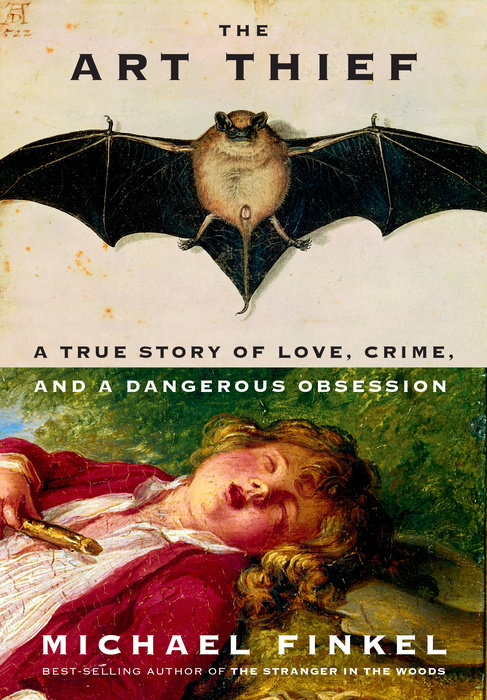
The Art Thief: A True Story of Love, Crime, and a Dangerous Obsession Michael Finkel. The strange true story of an unusual art thief. Most art thieves focus on a particular object and do it for the money. Stephane Breitwieser saw an object he wanted and generally just walked off with it. Living with his girlfriend in his mother’s attic, his room was soon filled with priceless objects from museums and cathedrals all over Europe. In just eight years, Breitwieser made off with over two hundred objects. Was he a kleptomaniac? A true art lover? Or just mad? And what about his girlfriend? Did she never feel a twinge of conscience or was it all just a game? 4 stars

City Under One Roof Iris Yamashita (Cara Kennedy #1). When a severed hand and foot washes up on the beach near the small town of Point Mettier, Alaska, Cara Kennedy, a detective from Anchorage, shows up to investigate, but also with her own agenda. Point Mettier is quite isolated and when a blizzard closes the tunnel that leads into the city, everyone (including Kennedy) is stuck there indefinitely. All 205 residents of the town live in the same building and it doesn’t take long for Cara to meet several of this strange and motley crew. As if that wasn’t enough, a gang from a nearby village shows up armed and ready for trouble. A great start to a new series. I look forward to reading the second which came out recently. 4 stars

The Winter Sea Susanna Kearsley (Scottish Series #1). Carrie McClelland writes historical fiction and during her research in Scotland, a story becomes alive to her in ways she can’t explain. Does she have ancestral memory? Is there such a thing? In the spring of 1708, Jacobites are making plans to bring James Stewart out of exile in France to reclaim his crown in Scotland. As characters come and go at Slains Castle, plots are formed, romance blooms, and betrayal is uncovered. Kearsley is one of my favorite writers of historical fiction. The third book is a prequel of this one, and I hope to get to it soon. 4 stars

The Prisoner of Heaven (The Cemetery of Forgotten Books #3) Carlos Ruiz Zafon. Translated from the Spanish, this series began with Shadow of the Wind one of the best-selling books in Spain and for good reason. I have heard you don’t need to read these books in order. Well, of course, you don’t need to but you will certainly miss out on a lot of backstory if you start with this one. We pick up Daniel and Fermin’s story from Shadow of the Wind, and David Martin from book two is also featured. Fermin is about to be wed but he has a problem. He has been using a false identity for years. How can he legally marry without putting himself in danger? Daniel is unaware of Fermin’s dilema until a sinister-looking stranger shows up at the Sempere bookshop looking for Fermin. When Daniel tells Fermin about him, he eventually learns the whole story of Fermin’s past. It’s not a pleasant story and I found it difficult to get through some of that, but overall enjoyed learning more of Daniel and Fermin. 4 stars

Wolf Hall Hilary Mantel (Cromwell #1). Winner of the Booker Prize in 2009 and the Walter Scott Prize in 2010 (and nominated for several others), Mantel writes of England in the 1520’s. Henry VIII desperately wants to annul his marriage of twenty years and marry Anne Boleyn; even (maybe especially) if it means taking control of the church and making himself the head of the church in England. Thomas Cromwell is willing to do whatever the king wants and has the charm, persuasion, and amorality to do it. Mantel’s writing can take some getting used to, but worth the trouble as you get into the rhythm. I read this a few years and read it again to participate in a year-long read-along (#wolfcrawl) with all 3 books in the Cromwell Trilogy. 4 stars

 pmgilmer