
I’ve read several times lately that the blog is dead. I do listen to more podcasts than I read blogs, but there have been several blogs I enjoyed following and the writers have quit for different reasons. Most of the blogs I follow are about reading; book reviews especially. I suspect that one reason there are not as many of these can be pointed to the rise of the YouTube channels where people review, recommend, and highlight books. Personally, I don’t have the patience to watch these, though I have tried several. I can listen to podcasts while driving or doing dishes, etc. As I much prefer to read the reviews and thoughts of others concerning what they’re reading, I’m going to post my own thoughts monthly rather than just once or twice a year. No spoilers here. My reviews are brief and do not include major plot details or synopses. So, without further ado, my reviews for August.
I completed fourteen books in August, but I will only share reviews of my top six. For a more complete picture, you can always check out my goodreads profile.

Bloomsbury Girls by Natlie Jenner. Historical fiction taking place in London in 1950. Bloomsbury Books has been in business for a hundred years and not much has changed in that time. It is run and guided by men, but changes are coming with several key women leading the charge. When the manager becomes ill, they get their chance to prove their worth and work hard to do so. Some well-known literary figures of their time (including Daphne Du Maurier and Ellen Doubleday) appear and help the women in different ways to prove that women have a place in the publishing and writing industries. I listened to the audio narrated by Juliet Stevenson who did a fabulous job. 4 stars

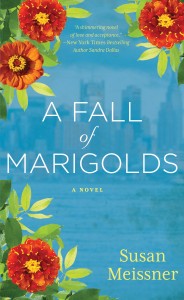
I really loved this book and looked forward to watching the adaptation on Netflix. I couldn’t get past the first thirty minutes. Curious if anyone who hasn’t read the book would like it. Helen, a kindergarten teacher, age 32, has been divorced for a year and she wants to do something different. Something to change her life. So, she signs up for a wilderness course even though she has not even gone camping before. When her younger brother’s best friend practically hijacks her for a ride, she is less than pleased to learn he is going on the same course. Even though she wants them to act like they don’t know each other, the attraction is undeniably there and to Helen’s further disgruntlement, Jake is everyone’s favorite and he manages to save her life more than once. 5 stars

Martin Luther: The Man Who Rediscovered God and Changed the World by Eric Metaxas. I’ve read a couple of books about Luther. Probably my first was in college for a world history class. I wish I could remember the discussions we had and my professor’s comments but far too long ago. Luther was a complex and controversial man, but no one can deny his place in the church and in the world. Metaxas covers Luther’s life and comments on what has become legend and how much truth there may be in some of the stories. Hearing some sermons about Jesus and his dealings with the Pharisees at the same time I was reading about Luther and his conflicts with the Pope and Catholic church made me see quite a few similarities. Though I don’t agree with everything Luther said (and he said and wrote a lot!), his story is fascinating and we all owe a great debt to him.

Olive Again by Elizabeth Strout. Following the Pulitzer prize winning, Olive Kitteridge, we meet Olive again in later life. Though Olive has mellowed somewhat, she is still her prickly, yet honest self, as we meet different people who cross her life in a small town in Maine. This is a novel which reads as a group of short stories that revolve around one woman. Though some people find Olive unbearable, there are others who admit they always kind of liked her. Me, too. 4 stars

Her Lost Words by Stephanie Marie Thornton. Historical fiction. A tale of two women, a mother and daughter. Wollstonecraft escapes from a abusive home and becomes a champion of women’s rights in the late 1700’s. Her “A Vindication of the Rights of Woman” was published by a man who supported and encouraged her as a woman writer when many others wouldn’t. Refusing to marry because she believed marriage was just another form of bondage, she became involved with a man, bore his child, and was soon deserted. Her daughter, Mary Shelley, never knows her mother but longs to emulate her and follow her in her footsteps. She falls in love with the married Percy Shelley and follows him in spite of being shunned by family and society. Though she doesn’t believe she has the writing talent her mother had, she is challenged to write a story and begins to write what we know today as “Frankenstein”. I enjoyed reading about both of these two women as I knew very little about either. Thornton brings to life, not only the two women, but the times they lived in. 4 stars

A Necessary Evil by Abir Mukherjee (Sam Wyndham #2). India, 1920. British Captain Wyndham and his sergeant Banerjee (better known as Surrender-Not) are in a car with a Maharajah’s son when the prince is assassinated before their eyes. Even though they quickly track down the killer, Wyndham is not satisfied that the murder has been solved. He manages to convince his superiors to let him go the kingdom of Sambalpore to further investigate. Was it the work of a religious fanatic? Or what about the prince’s playboy brother who is now next in line to the throne? Even the wives of the Maharajah are not above suspicion. I enjoyed this second book as much as the first and look forward to continuing the series. 4 stars






 pmgilmer