“He taught me the difference between casual “birdwatching” and the more intense, focused “birding,” and urged me to go beyond identifying birds to noting their actions and behavior.” ― Jennifer Ackerman, The Genius of Birds
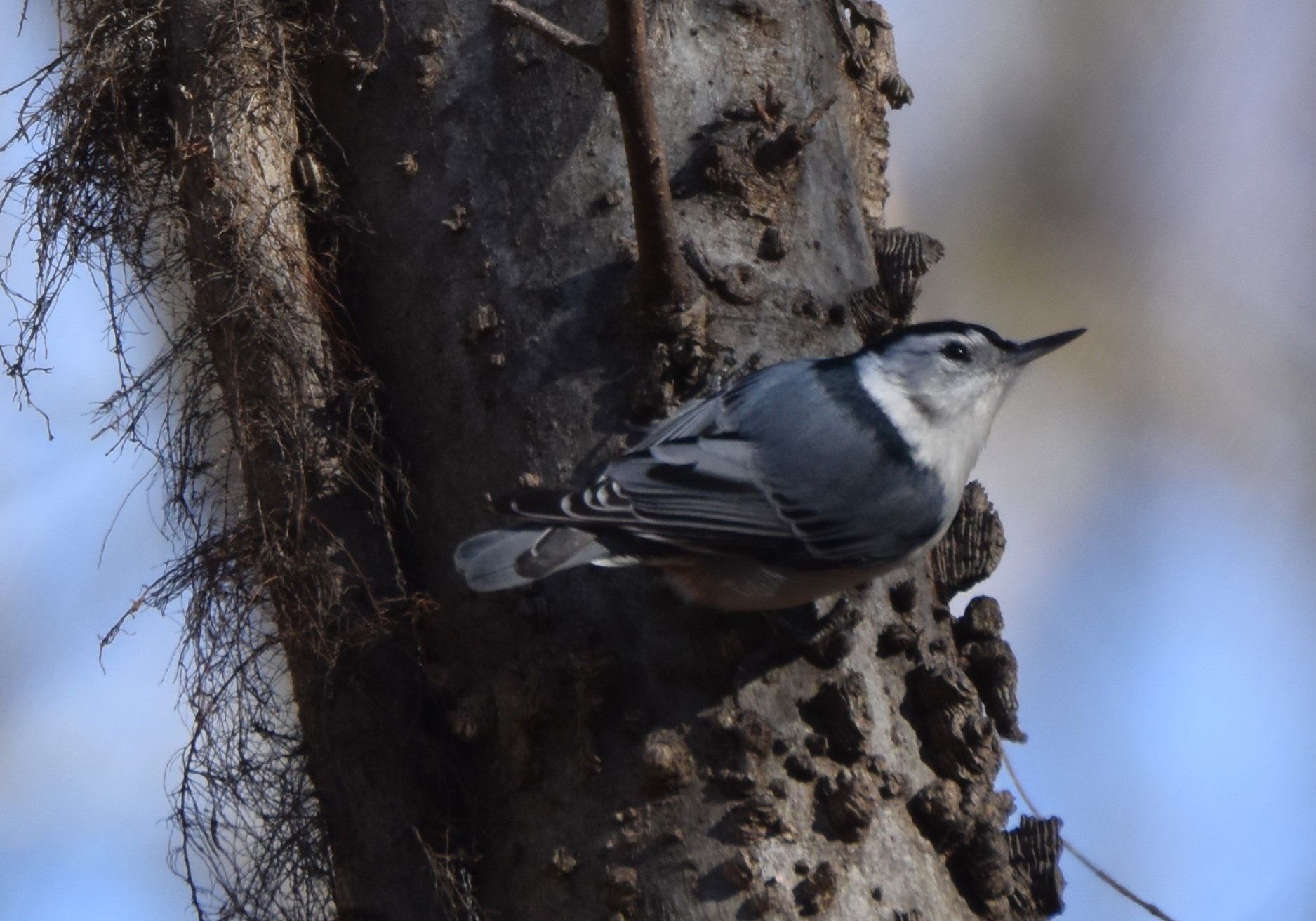
White-breasted Nuthatch
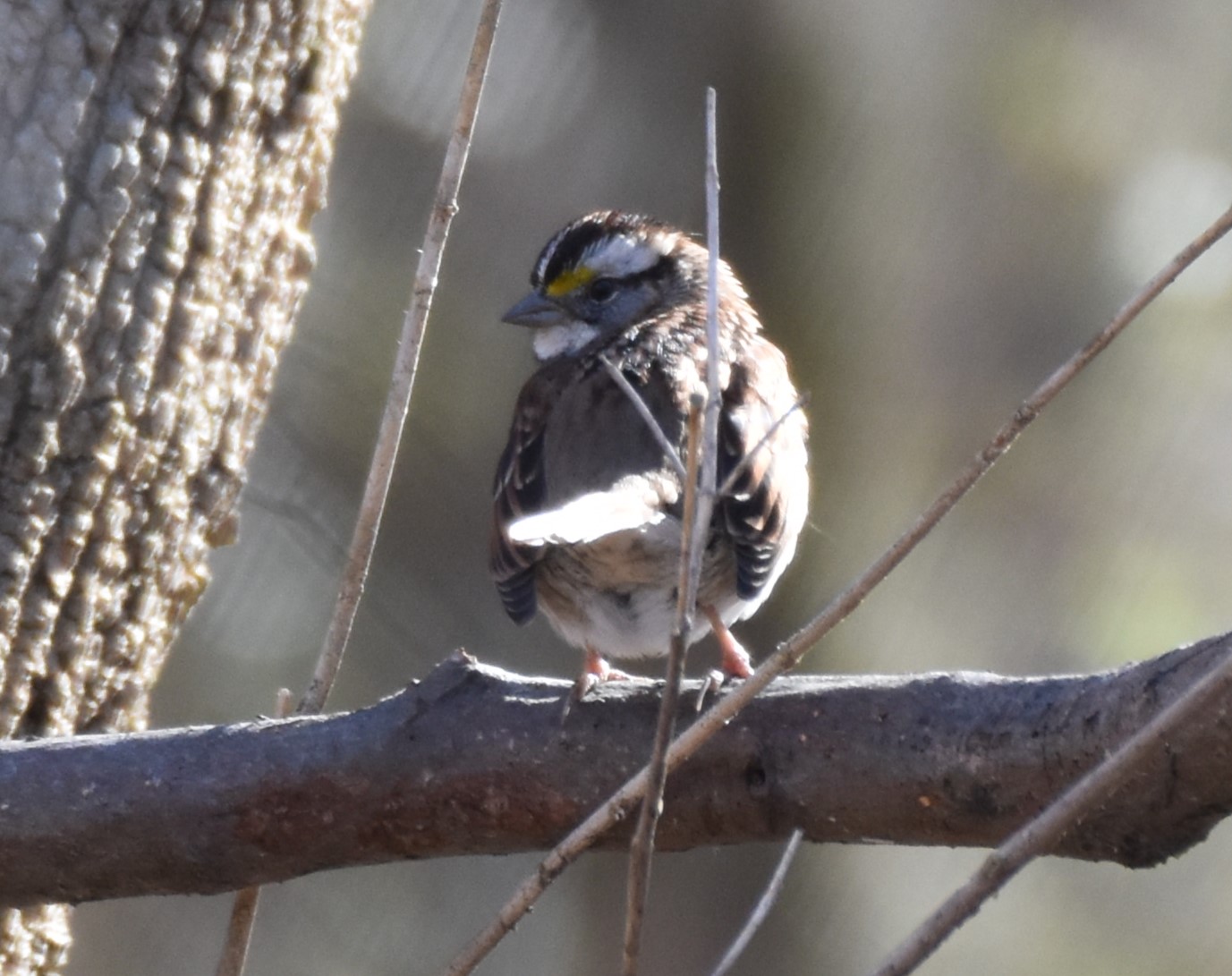
White-throated Sparrow
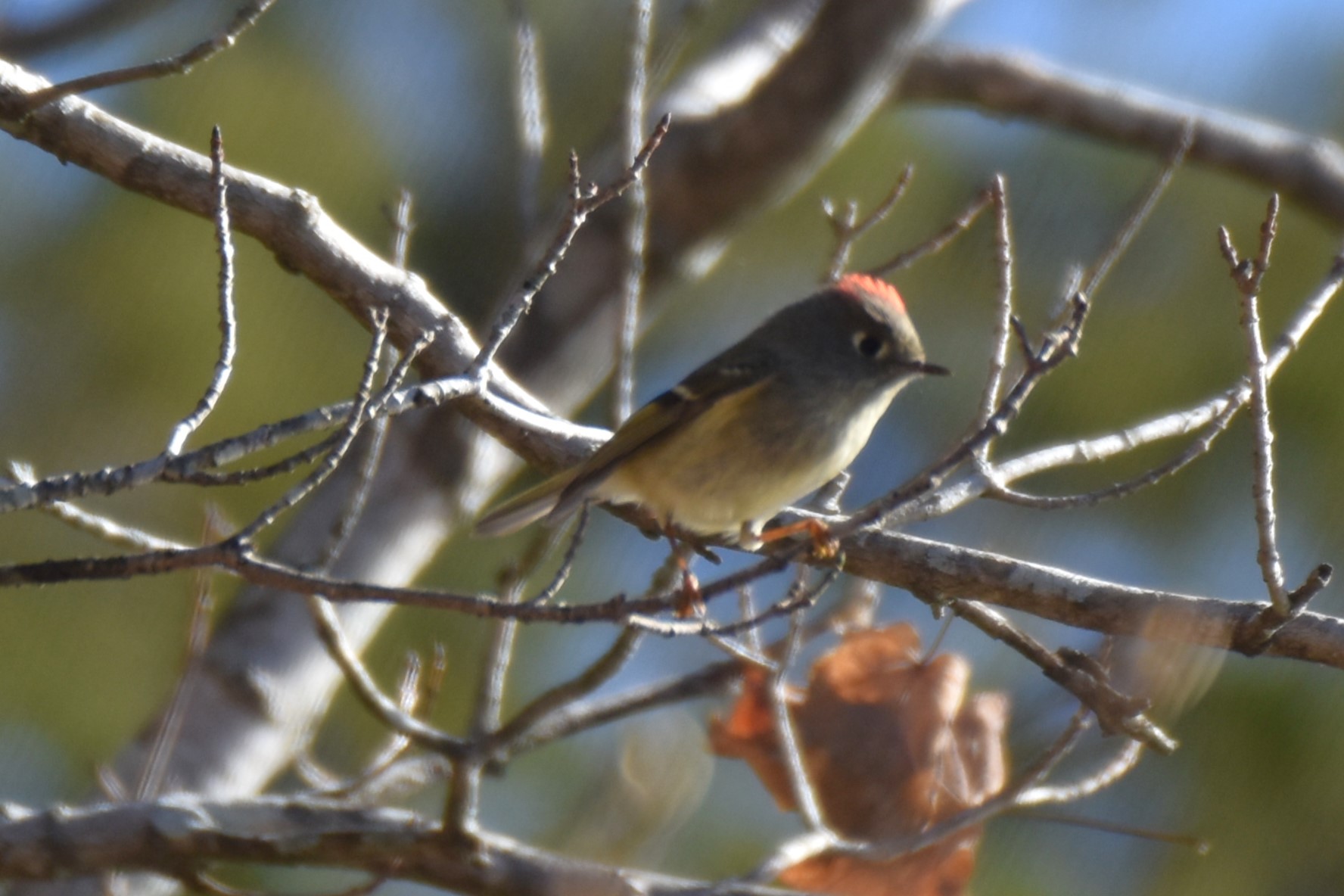
Ruby-crowned Kinglet
Chipping Sparrow
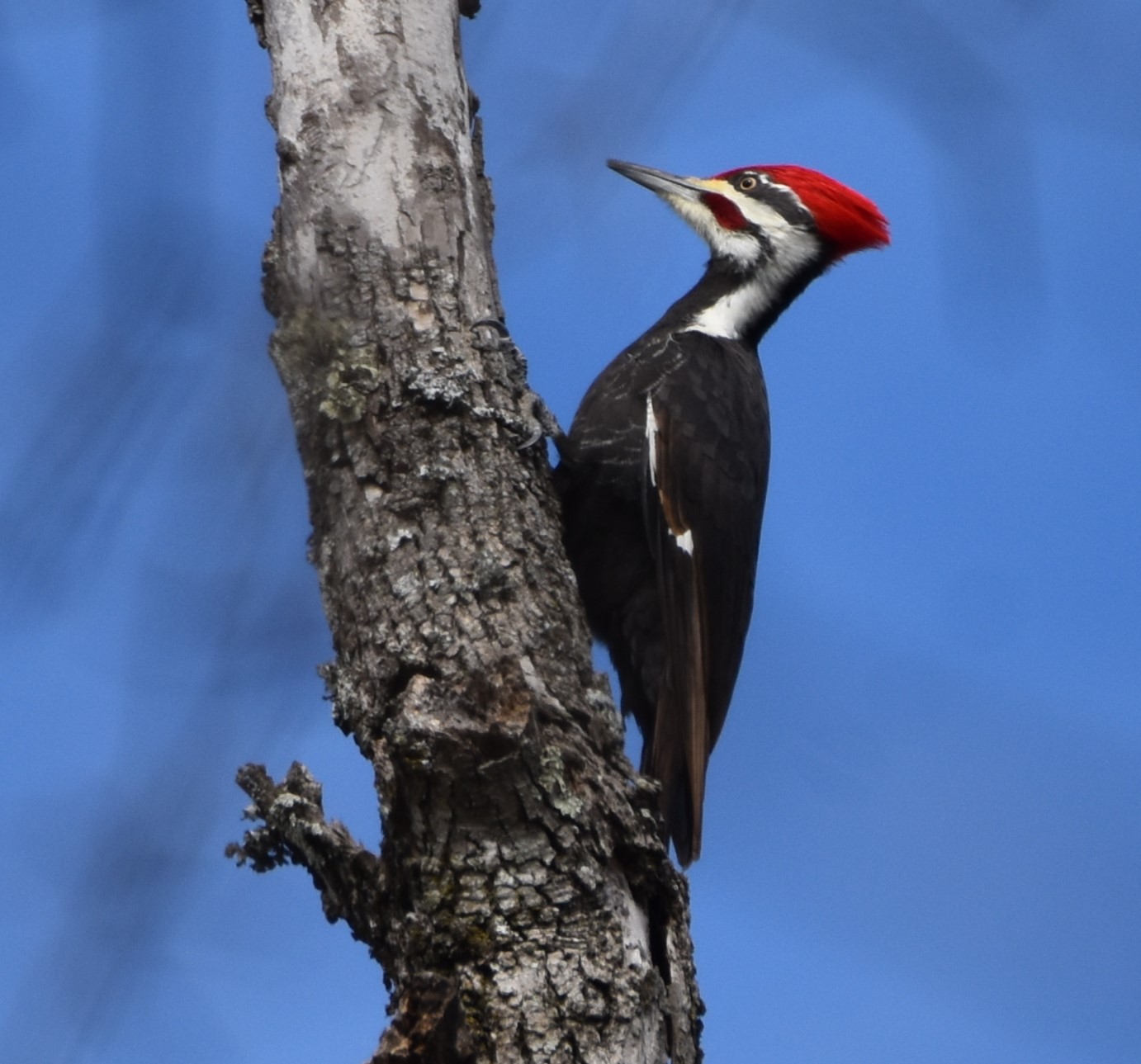
Pileated Woodpecker
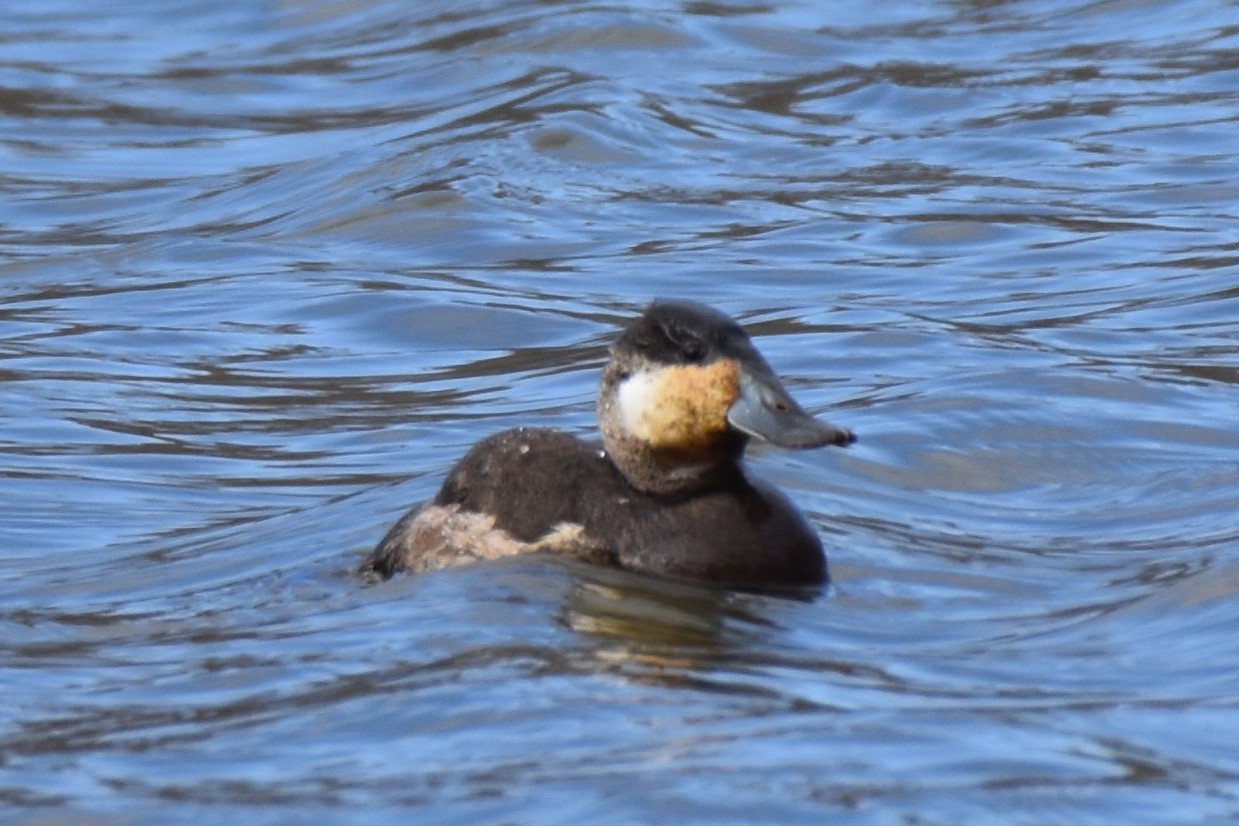
Ruddy Duck
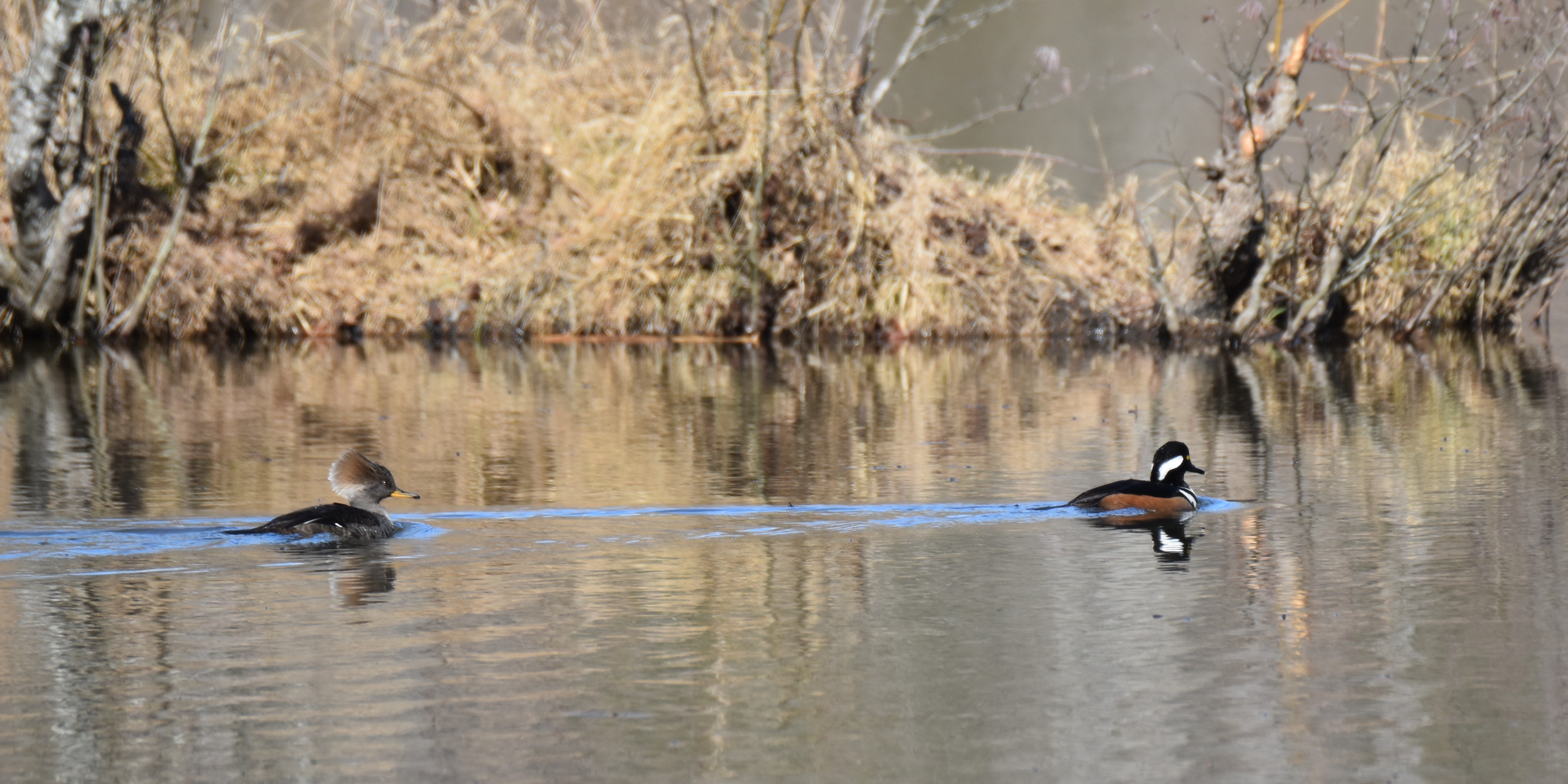
Pair of Hooded Mergansers
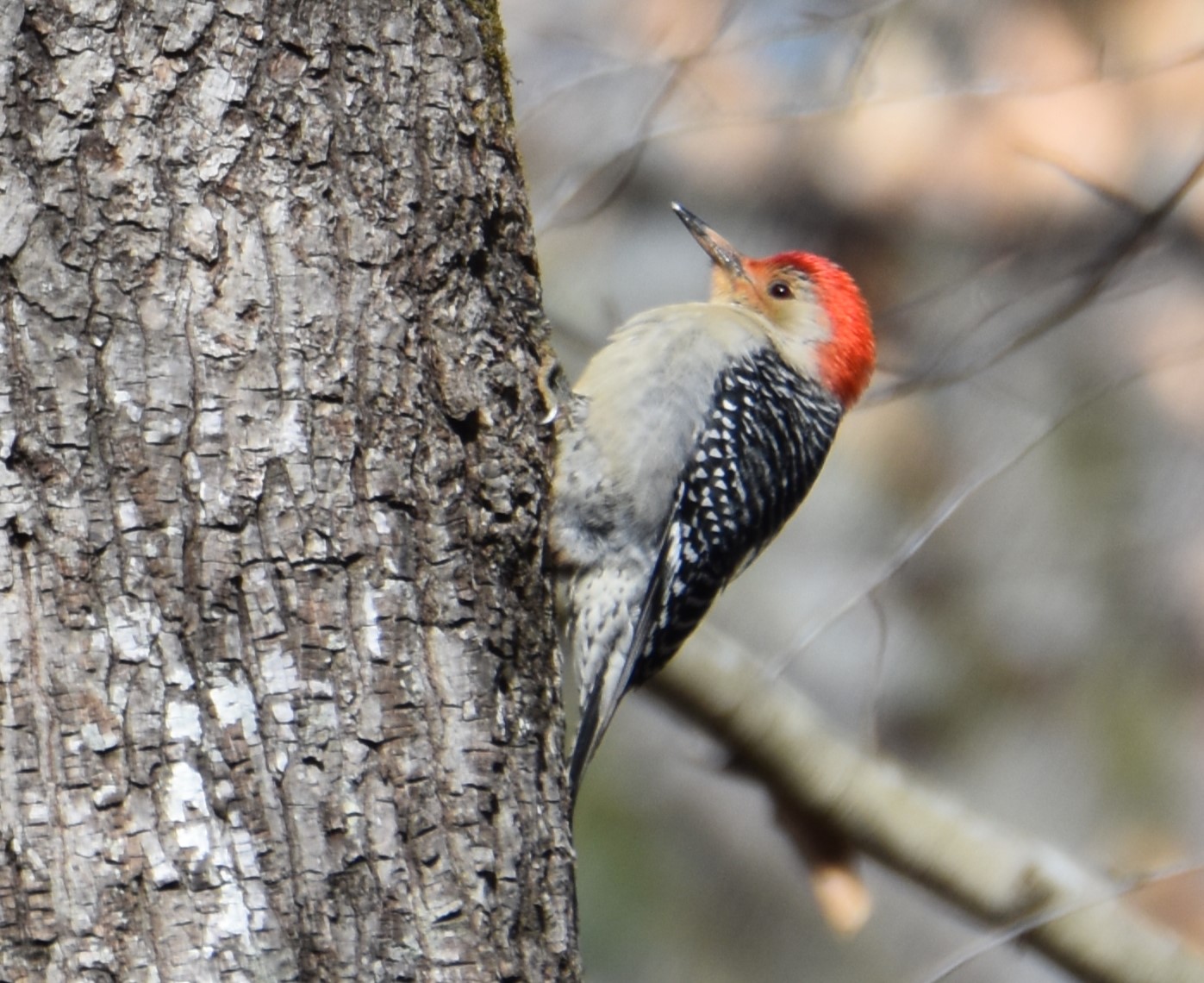
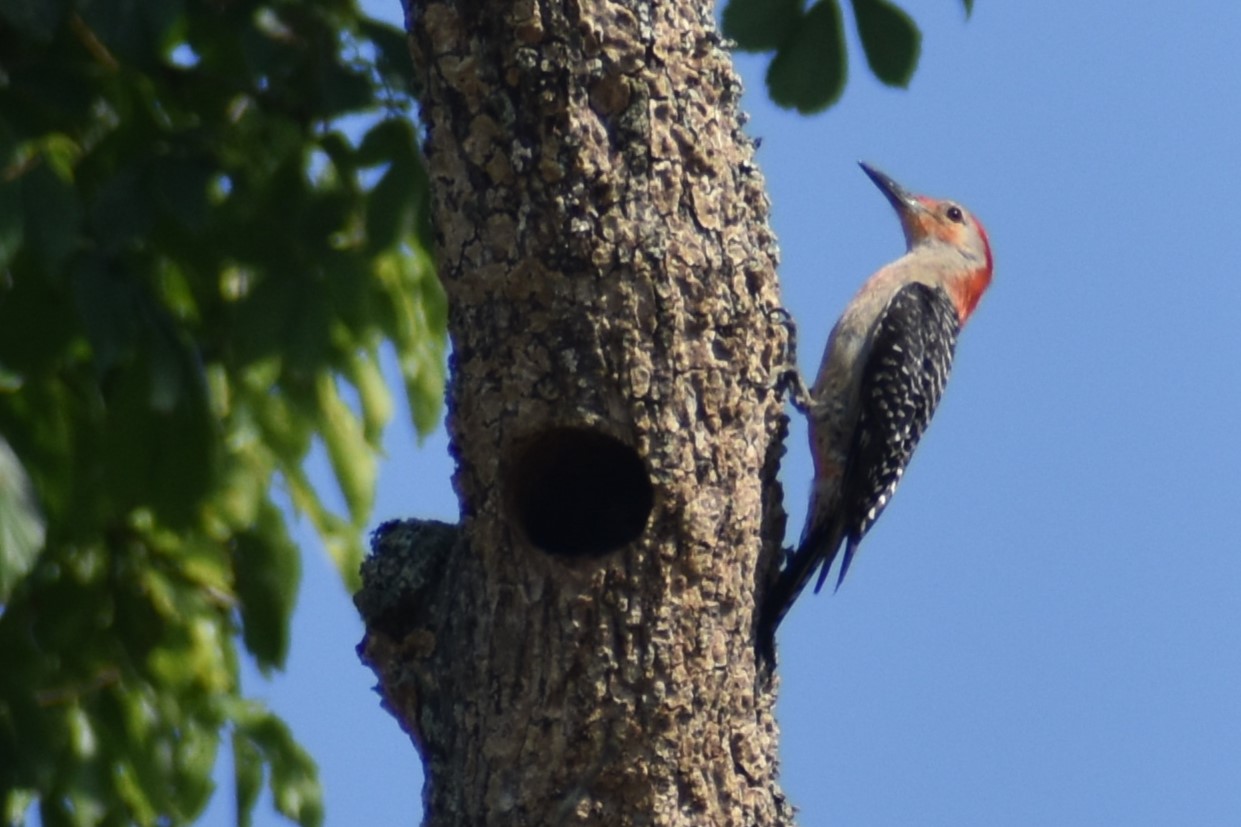
Red-bellied Woodpecker
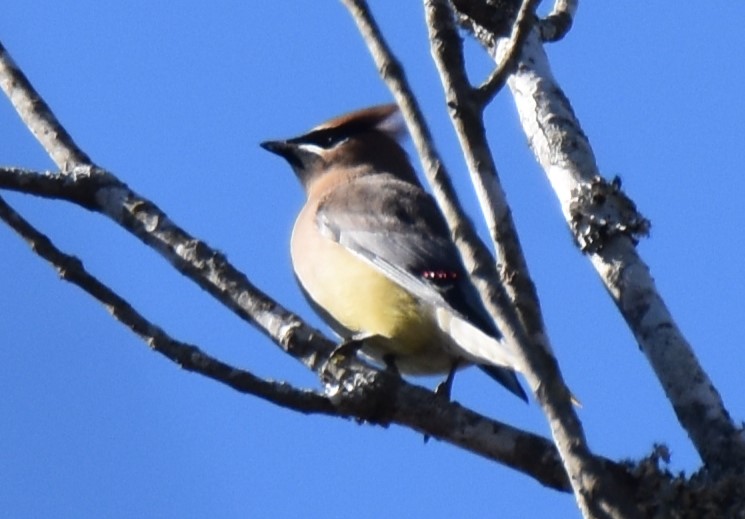
Cedar Waxwing
Northern Flicker
Pine Warbler
Hermit Thrush
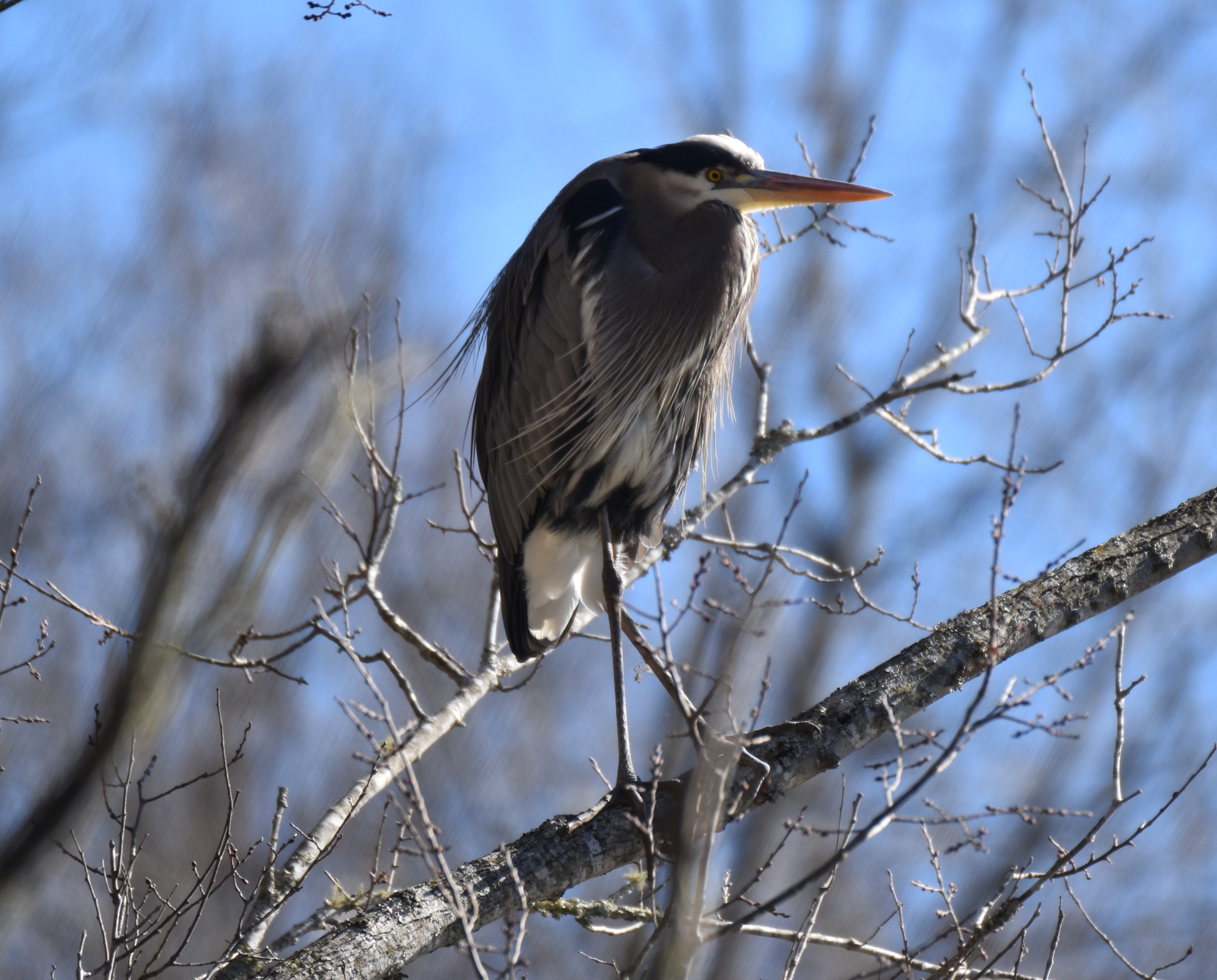
Great Blue Heron
Brown Creeper
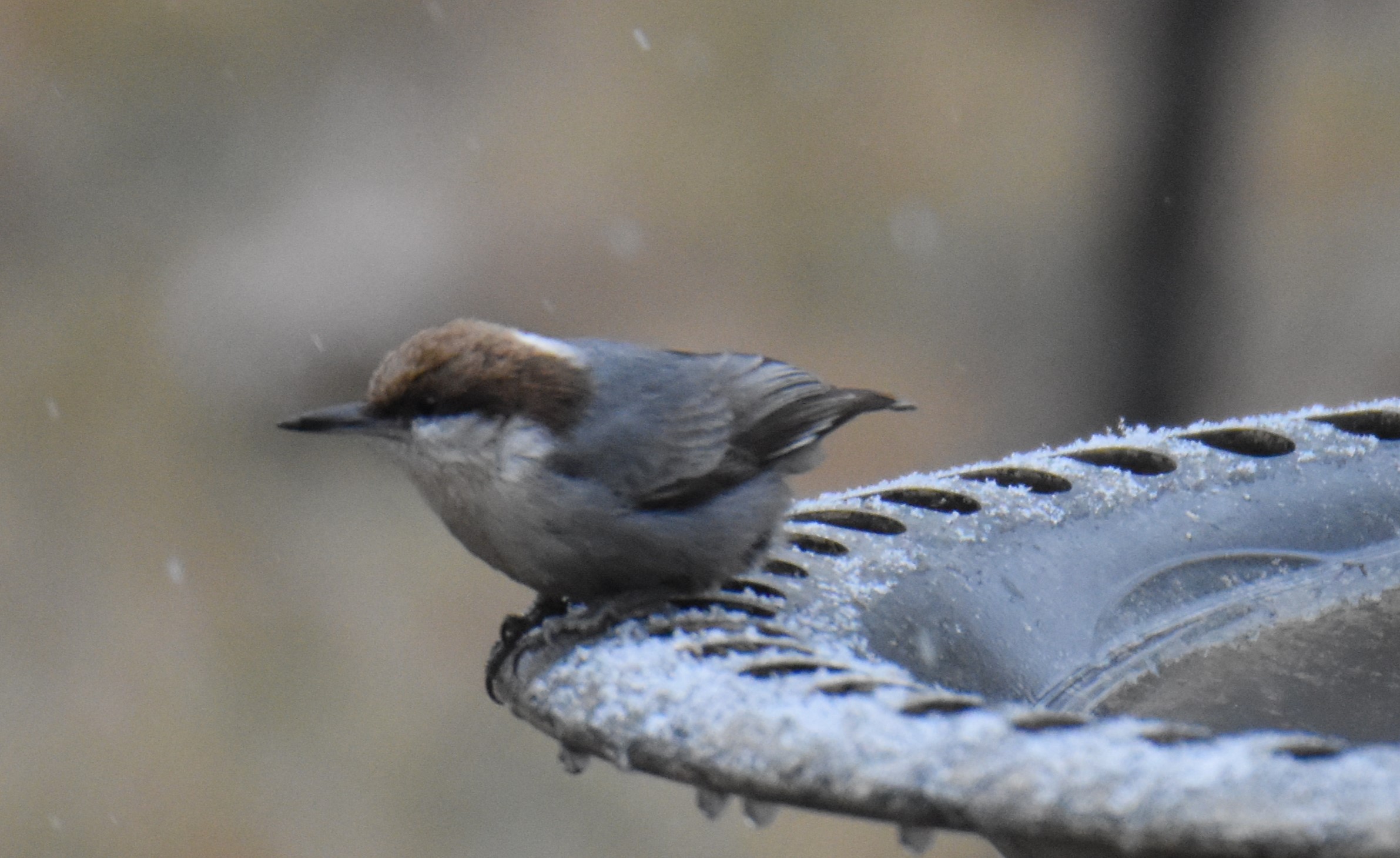
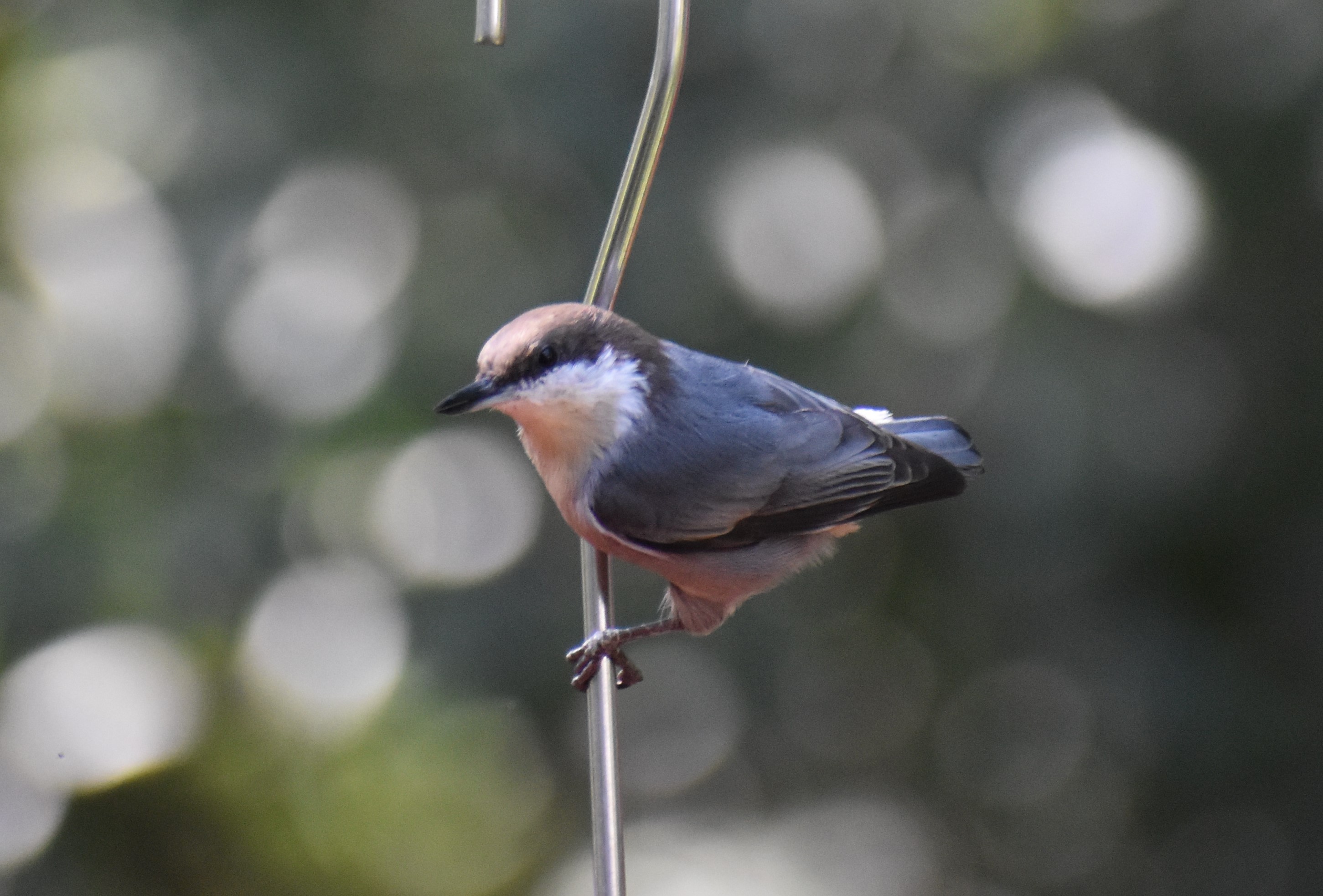
Brown-headed Nuthatch
“Let Israel be glad in his Maker, let the children of Zion rejoice in their King! Psalm 149:2
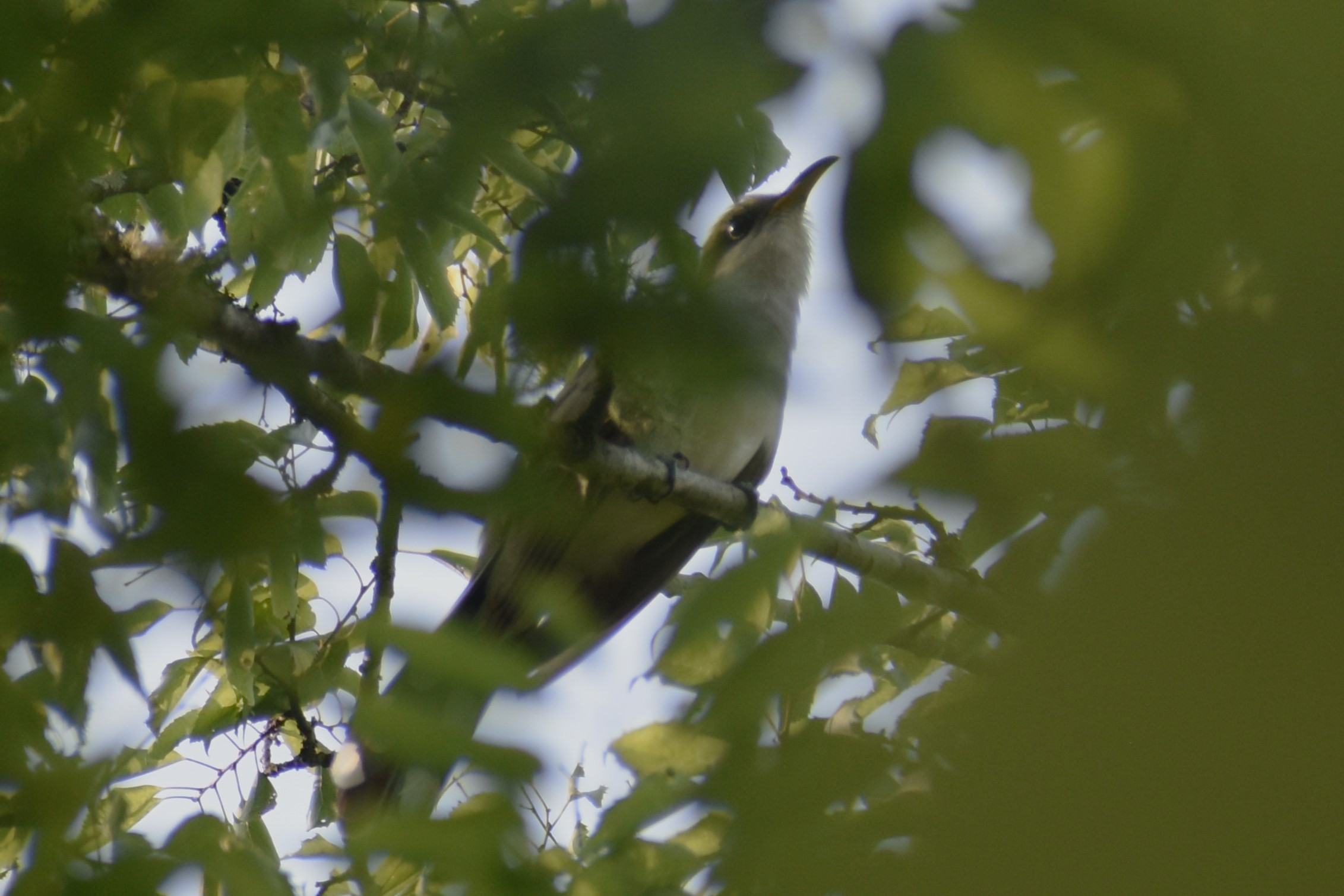
Yellow-billed Cuckoo. I have heard this bird several times at different parks, but didn’t have much hope in seeing it. They stay high in the trees, so I was delighted when this one had his lunch in a tree low enough where I could watch him. These cuckoos come to the Carolinas in April for breeding and stay through October. They spend their winters in South America.
Eastern Kingbird. These birds are part of the group known as the flycatchers. They can be seen around different bodies of water, and they also come to the Carolinas in April and leave in October; making their winter home in South America.
Mourning Doves. These doves don’t migrate. I have them in my yard all year round. I recently ran across an article titled “How to Attract Mourning Doves to Your Yard”. I felt no need to read it.
White-eyed Vireo. This vireo is fairly common in the Carolinas and you will usually hear them even if you never see them. I had walked past a heavy thicket, ready to go home when I heard this one singing. Fortunately, he decided to make an appearance and I was able to get several shots. The white-eyed vireos winter along the Southern coast of the U.S. as well as the coasts of Mexico, the Caribbean, and Central America.
Red-Bellied Woodpecker. This woodpecker lives here year round. They don’t come to my feeders as often as the downy woodpeckers, but they do show up and often bring their young to show them where the snack bar is located.
Ruby-Throated Hummingbird, male fledgling. A male fledgling is the best (probably the only way for me) way I can know for sure that the hummingbirds have had their babies; if not in my yard, then close by. These young males are just starting to flex their red throats, but by next year will look the one below.
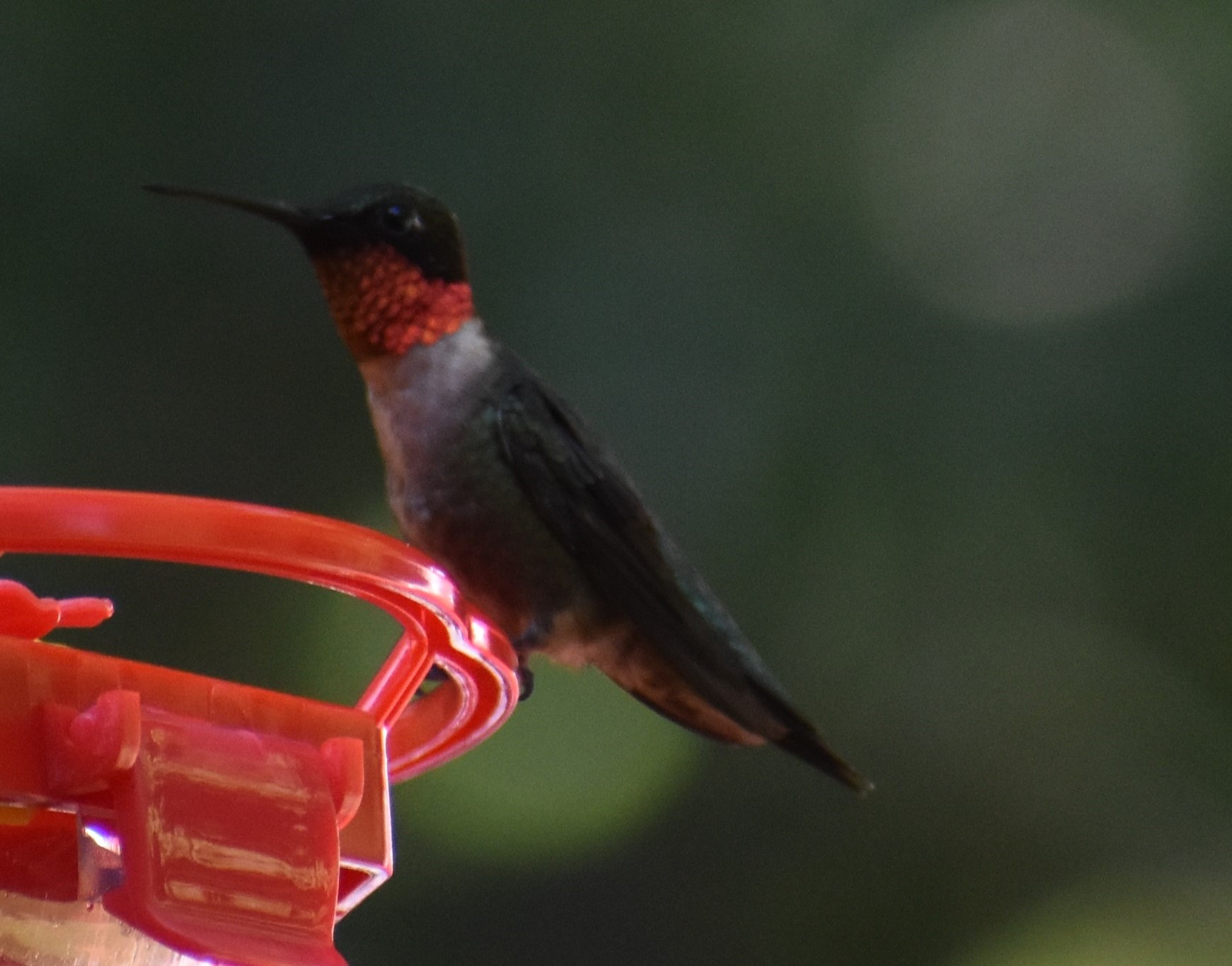
Ruby-throated Hummingbird, adult male. Ruby-throated hummingbirds are the only hummingbird that comes to breed in the eastern part of the U.S. The males are the first to arrive in April. They leave in October to cross the Gulf of Mexico to spend their winters in Mexico.
House Finch–parent and fledgling. The House Finch, though they only came to the Carolinas in the 1960’s, are quite common and can strip a cylinder of sunflower seeds in record time. I had noticed they seemed noisier than usual lately, and when I saw these two, I understood. I’ve been hearing the fledglings (for the most part). They’re in the trees and the feeders and chirp their heads off until a parent finally feeds them.
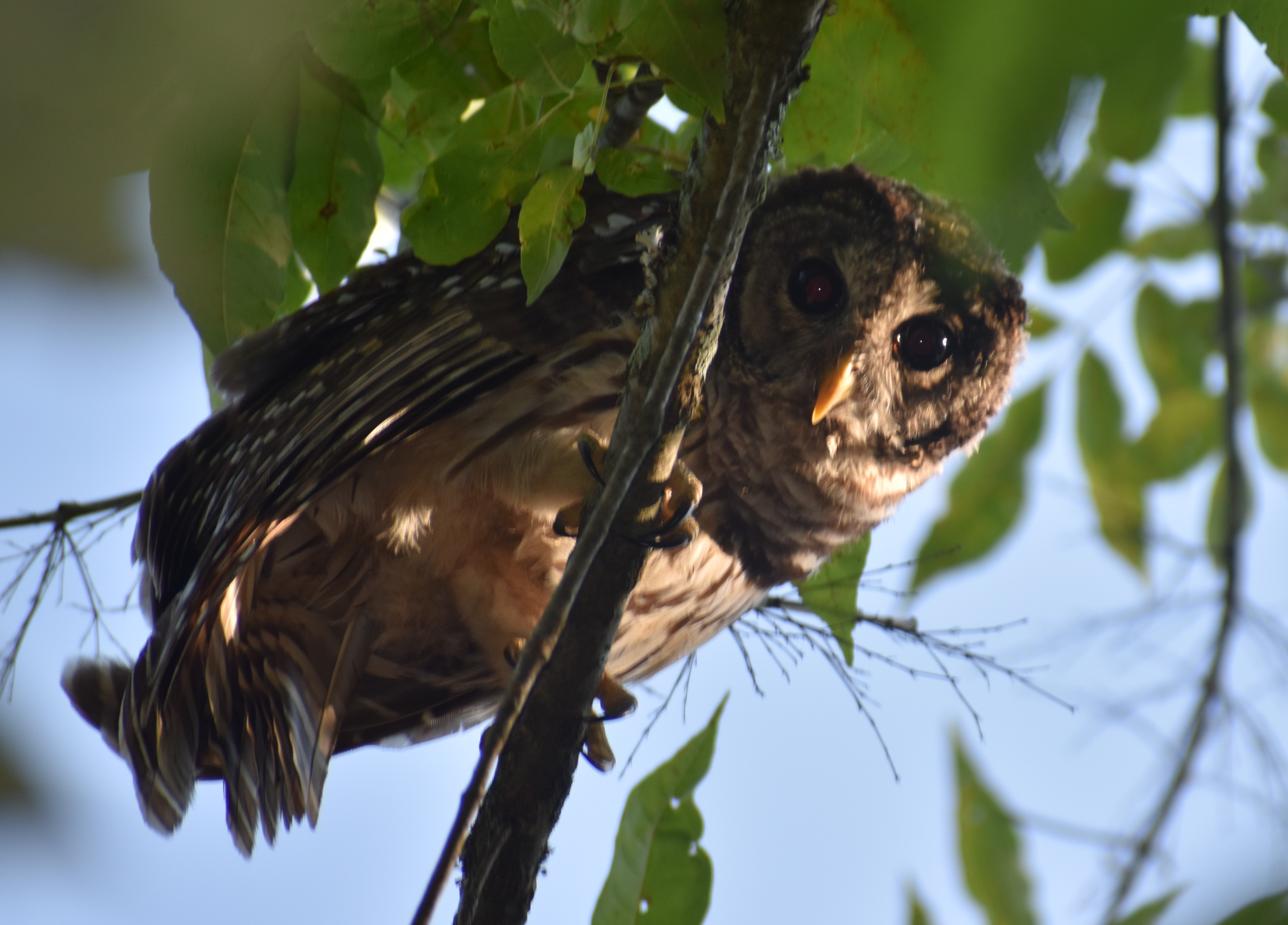
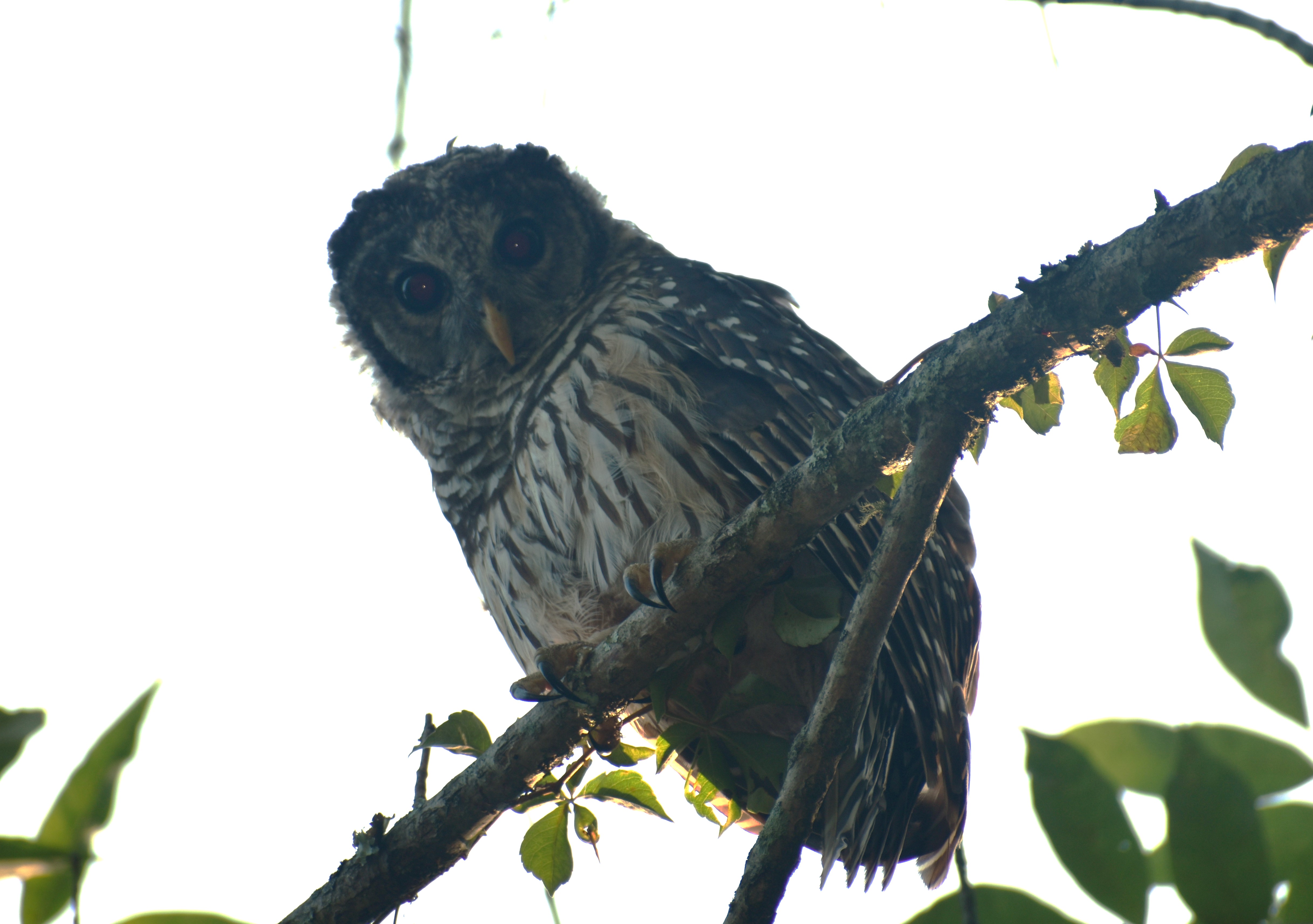
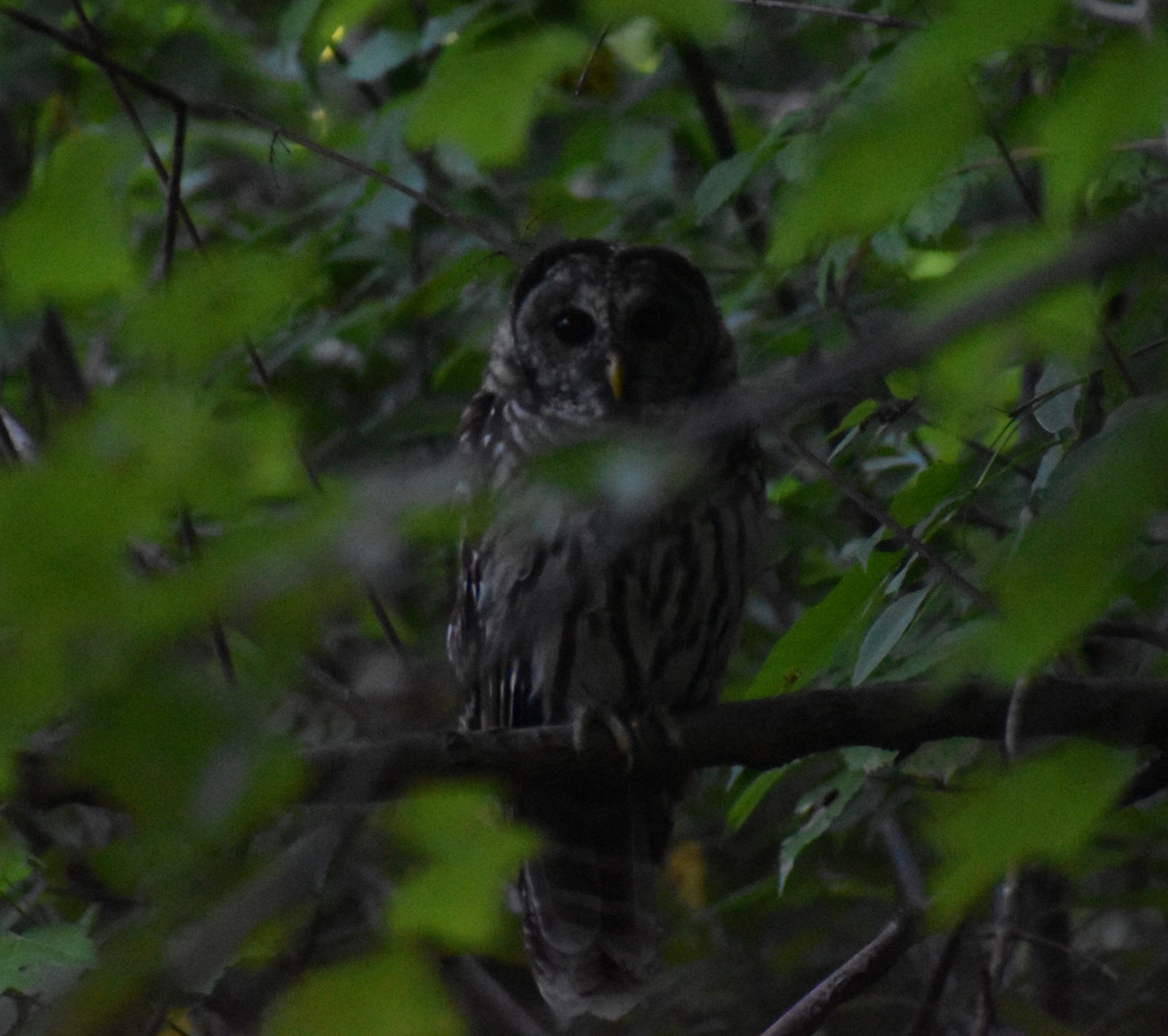
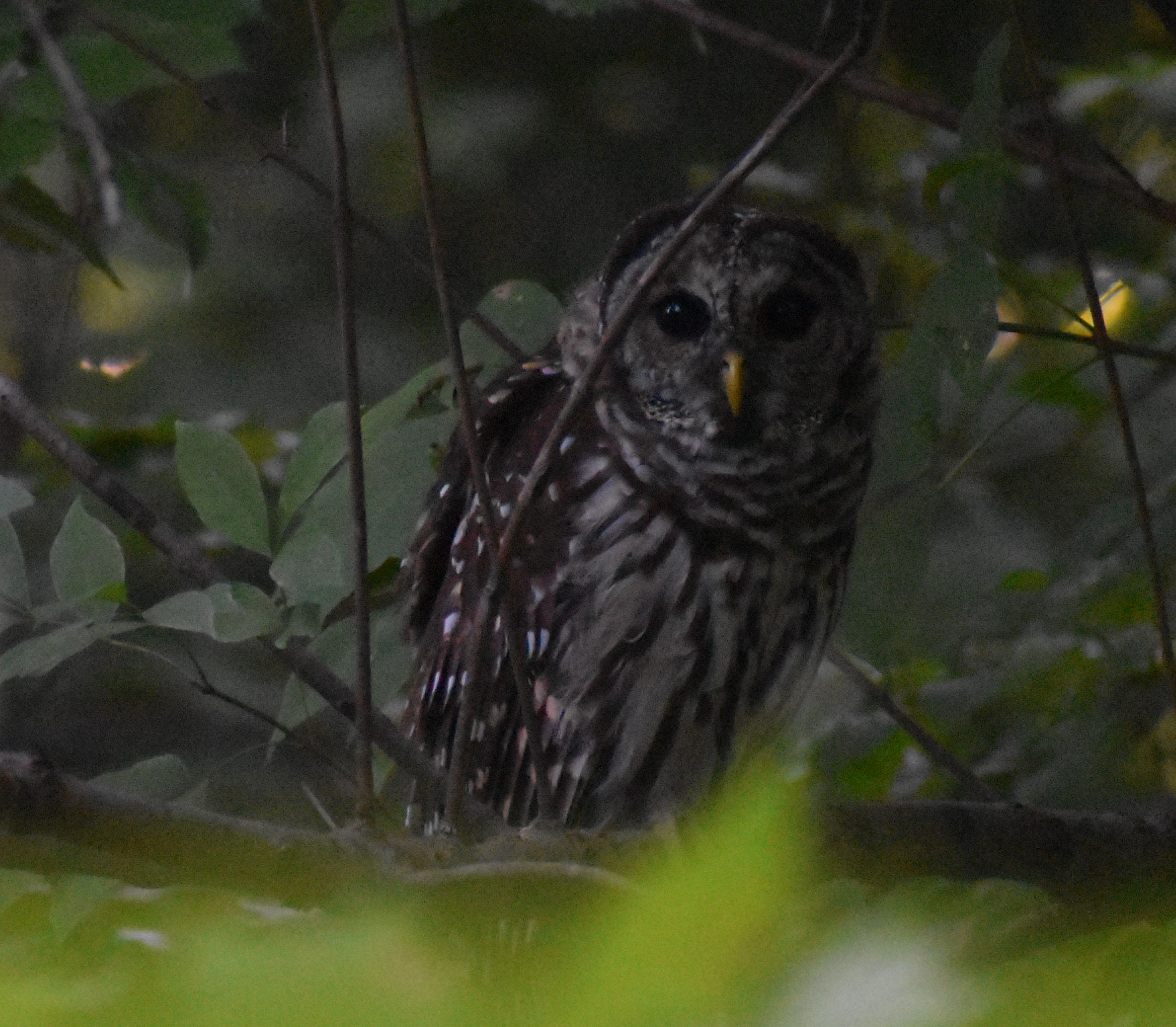
I’m sure I could have added a few more pictures, but these are my favorites. The highlight of the month was having a photo-op with a barred owl. As you can see, I took quite a few pictures. He seemed as curious to watch me as I was enthralled with him. To see more of my pictures, follow me on Instagram. https://www.instagram.com/pmgilmer27/
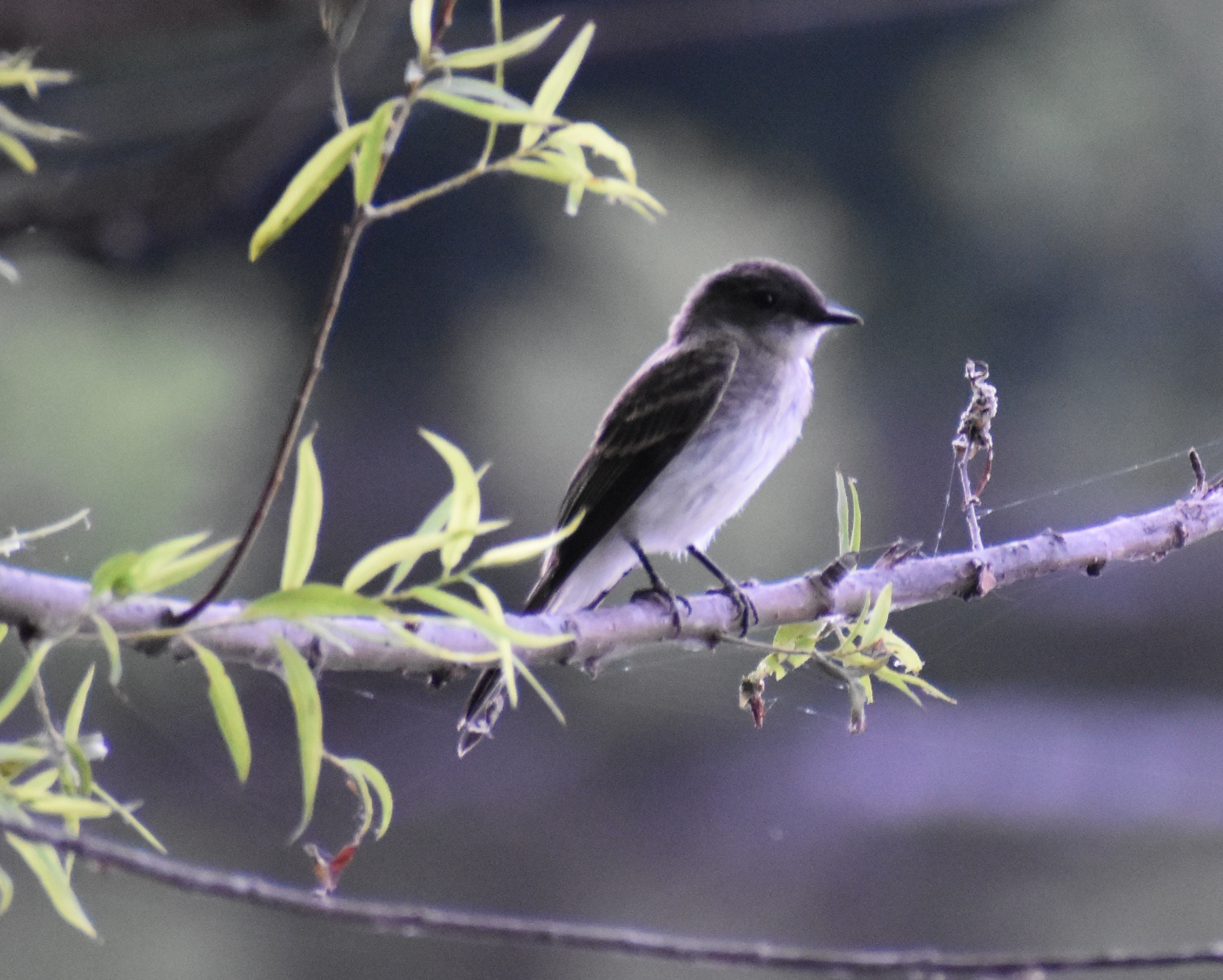
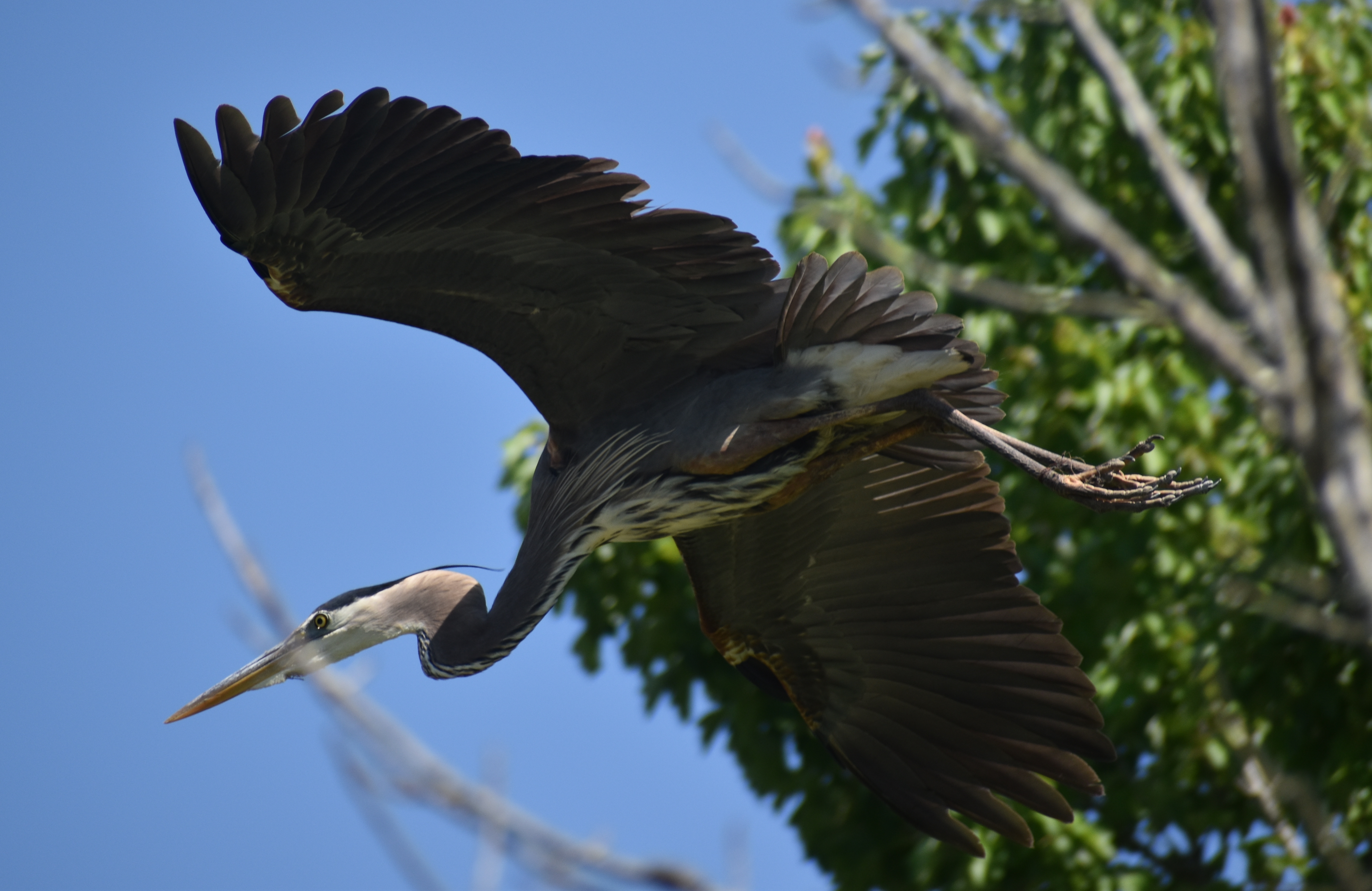
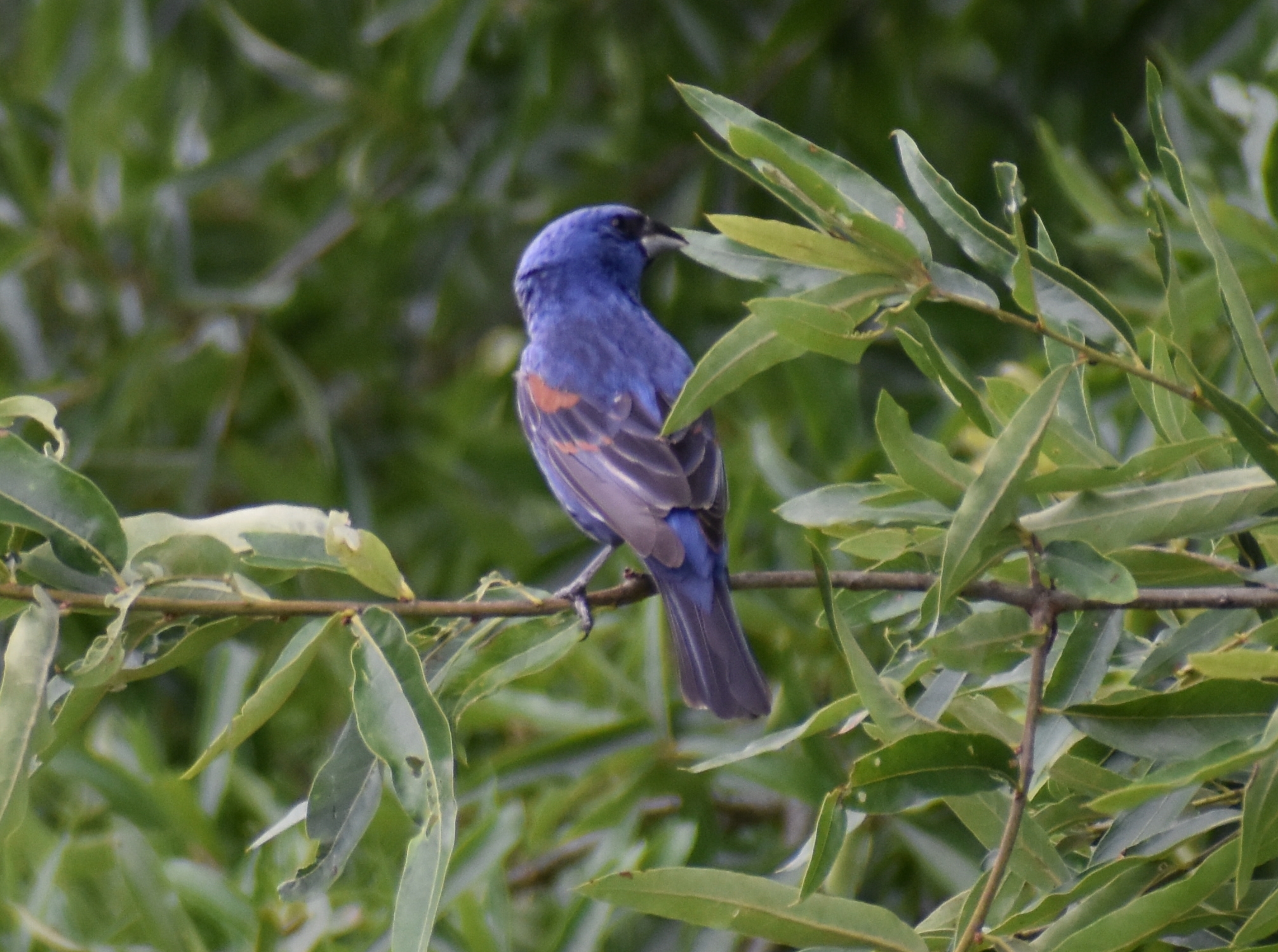
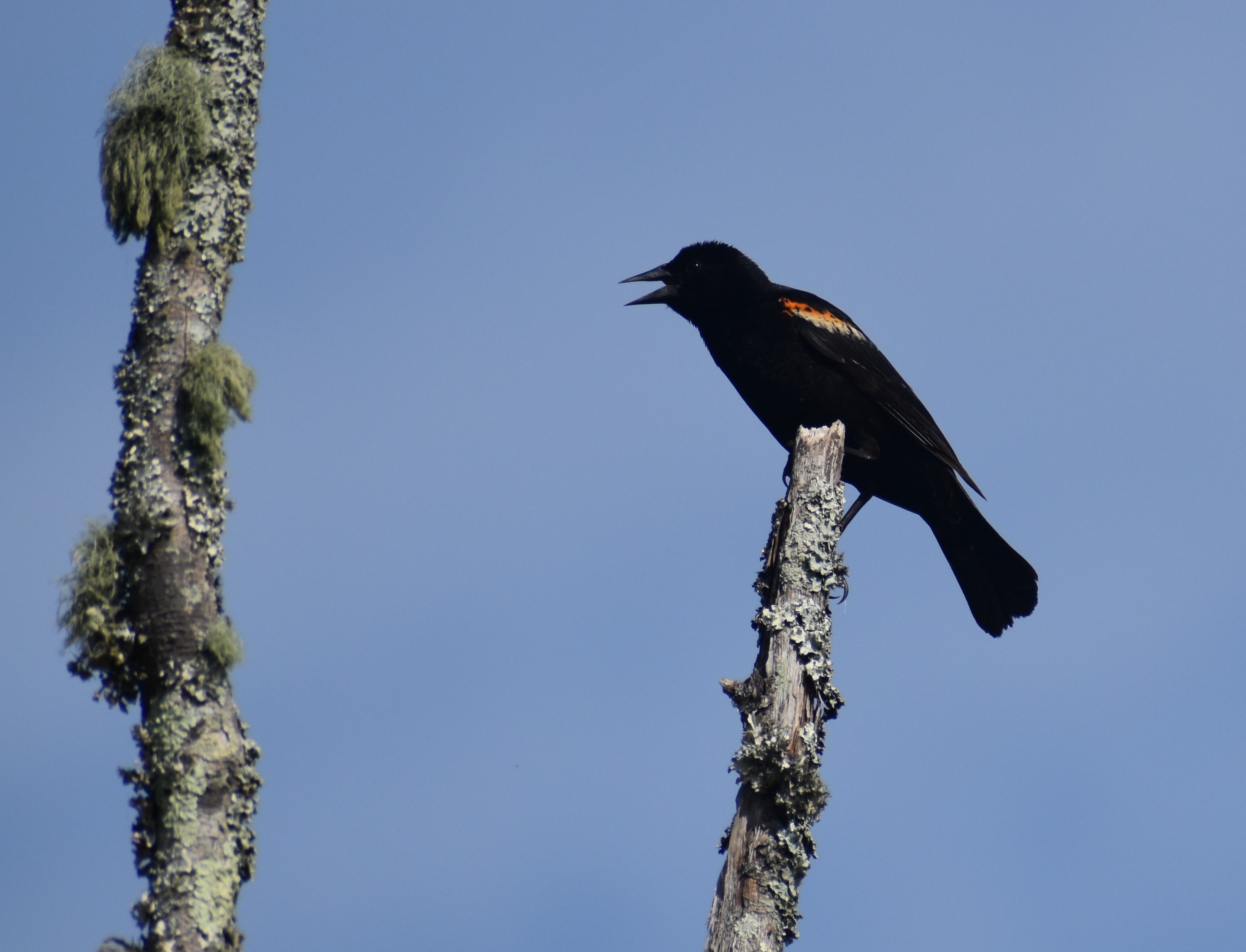
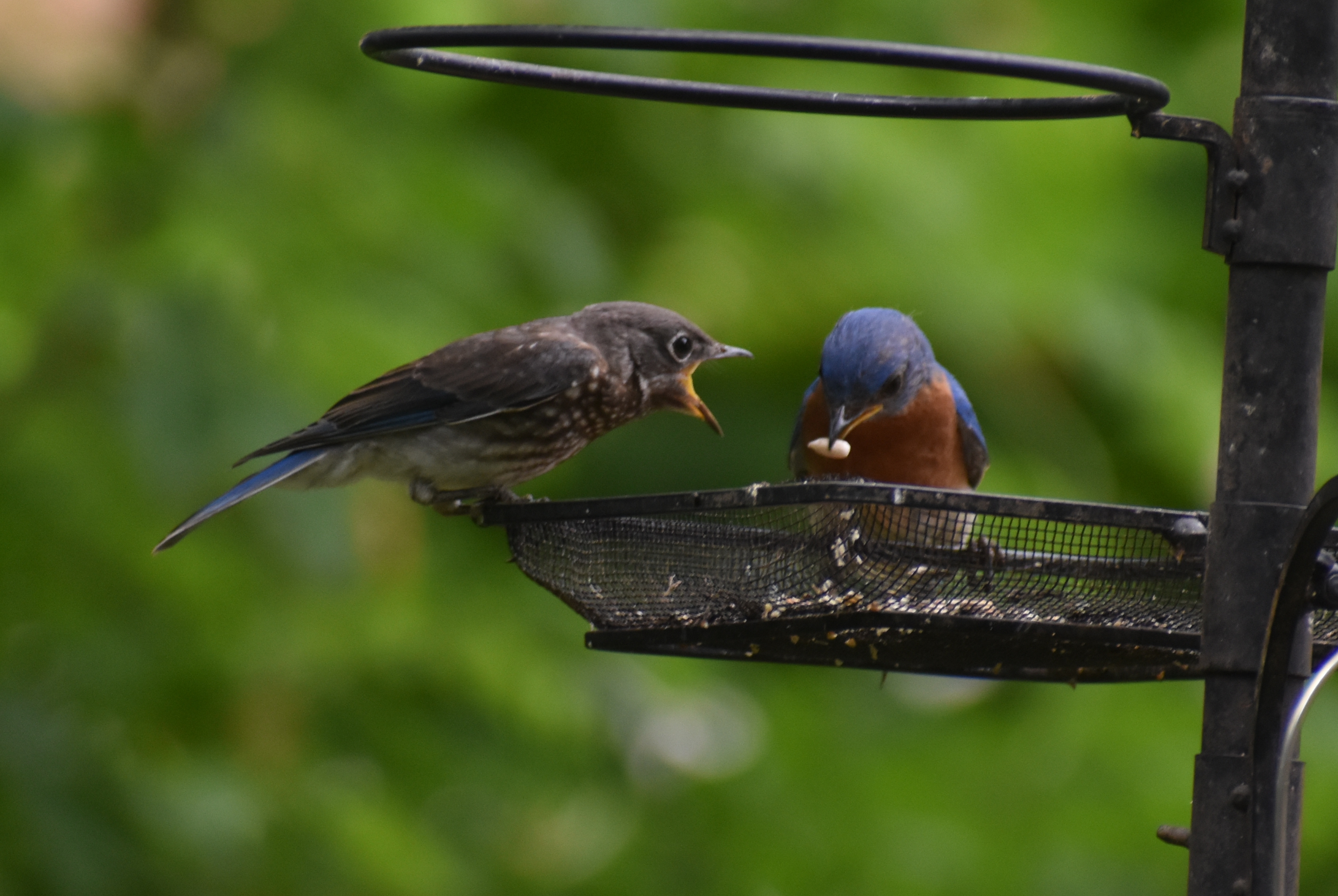
Great Blue Heron having a snackBank swallowEastern phoebeGreat Blue HeronBlue GrosbeakRed-winged BlackbirdMale Eastern Towheemale goldfinchFledgling bluebird and dad
“And God said, ‘Let the waters swarm with swarms of living creatures, and let birds fly above the earth across the expanse of the heavens.'” Genesis 1:20
I bought a journal to keep track of some of the birds I’ve seen and places I’ve visited, but like most of my journals, my writing in it has been haphazard at best. Since I still would like to keep some kind of record, I decided to start recording some of my adventures in this blog.
Reading that various ducks winter at MacAlpine Creek Park (in Charlotte,NC), I have made several visits in the past few months, hoping to see new waterfowl. So far, I’ve only seen mallards and Canadian geese. As much as I like to see these birds, I’ve been disappointed not to see anything new.
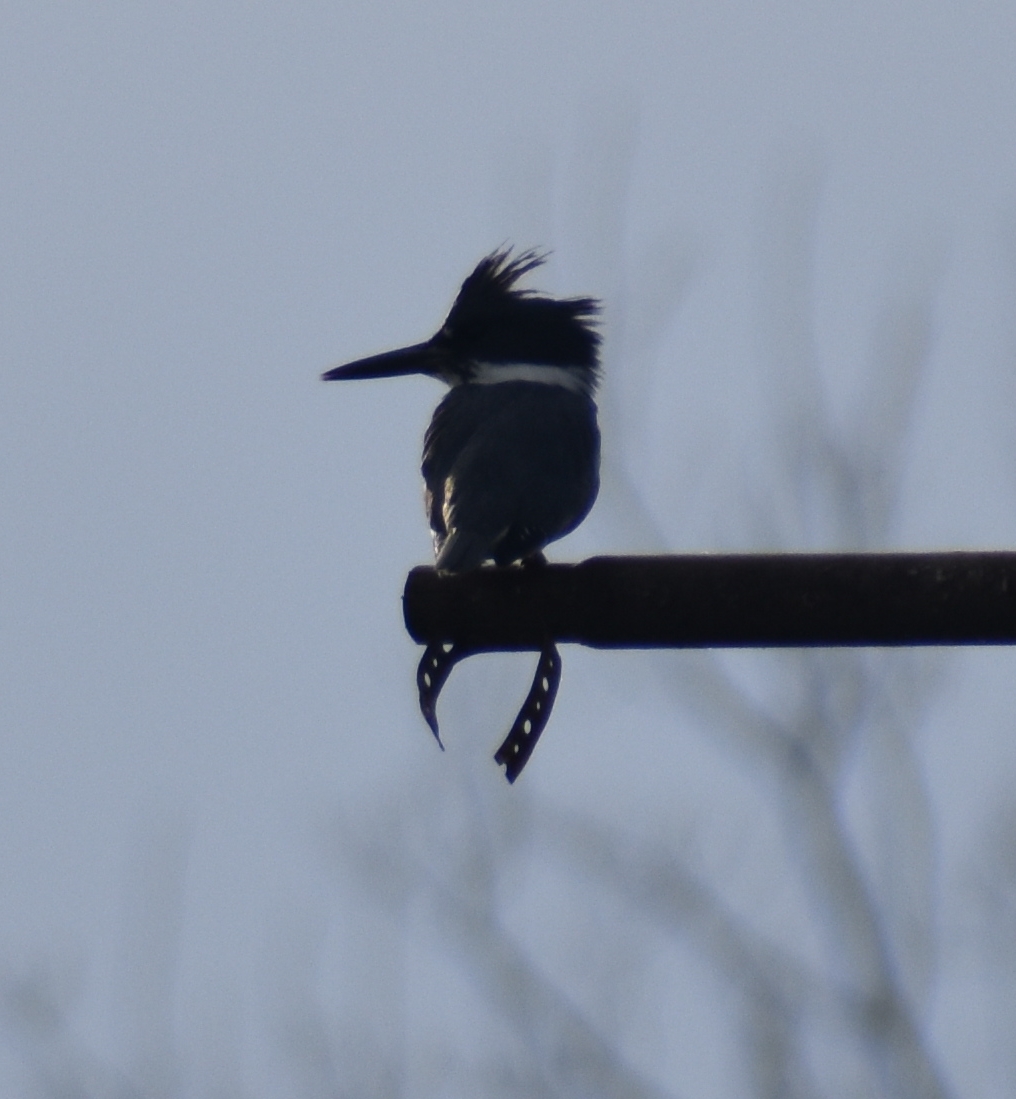
On my most recent trip to MacAlpine, I saw several types of birds and most excitedly, several I hadn’t seen there before (though not the waterfowl I expected). I started on my usual route to the marshy area where I have seen a great blue heron and an egret on several visits. Much to my disappointment, there was nothing there. Some mallards soon flew in, but I kept looking for the egret and heron. Then I noticed a bird sitting on a metal cross in the pond (I have no idea why that cross is there. Maybe someone can enlighten me.) Using my binoculars, I realized it was a kingfisher. A first time sighting for me. I took a few pictures and decided to go to the other trail I usually walk and maybe I would come back before I left to look one more time.
Belted Kingfisher
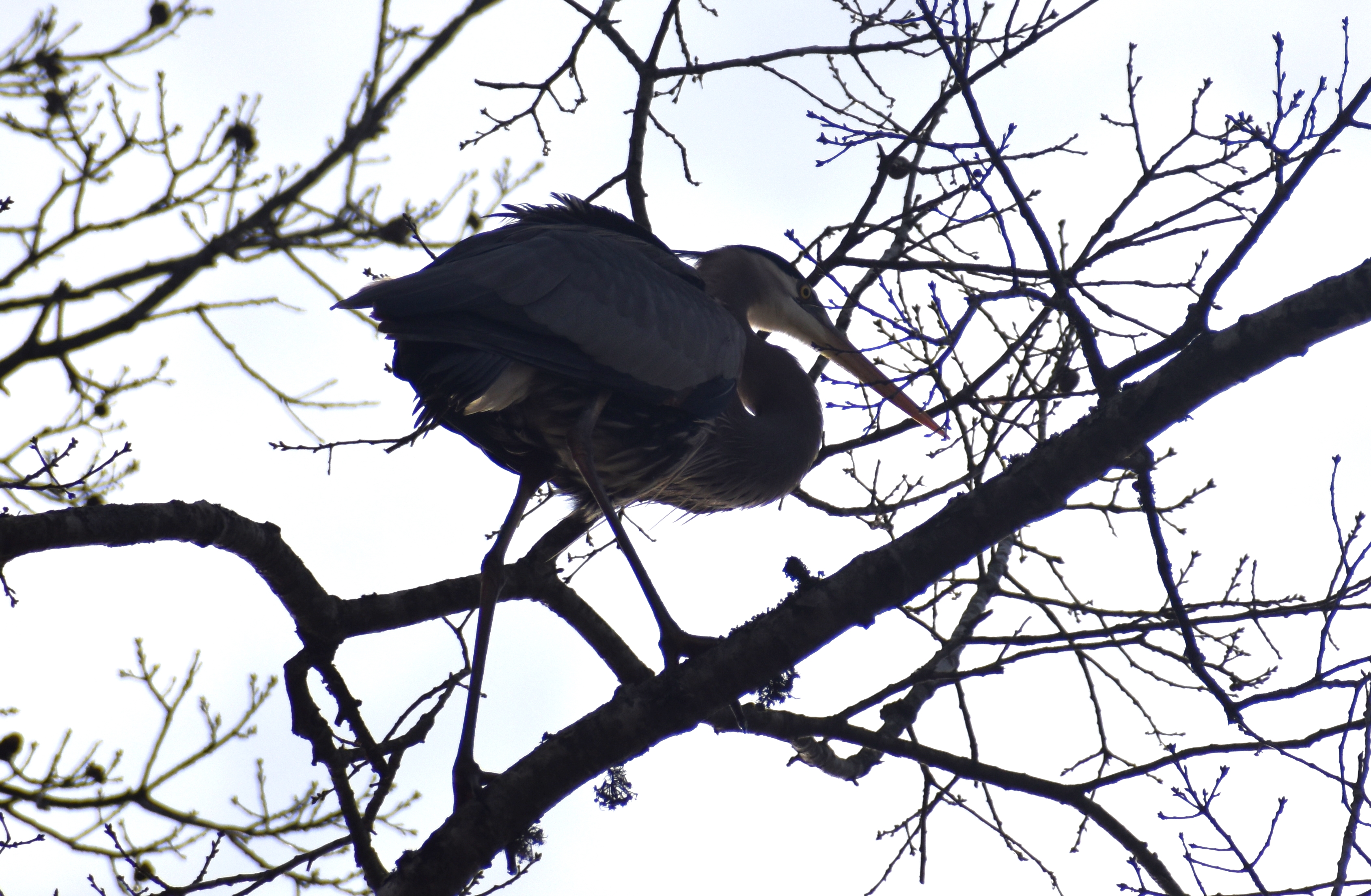
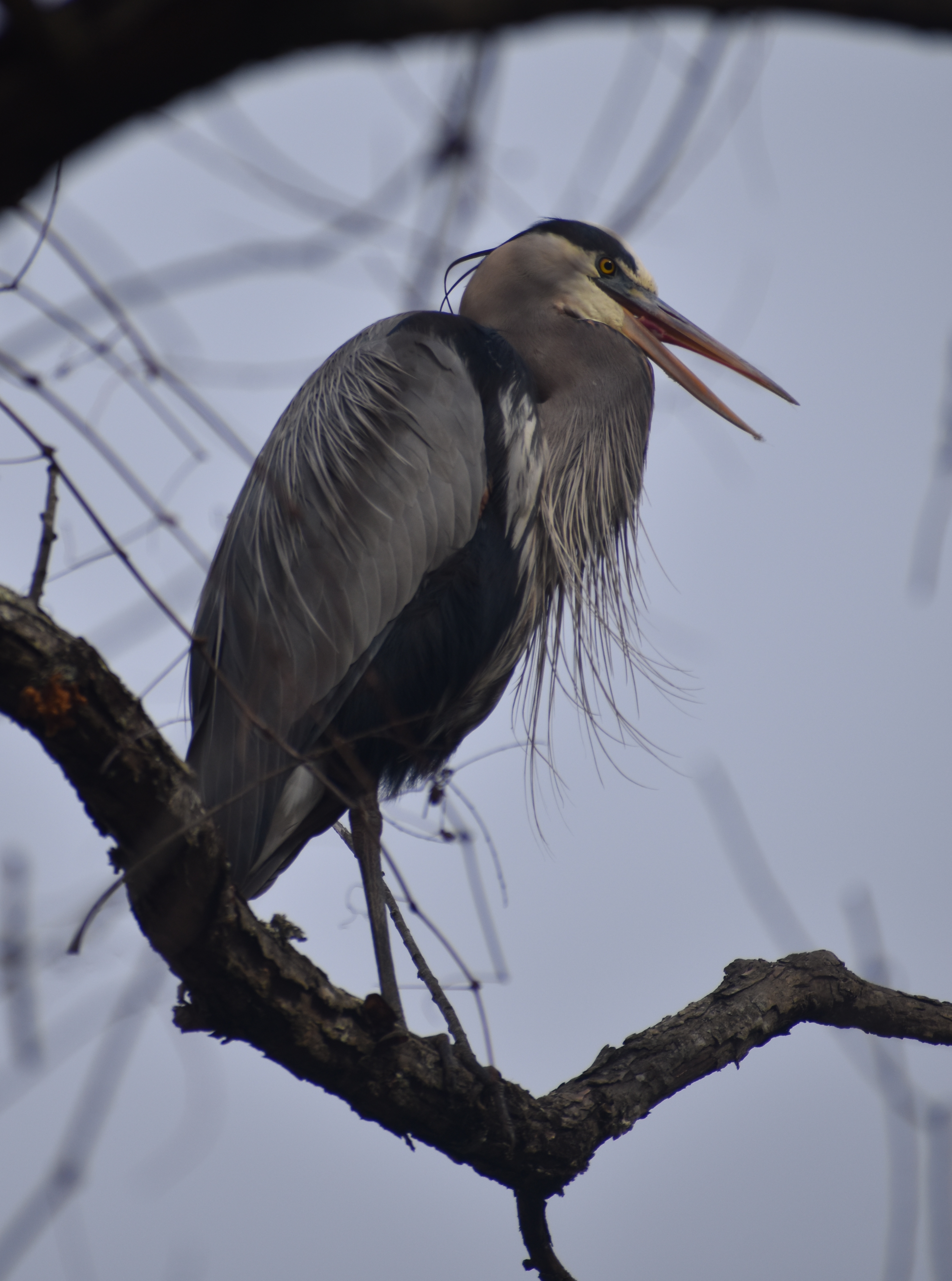
Just as I was leaving that area, a heron flew over my head and landed in a tree. I had never seen this bird in a tree (though I have since learned they nest in trees) and took several pictures from different angles.
Great Blue HeronGreat Blue Heron
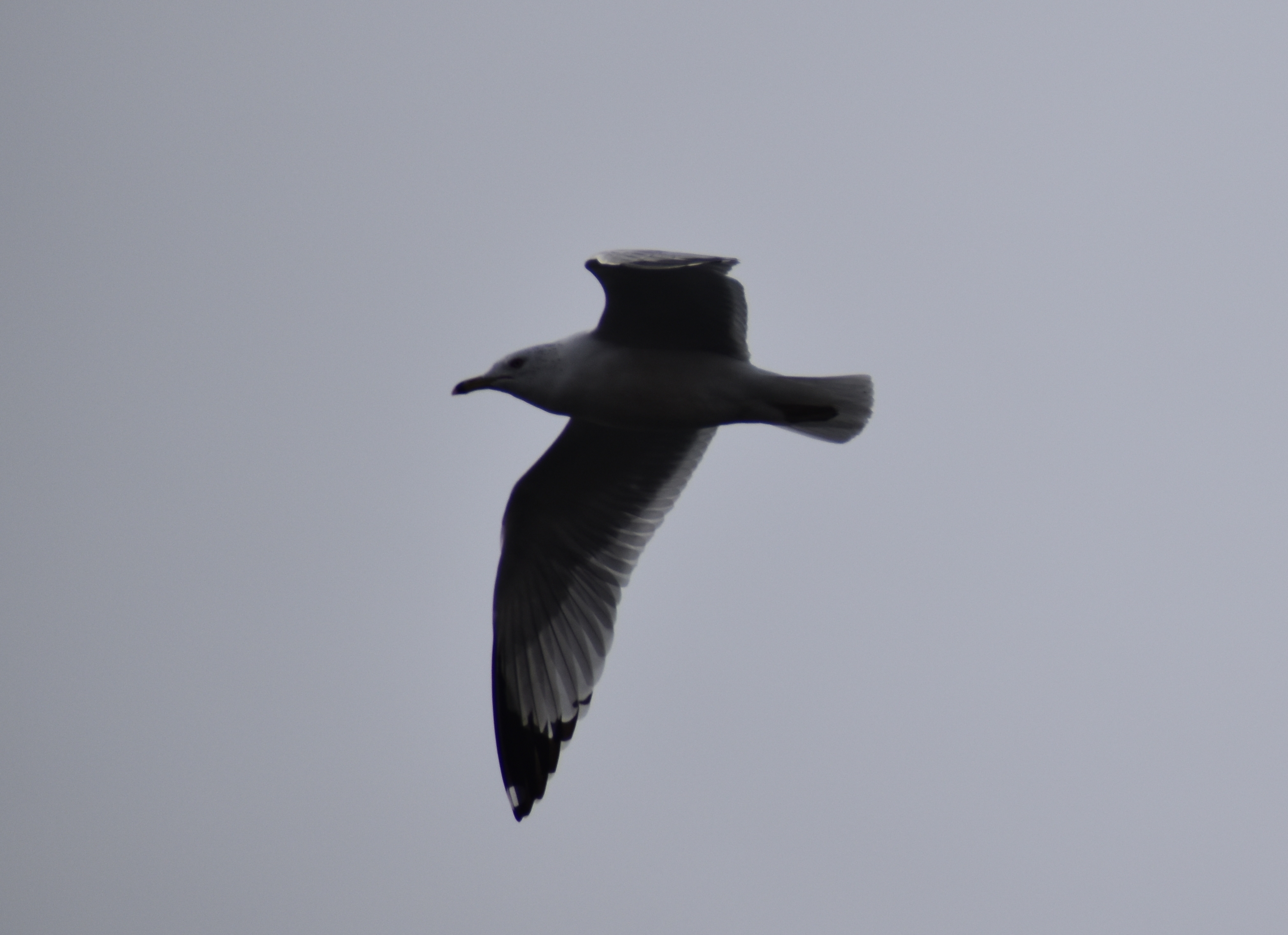
I made my way back to the front pond, hoping some ducks had shown up. I saw some white birds that looked like seagulls. And before anyone corrects me, I know gulls are not just “seagulls” but I confess that is still how I think of them. Anyway, I have never seen these birds at McAlpine before. They didn’t stay long. They were gone by the time I made my loop.
Ring-billed gullColony of Gulls
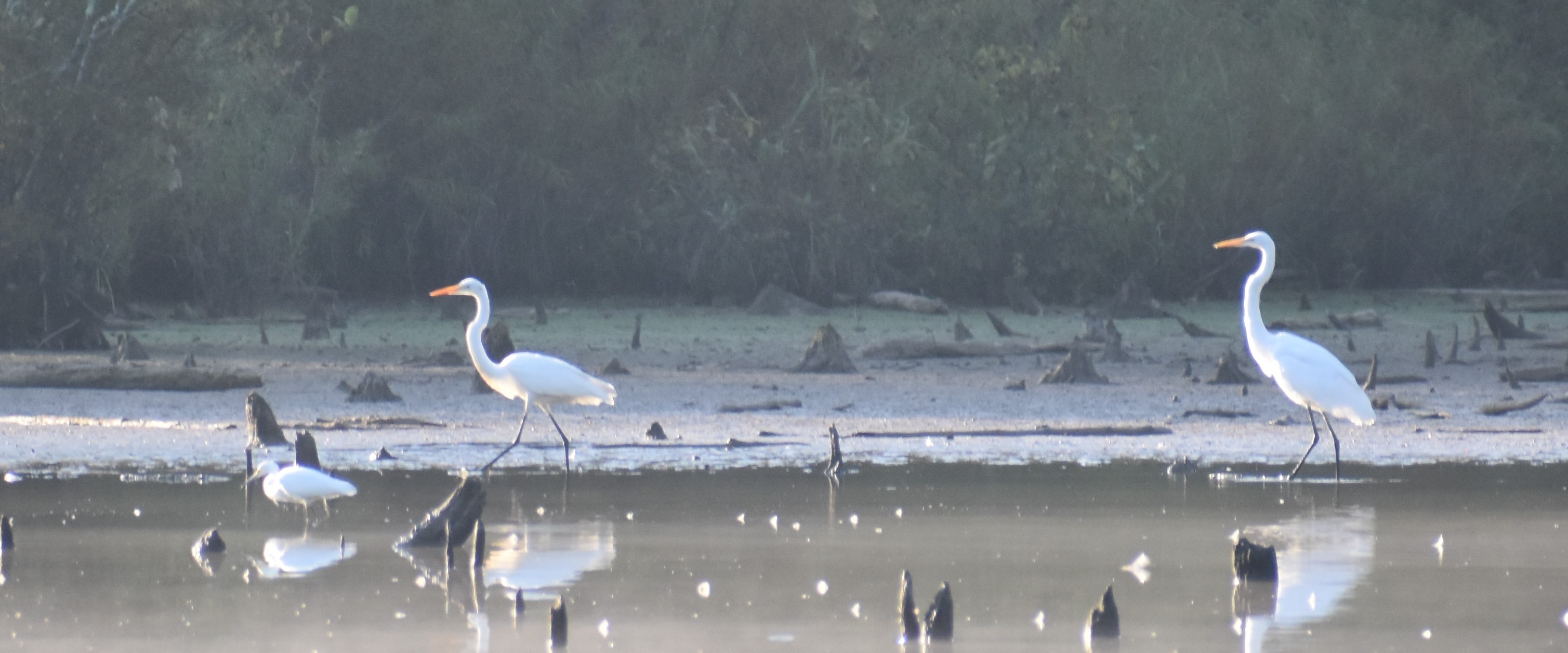
Walking along the other side of the marsh, I finally saw the egret. I guess the slightly warmer weather brought out the turtle.
Turtle and Great Egret
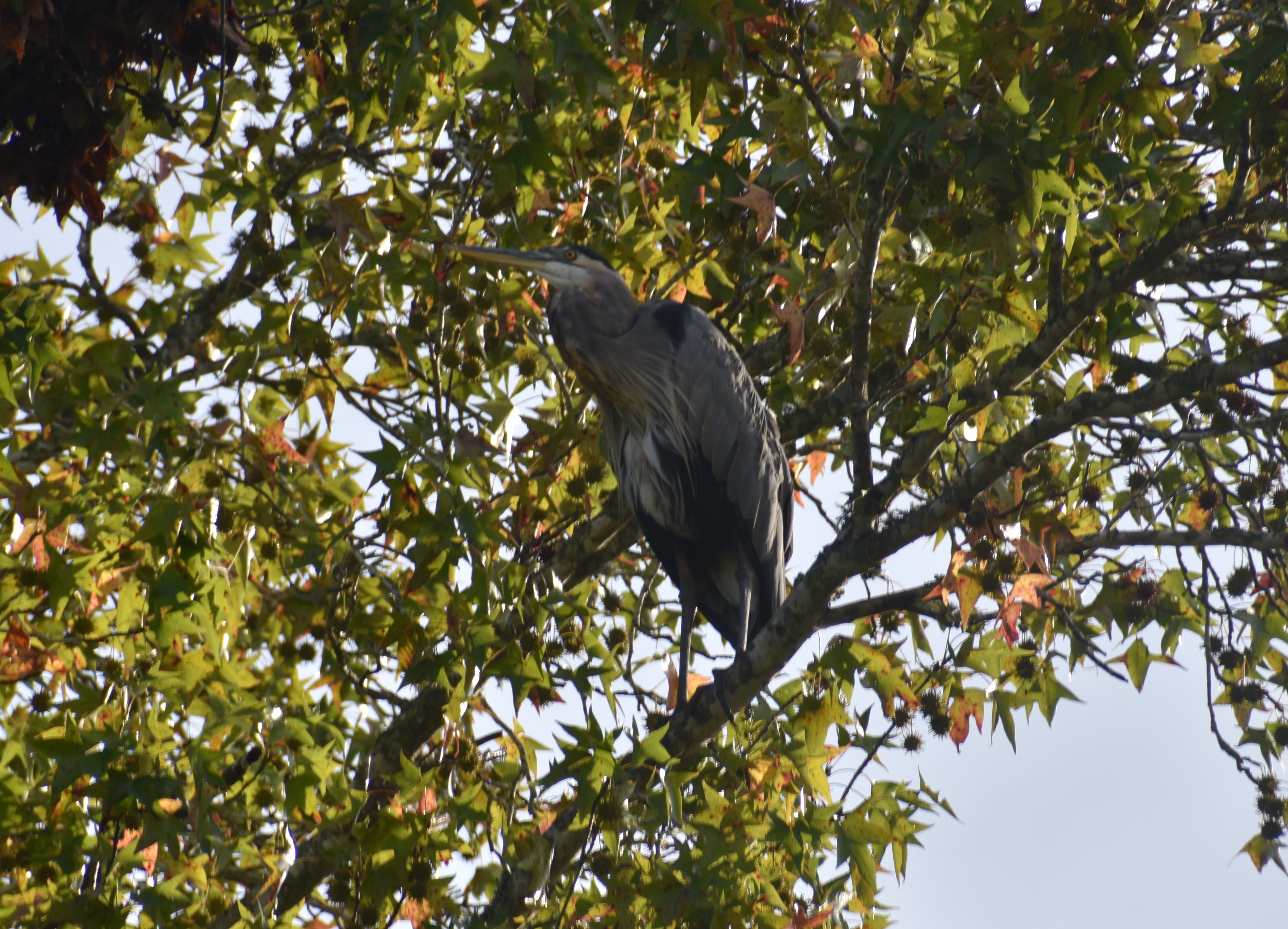
As I continued my walk, I saw something a bit strange up in a tree. I thought it might just be some trash (more than once I’ve trained my binoculars on a plastic bag), then thought maybe it was a nest of some sort.
Strange creature
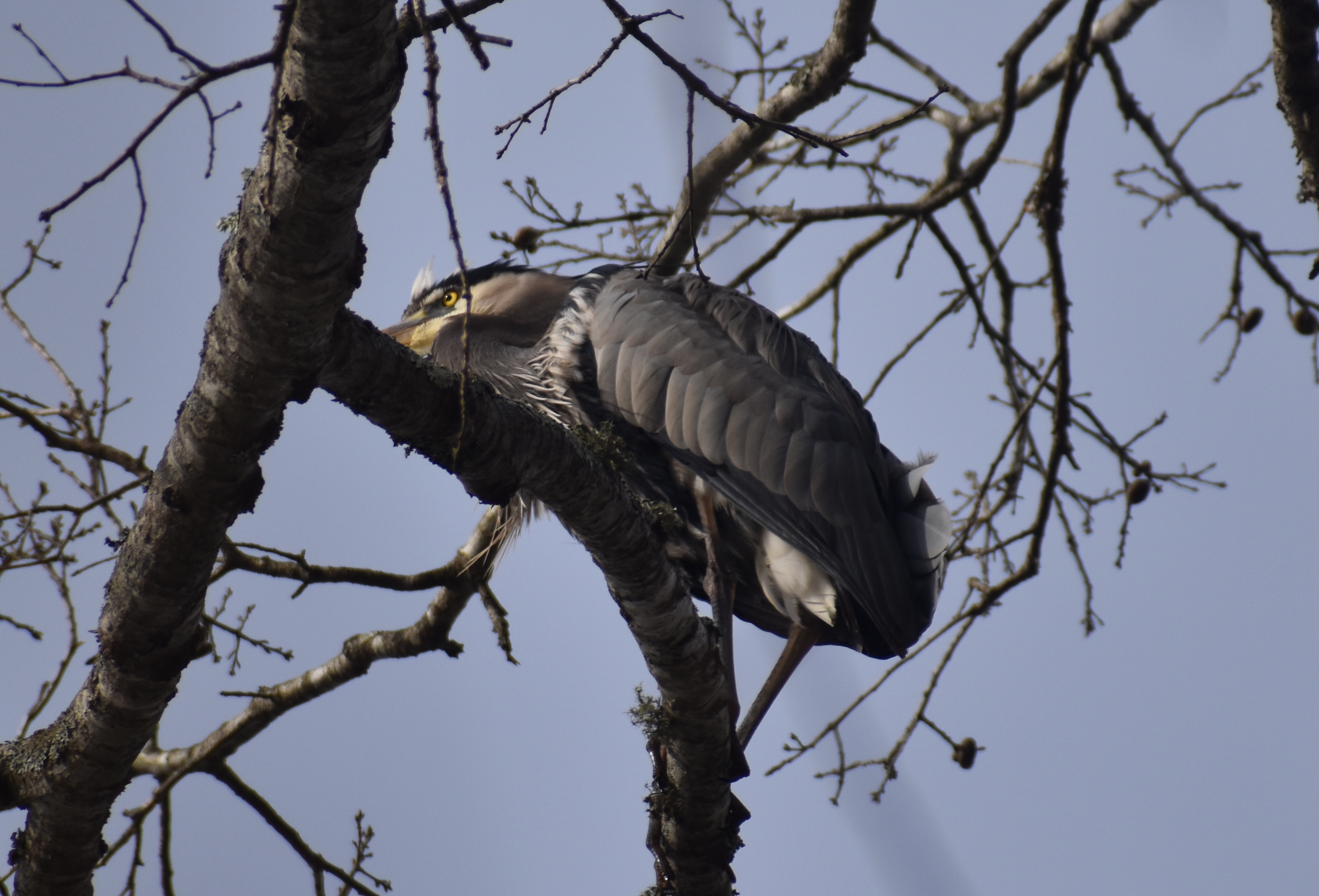
You probably notice the beak, but I didn’t even see that at first. Once I saw the leg (that’s just one leg; the other is a branch), I realized it was a bird. Another heron. He was probably trying to take a nap, but I walked around him as close as I could and got quite a few shots even before he woke up and began his creaky cry.
Great Blue Heron
I usually see several downy woodpeckers at McAlpine but not this day. However, I did see two other types of woodpeckers. The first a red-bellied woodpecker who I always hear, even if I don’t see them. They are very noisy birds and that’s not counting their rat-a-tat-tatting on trees.
Red-bellied Woodpecker, male
While I was snapping pictures of this woodpecker, I heard another one drilling very loudly behind me. I’m always reluctant to turn from something I have discovered as I can quickly lose sight of them and a bird in a hand, etc. But, fortunately, I did turn around in time to see a pileated woodpecker. The first I’ve seen here.
Pileated Woodpecker
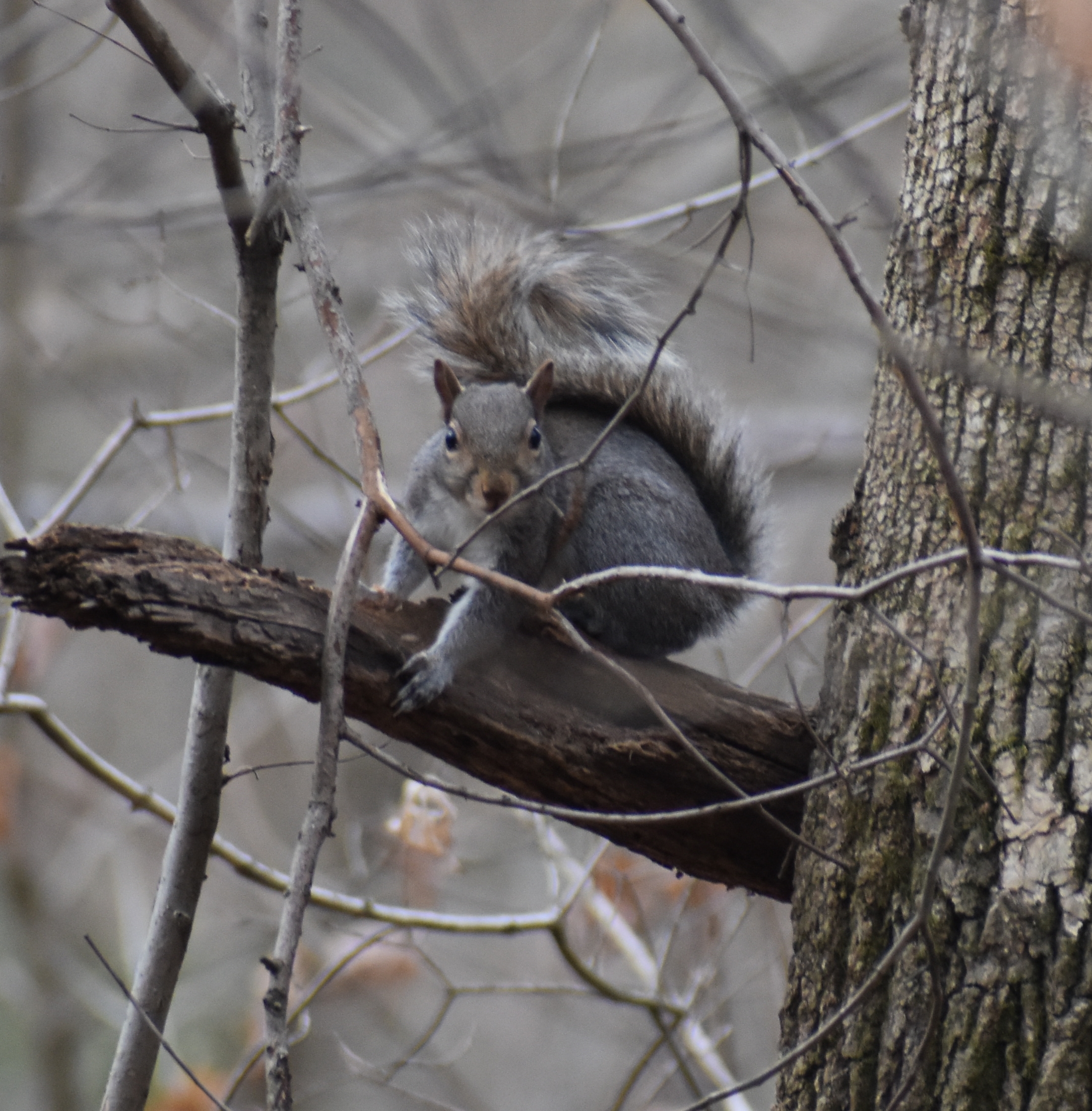
Last, but not least, I saw a couple of cardinals, a mockingbird, several eastern phoebes, a couple of tufted titmice, and, of course, a scurry of squirrels.
Male Northern CardinalEastern PhoebeGrey Squirrel
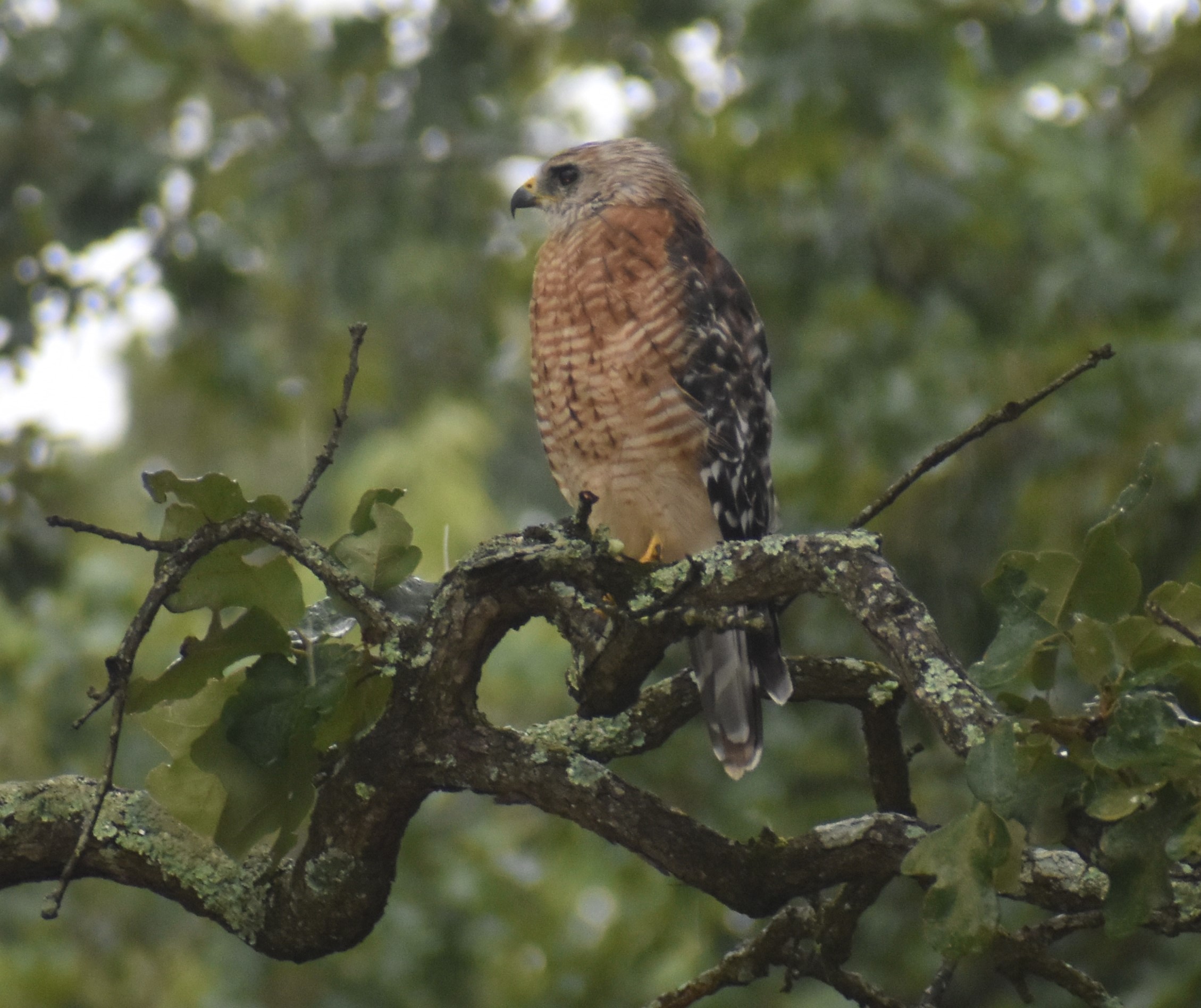
I saw a good variety that day and was pleased with what I saw, even though I still didn’t see any different ducks. I also talked to a couple of other birders who had seen a hawk at close range and was told by another birder of a barred owl that lives there. I’m still hoping to see that owl and get some good pictures of the hawks on future trips.


























 pmgilmer