Favorite Reads from November ’23

“Books help to form us. If you cut me open, will you find volume after volume, page after page, the contents of every one I have ever read, somehow transmuted and transformed into me? Alice in Wonderland. The Magic Faraway Tree. The Hound of the Baskervilles. The Book of Job. Bleak House. Wuthering Heights. The Complete Poems of W.H. Auden. The Tale of Mr. Tod. Howards End. What a strange person I must be. But if the books I have read have helped to form me, then probably nobody else who ever lived has read exactly the same books, all the same books and only the same books, as me. So just as my genes and the soul within me make me uniquely me, so I am the unique sum of the books I have read. I am my literary DNA.” Susan Hill in Howards End is on the Landing

A Southern gothic novel with a cast of characters that are at turns amusing and extremely dark–from a precocious girl playing detective to a snake-handler (warning: you will go to sleep dreaming of snakes of all kinds) to others crazy on meth and PTSD  The story takes place in Mississippi in the late 60’s or early 70’s. A nine-year old is killed while out playing in his yard. His younger sisters are also there but too young to know what happened. Twelve years later, the youngest sister, Harriet (who was only a baby at the time) decides she is going to solve the murder. Her mother spends most of her time in bed, but Harriet has the maid who also serves as a nanny, her grandmother and her great-aunts who all live nearby. Harriet also has her faithful friend, Hely, who is willing to go the crazy extra mile to help exact revenge. 4 stars

It’s the summer of 1976 in London and the middle of a heat-wave. Gretta is preparing breakfast when her newly retired husband goes out for a paper. Unfortunately, he doesn’t return. Now, Gretta’s three adult children come together (one of them needing to return from the U.S.), and their relationships—rocky at best—are tested as secrets and hurts are revealed. O’Farrell is one of my favorite writers and is skilled at writing family drama. 4 stars

My third Katherine Center book for this year; she is quickly becoming a favorite author when looking for a fun, comfort book. Romance that is not silly and deals with tough situations. Cassie is one of the few female firefighters in her Texas firehouse, and she excels in dealing with emergencies. Her mother (who left her and her father when she was sixteen), calls and asked her to come to Boston to help her deal with some medical issues. The last thing Cassie wants to do is be with her mother—for any reason—but she’s left with little choice. Though she gets a new job at a firehouse in Boston, the men there are not exactly thrilled with a “lady” firefighter. Except for one handsome rookie. 4 stars

Historical fantasy, this story takes place in 1912 where magic has been dwindling away for years. Biddy has grown up on Hy-Brasil, an island unknown to most of the world. Though she has no magic herself, she was raised by the mage Rowan who promises her that one day she will be able to see the world. For now, she is safer on the island. But, one night, Rowan does not return from one of his many nightly quests and Biddy knows she has to do something. When she enters Rowan’s dream, she learns that Rowan has powerful enemies and her isolated home may not be safe any longer. 4 stars

Margo seems like a normal middle-aged librarian, both friendly and helpful. But Margo is not her real name. She is actually a former nurse who is in hiding because of the numerous premature deaths that happened to patients in her care. When Patricia joins the staff, she mostly keeps to herself, nursing her grievance over her failed attempts to become an author. When she finds Margo in the bathroom one day with a patron who is dying, she begins to do a little research on her colleague. 3 stars

Arthur, an 85 year old widow, goes to the cemetery every day to visit his wife. Maddy, a teenage girl whose mother died when she was a baby and whose father seems clueless with what to do with her, also visits the cemetery on a regular basis (mostly just to avoid school and other people). One day she overhears Arthur talking and decides to meet him and introduces herself. The two become friends, and soon Arthur invites her to his home for lunch and to meet his cat. When Maddy gets into some trouble, Arthur is there to help along with his neighbor, Lucille, another lonely soul. I haven’t read Elizabeth Berg in several years, though I’ve always enjoyed her, so it was nice to come back. 4 stars

After pastry chef, Olivia Rawlings, prepares a flaming dessert for a Boston dinner club and ends up setting the whole building on fire, she decides to leave town and regroup.  Her best friend, Hannah, lives in Guthrie, Vermont, so she goes there and gets a job at the Sugar Maple Inn. Even though it is not easy to win over the rather grouchy owner, Margaret, Olivia settles in and begins making her amazing desserts. She soon becomes friends with Margaret’s best friend and her family, including her son, Martin. Martin has only come home because his father is dying. Music brings them all together though. Olivia wants to fit in and stay here, but does she really belong? And will Martin stay? Or go back to Seattle? 4 stars

Now is the time to finish some reading challenges, prepare for new challenges, and, hopefully, do some Christmas reading. Along with other books, I’m reading Charles Spurgeon’s Joy to the World Advent: Daily Readings for Advent. I hope you all have a Merry Christmas & enjoy some reading!
Favorite Reads of October ’23

“But while I can conceive of someone filling up a 100+ book Goodreads goal with pure garbage and being the worse off for it, truthfully, I would prefer every over-indulgent reader of modern pulp to every non-reader and philistine in the world who denies the value of books generally. The excess, in this case, is nearer to the virtue than the deficiency. So, while spending time each semester closely reading Plato, Aristotle, the Founding Fathers, and more, I shall continue to fill up my Goodreads goal counter with a mix of the good, the bad, the ugly, and the Great, and I shall be the better for it.” Philip Bunn in his essay “In Defense of Voracious Reading”

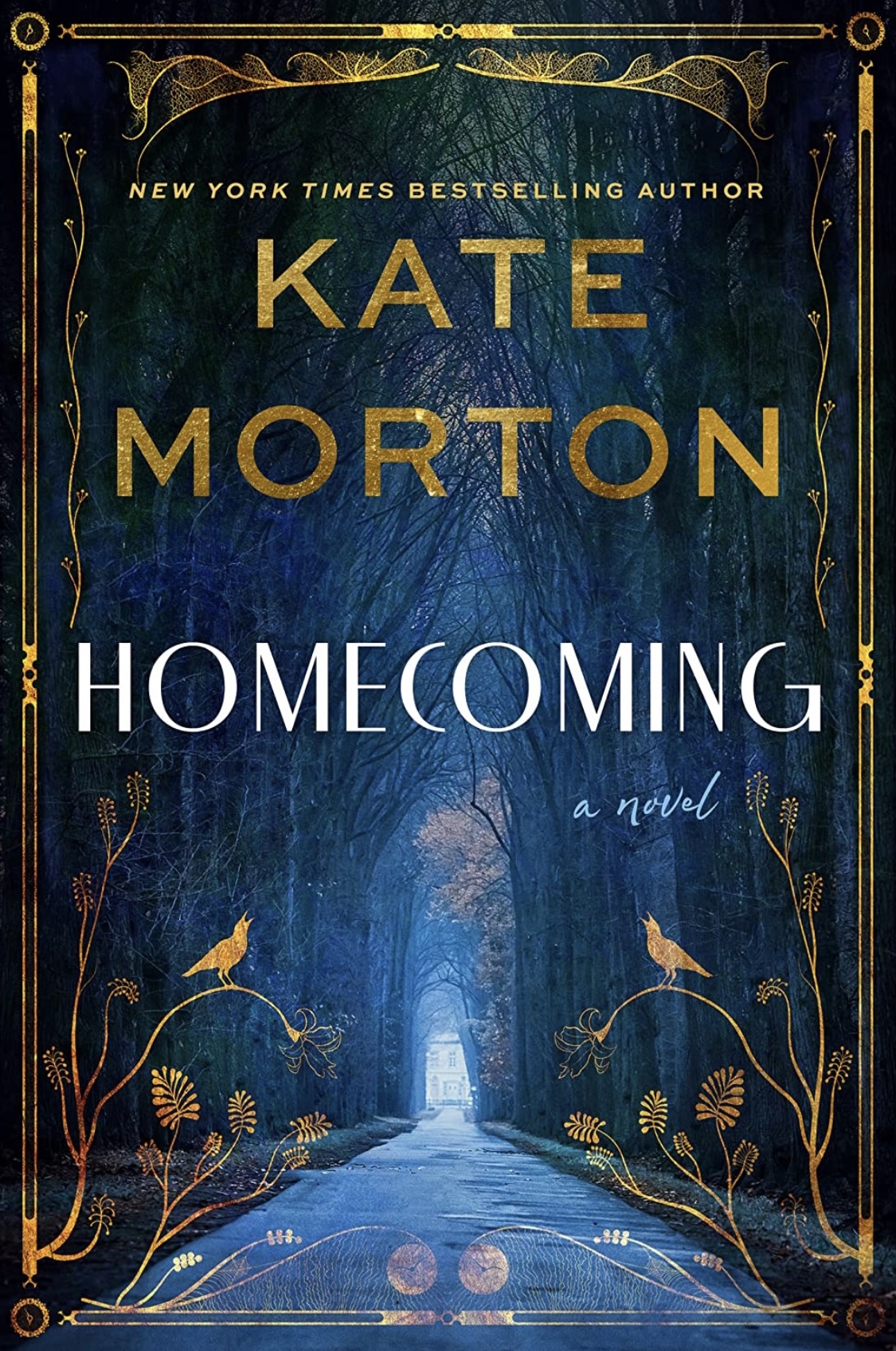
Homecoming Kate Morton’s books always involve a dual timeline and a mystery of some sort. I loved this one from the shocking prologue to the twisted and surprising ending. On an extremely hot Christmas Eve in 1959, in a small town in South Australia, a delivery man decides to take his horse for a swim before returning home. The horrifying scene he comes upon leads to a murder investigation that rocks the small town for years to come. Sixty years later, Jess, who has worked in London for the past twenty years, receives a call from Sydney letting her know her grandmother, Nora, has had a fall and is in the hospital. Jess returns to her childhood home only to find her grandmother confused and unable to tell her what she had been looking for in her attic. When Jess finds a book in her grandmother’s bedroom telling of the Turner Family Tragedy, she is intrigued and begins to dig into what turns out to be part of her own family history. 5 stars

To Say Nothing of the Dog by Connie Willis. I don’t read a lot of science fiction, but if more were as delightful as this one, I would definitely read more. The second of Willis’s time travel books, we are now in 2060 where Ned has made too many trips to the past in search of a “Victorian atrocity” (the bishop’s bird stump which you will not totally understand till near the end of the book). He is sent back to Victorian times because that was a peaceful time and, hopefully, he will get some rest. But, no rest for Ned as he is set in the midst of a wild cast of characters (to say nothing of the dog, Cyril, a delightful character in his own right) and soon learns that a cat (which are extinct in 2060) has somehow gone through the net and Ned’s own appearance has caused Terence to miss meeting his future fiancé and Verity has come and needs Ned’s help in setting things right. If not, disaster may strike during World War II or maybe the Battle of Waterloo. I could go on, but I hope you get the picture and will pick this one up. 5 stars

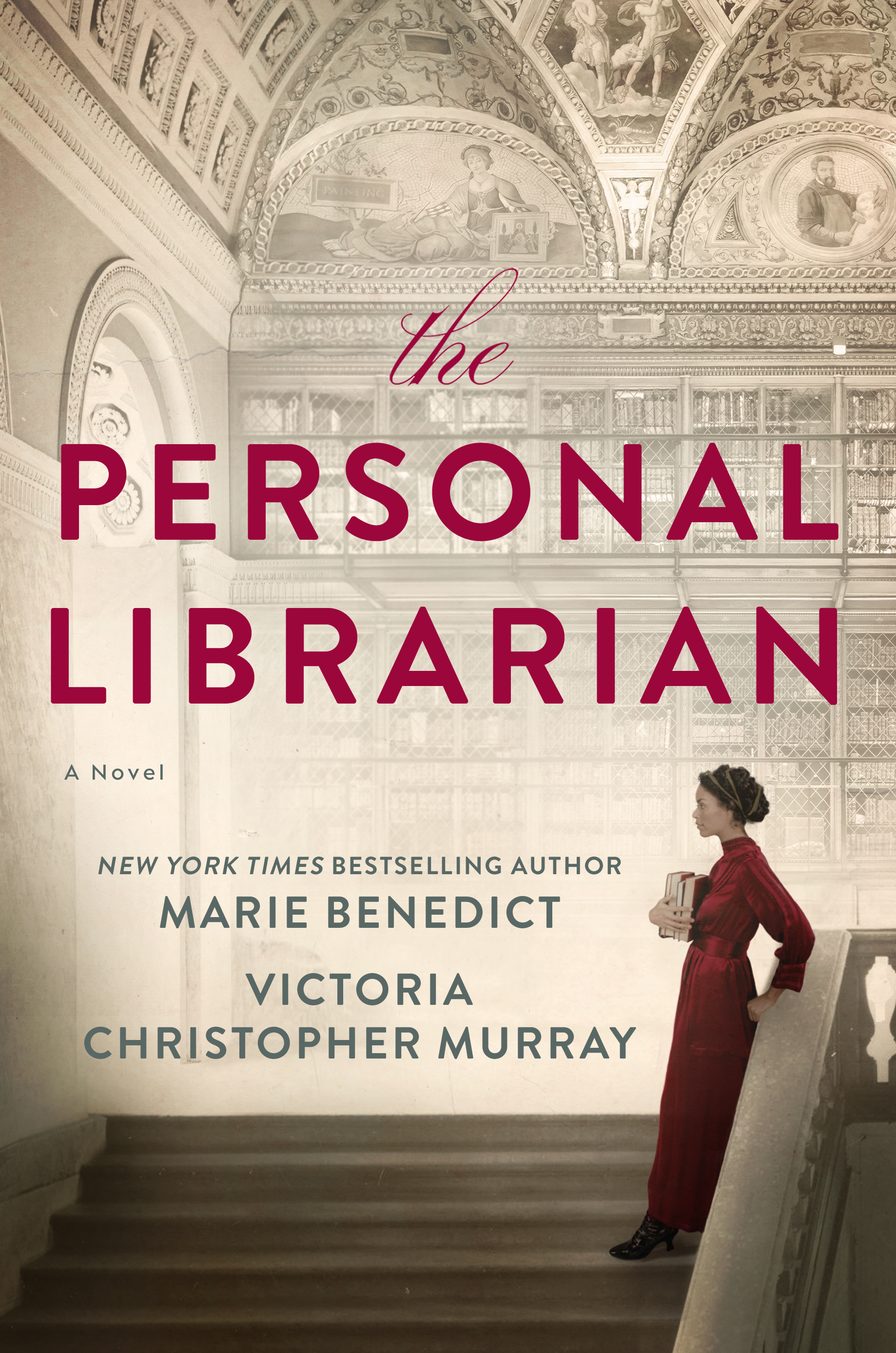
The Personal Librarian by Marie Benedict & Victoria Christopher Murray. Read for a book club, this historical fiction book tells the story of Belle da Costa Greene who became J.P. Morgan’s personal librarian at a time when women still didn’t have the vote. She helps him obtain rare manuscripts, books, and artwork and becomes famous for both her intelligence and audacity, not only in the New York art world, but also in Europe. But Belle had a secret and it was one she took to her grave. Belle was listed as “colored” on her birth certificate. Because of her light skin, her mother separated from her father and raised her and her siblings as white. Belle’s father, Richard Greener, was the first black graduate of Harvard and very involved in seeking equality for people of color. Belle had been close to her father, but because of her mother’s decision, and eventually her own, Belle had no contact with her father for years. I found this a very interesting portrayal of a woman who achieved great success at the cost of losing her father and her own heritage. Not mentioned in the book (even in the author’s notes) was when Belle’s racial status was discovered. It was not until 1999 (almost fifty years after her death) that a writer working on a biography of J.P. Morgan found Greene’s birth certificate with a “C” on it for colored. 4 stars

Seven Women and the Secret of their Greatness by Eric Metaxas. From Joan of Arc to Rosa Parks, Metaxas profiles seven women from history who made an impact upon the world they lived in and even the future. These mini-biographies tell a great story of each woman—where they came from and how they became the women they were. 4 stars

Favorite Reads of September ’23

“Books have formed the soul of me. I know that spiritual formation is of God, but I also know—mainly because I learned it from books—that there are other kinds of formation, too, everyday gifts, and that God uses the things of this earth to teach us and shape us, and to help us find truth.”
― Karen Swallow Prior, Booked: Literature in the Soul of Me

All My Knotted-Up Life: A Memoir  Beth Moore. I’ve done several Bible studies written by Beth Moore and can honestly say I have learned a great deal under her teaching. I used one of her studies to teach a group of young women while on the mission field (where Bible studies were not so easily come by) and after listening to the first lesson on video, one of the young women turned to me and said, “This woman really loves the Word.” In spite of all the controversy surrounding this woman in recent years, I don’t know how anyone can argue with that statement. So, I have a special interest in reading Moore’s story. Though she covers some hard periods in her life, nothing is graphic. She shares her heart in well-written prose with humor and grit. 5 stars

Marjette, a kindergarten teacher and single mother of a teen-age boy, meets her new neighbor when she sees her crying and can hardly continue to ignore her. Noa has recently lost her husband and her daughter turns out to be one of Marjette’s new students. Though at first, this divorced black woman seems to have nothing in common with her newly widowed Jewish neighbor, they bond over their troubles and learn about friendship and starting over. 4 stars

Babel: An Arcane History by R.F. Kuang.

In 1828, Robin Swift is rescued by Professor Lovell after his mother dies of cholera in Canton. Who is Lovell and how does he know Robin and why does he want to bring him to London? Robin is tutored in Latin, Ancient Greek, and Chinese and is promised if he does well, he will be sent to Oxford and enrolled in their Royal Institute of Translation, also known as Babel. When Robin does make it to Babel, he is dazzled by the city, the school, and the opportunities he seems to have. Not only are the students working on translations, they will also learn about silver-working—the magic that keeps the country running. But, in spite of the excitement of being a part of this special group, Robin soon learns that not everyone is treated equally and working for England can make him a traitor to his homeland. When he meets someone who looks remarkably like him, he learns about a group who are trying to fight the Empire and their control over the world. Will he ignore the voices telling him to leave behind the scholarships, stipends, and other advantages he has been given? Or will he ignore what is being done by the Empire to other countries? 4 stars

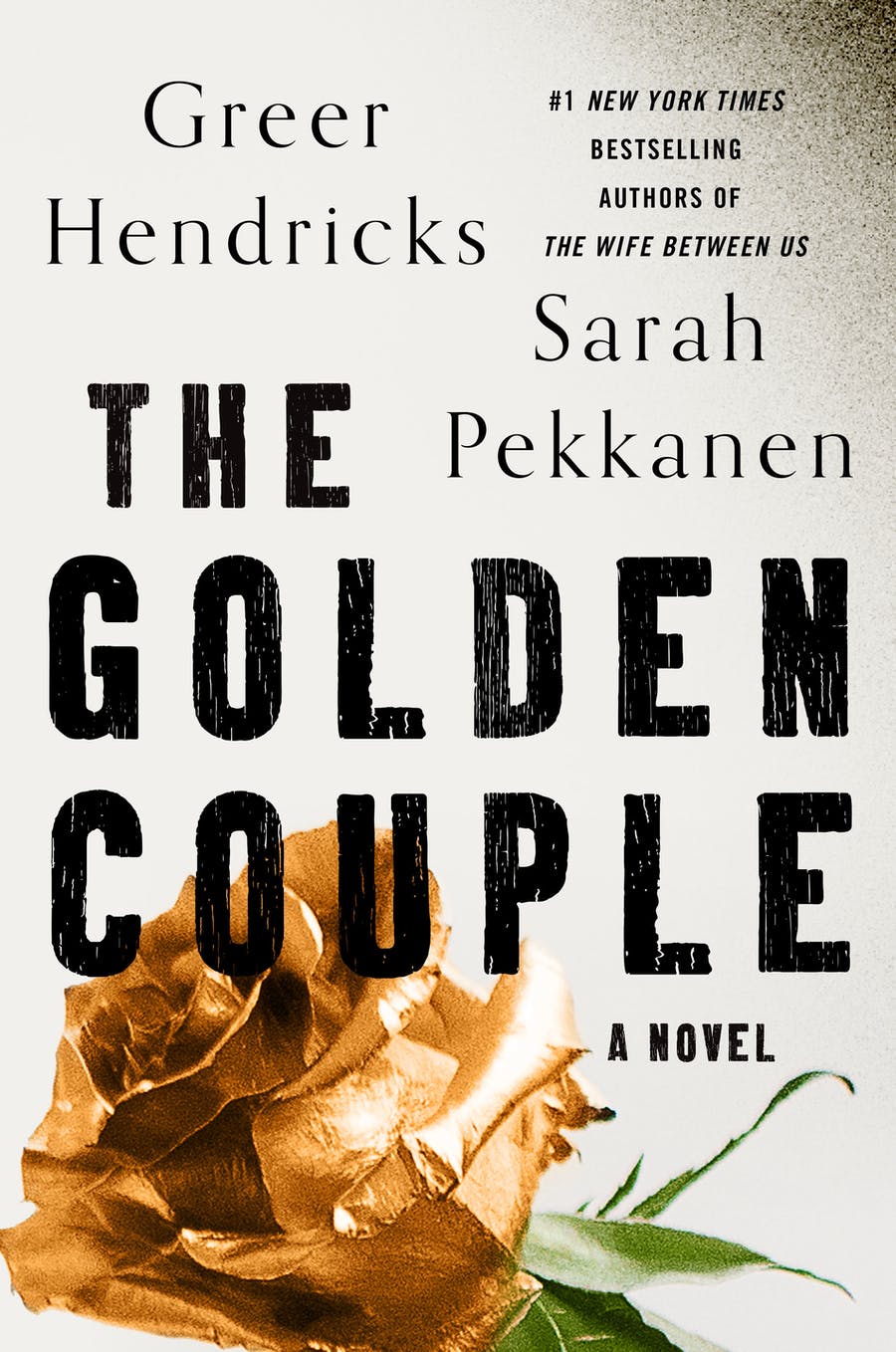
I finished two very different audio books this month though both are fiction. The first, The Golden Couple, is a suspense/thriller with two authors: Greer Hendricks & Sarah Pekkanen; and two narrators: Karisa Vecker & Marin Ireland. Marissa comes to the therapist, Avery, in the hopes of saving her marriage. She has cheated on her husband and though she tells him the man was just someone she had met casually, he wasn’t. Avery has a ten session system in place, but it doesn’t take long for her to decide that this couple may be more complicated than first appearances seem to indicate. Meanwhile, Avery has her own problems as she blew the whistle on an insurance company. Even though she was led to believe she was speaking anonymously, she is given not so subtle warnings by several strangers. Several twists and creepy characters in this one. 4 stars

The Party Crasher by Sophie Kinsella (Fiona Hardingham, narrator) is more of a family drama/romance/humor. I read my first Sophie Kinsella on audio and usually find them to be very entertaining though still containing serious subject matter. Though this is one is somewhat centered around a divorce, family ties and their importance are at the forefront. Effie, as the youngest of three, was quite shocked when her parents got divorced two years ago and is less than enamored with her father’s girlfriend, Krista. Selling their family home, Krista throws a major party to give everyone a chance to say good-bye, but she doesn’t exactly invite Effie. Effie (of course) doesn’t want to go anyway, but she does want to retrieve her beloved Russian dolls. She decides to sneak in during the party, grab the dolls, and leave. No problem. Madcap adventures ensue. 4 stars

Favorite Reads for August ’23

I’ve read several times lately that the blog is dead. I do listen to more podcasts than I read blogs, but there have been several blogs I enjoyed following and the writers have quit for different reasons. Most of the blogs I follow are about reading; book reviews especially. I suspect that one reason there are not as many of these can be pointed to the rise of the YouTube channels where people review, recommend, and highlight books. Personally, I don’t have the patience to watch these, though I have tried several. I can listen to podcasts while driving or doing dishes, etc. As I much prefer to read the reviews and thoughts of others concerning what they’re reading, I’m going to post my own thoughts monthly rather than just once or twice a year. No spoilers here. My reviews are brief and do not include major plot details or synopses. So, without further ado, my reviews for August.

I completed fourteen books in August, but I will only share reviews of my top six. For a more complete picture, you can always check out my goodreads profile.

Bloomsbury Girls by Natlie Jenner. Historical fiction taking place in London in 1950. Bloomsbury Books has been in business for a hundred years and not much has changed in that time. It is run and guided by men, but changes are coming with several key women leading the charge. When the manager becomes ill, they get their chance to prove their worth and work hard to do so. Some well-known literary figures of their time (including Daphne Du Maurier and Ellen Doubleday) appear and help the women in different ways to prove that women have a place in the publishing and writing industries. I listened to the audio narrated by Juliet Stevenson who did a fabulous job. 4 stars

I really loved this book and looked forward to watching the adaptation on Netflix. I couldn’t get past the first thirty minutes. Curious if anyone who hasn’t read the book would like it. Helen, a kindergarten teacher, age 32, has been divorced for a year and she wants to do something different. Something to change her life. So, she signs up for a wilderness course even though she has not even gone camping before. When her younger brother’s best friend practically hijacks her for a ride, she is less than pleased to learn he is going on the same course. Even though she wants them to act like they don’t know each other, the attraction is undeniably there and to Helen’s further disgruntlement, Jake is everyone’s favorite and he manages to save her life more than once. 5 stars

Martin Luther: The Man Who Rediscovered God and Changed the World by Eric Metaxas. I’ve read a couple of books about Luther. Probably my first was in college for a world history class. I wish I could remember the discussions we had and my professor’s comments but far too long ago. Luther was a complex and controversial man, but no one can deny his place in the church and in the world. Metaxas covers Luther’s life and comments on what has become legend and how much truth there may be in some of the stories. Hearing some sermons about Jesus and his dealings with the Pharisees at the same time I was reading about Luther and his conflicts with the Pope and Catholic church made me see quite a few similarities. Though I don’t agree with everything Luther said (and he said and wrote a lot!), his story is fascinating and we all owe a great debt to him.

Olive Again by Elizabeth Strout. Following the Pulitzer prize winning, Olive Kitteridge, we meet Olive again in later life. Though Olive has mellowed somewhat, she is still her prickly, yet honest self, as we meet different people who cross her life in a small town in Maine. This is a novel which reads as a group of short stories that revolve around one woman. Though some people find Olive unbearable, there are others who admit they always kind of liked her. Me, too. 4 stars

Her Lost Words by Stephanie Marie Thornton. Historical fiction. A tale of two women, a mother and daughter. Wollstonecraft escapes from a abusive home and becomes a champion of women’s rights in the late 1700’s. Her “A Vindication of the Rights of Woman” was published by a man who supported and encouraged her as a woman writer when many others wouldn’t. Refusing to marry because she believed marriage was just another form of bondage, she became involved with a man, bore his child, and was soon deserted. Her daughter, Mary Shelley, never knows her mother but longs to emulate her and follow her in her footsteps. She falls in love with the married Percy Shelley and follows him in spite of being shunned by family and society. Though she doesn’t believe she has the writing talent her mother had, she is challenged to write a story and begins to write what we know today as “Frankenstein”. I enjoyed reading about both of these two women as I knew very little about either. Thornton brings to life, not only the two women, but the times they lived in. 4 stars

A Necessary Evil by Abir Mukherjee (Sam Wyndham #2). India, 1920. British Captain Wyndham and his sergeant Banerjee (better known as Surrender-Not) are in a car with a Maharajah’s son when the prince is assassinated before their eyes. Even though they quickly track down the killer, Wyndham is not satisfied that the murder has been solved. He manages to convince his superiors to let him go the kingdom of Sambalpore to further investigate. Was it the work of a religious fanatic? Or what about the prince’s playboy brother who is now next in line to the throne? Even the wives of the Maharajah are not above suspicion. I enjoyed this second book as much as the first and look forward to continuing the series. 4 stars

Favorite Reads of 2023 (so far)

If anyone out there is paying attention, I did a post on my favorite books of 2022 for the first half of that year, but I never did a follow-up. I’m sure I read some good books the second half of the year, but somehow, I just couldn’t come up with them. Since I rated 4 books 5 stars in May, I thought I should write down my thoughts about them now. As come December, I surely won’t remember.

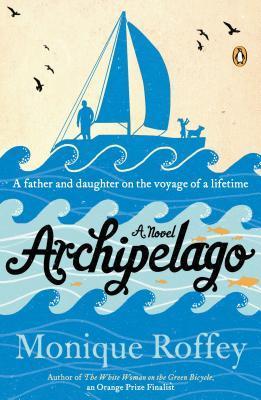
In January, my top book was The Mermaid of Black Conch. This is my second book by Monique Roffey, a British/Trinidadian writer. Though totally different from The White Woman on the Green Bicycle, I loved it just as much. The Mermaid starts in 1976 where David is fishing off the island of Black Conch. He meets a mermaid, Aycayia, and is enthralled. He pays her several visits, but one day she is captured by some American tourists who have come to fish. David knows he must rescue her, but how do you hide and keep a mermaid?

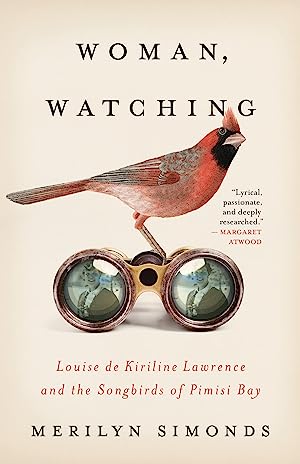
In February: Woman Watching: Louise de Kiriline Lawrence and the Songbirds of Pimisi Bay by Merilyn Simonds.I don’t often have a nonfiction book for my favorite, but I quite enjoyed this biography of a woman who became known for what she did for birding, but led a very interesting life all around. A Swedish aristocrat, she gave up much of her life of privilege as she was not one to sit around and enjoy an idle life. After surviving the Russian Revolution (though losing her husband), she went to Canada and joined the Canadian Red Cross and visited her patients by dogsled. She became a nurse to the famous Dionne Quintuplets, but when she could take no more of the media circus, she made her home in the wilderness, living alone in a cabin. Though she had no formal training, she began studying the birds that lived there, writing to scientists and eventually writing her own stories and articles as she did extensive research. Ornithologists from all over the world came to visit and learn from her. The author, Simonds, moved into the woods not far from where Lawrence was living in her later years. A birder, herself, Simonds was able to spent time with Lawrence which adds much to the biography of this fascinating woman.

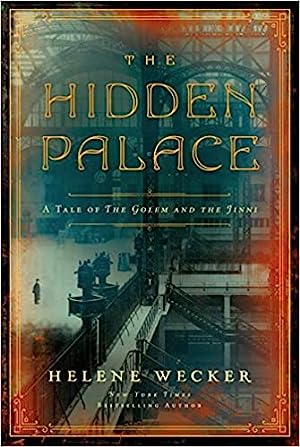
In March, The Hidden Palace.

First of all, I loved, loved this book! Second of all, if you haven’t read The Golem and the Jinni, stop reading this review and go read it first. I kind of wish I had reread it before starting this second, but I anticipate a reread of both sometime in the future when I need some comfort reads. These are the type of books I think can be even better the second time around. Told through the viewpoints of several characters, this takes place in New York City in the early 20th century, just as the Great War is beginning, and continues the stories of the Golem (Chava) and the Jinni (Ahmad). Not needing sleep and never aging brings on difficulties that they both have to face and deal with it. Then there’s Anna and her son, Toby, (also characters from the previous book). Toby has a continuing nightmare and is starting to be suspicious about both his mother’s and her friend, Chava’s, past. What are they not telling him? Sophia who had a relationship with Ahmad in the first book is suffering the consequences of that relationship and her parents have sent her across the ocean to keep from needing to dealing with her. New characters include a female jinni who wants to meet the “iron-bound jinni” and will do what it takes to cross the ocean to find him; and Kreindel, the young daughter of a rabbi who wants to make a golem for her own protection. All great characters and I enjoyed seeing their stories intersect.

In April, no five stars or stand-outs, but May made up for it.

In May:

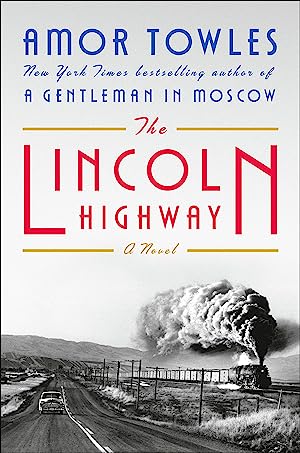
The Lincoln Highway by Amor Towles. This is one long, crazy adventure story and I loved it every bit of it. It covers ten days in June, 1954 and begins when 18 year old Emmett is driven home from a work farm where he has served time, but has been released early because of his father’s death. The bank has foreclosed on his father’s farm, so Emmett just wants to sign some papers for the bank, pick up his eight-year old brother, Billy, and head off to California to start a new life. Unfortunately, when the warden drives away, two of Emmett’s friends from the work farm appear and they have other ideas of what they all need to do to give themselves a better future.

The Golden Spoon by Jess Maxwell. This is a fun mystery especially if you’re into baking shows. Six amateur bakers are competing for the Golden Spoon at Grafton Manor, home of their host, Betsy Martin. Grafton Manor is her family home and the successful baking show has enabled her to keep up the manor and its grounds. The six contestants each have their own reasons for being there and not all of them are there just to win. Then, on the first day of the competition, an act of sabotage amps up an already tense situation. 

Journey Under the Midnight Sun by Keigo Higashino. (Listed by both titles on Goodreads). A Japanese mystery translated by Alexander O. Smith. I have read a couple of other mysteries by Higashino and enjoyed them all, but this was the longest and most complex. I had to make a list of the characters to keep everyone straight. Partly because of the Japanese names (unfamiliar to me), but mostly because many characters were introduced and different timelines were going on. A man is found murdered in Osaka in 1973. Detective Sasagaki works the case, but it takes him over twenty years to put together the pieces of what really happened that day. As I said, many characters are introduced, but it’s not until the end that you begin to see how they relate and come together.

Homegoing by Yaa Gyasi. In the 18th century, two half sisters are born into different villages in Ghana. One will marry an Englishman involved in the slave trade. The other will be captured and enslaved. Homegoing follows the different paths of these women and their descendants. Very well-written piece of historical fiction that covers everything from the Gold Coast to plantations of the U.S. South to Jazz Age Harlem.

And in June:

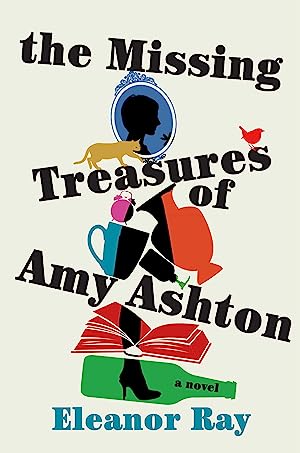
The Missing Treasures of Amy Ashton by Eleanor Ray. Every now and then, I look through my Goodreads TBR and randomly pick out a book. There are, of course, many I know I want to read, but there are others that I have no idea how they got there or what they’re even about. If it sparks my interest, I check the library. If the library doesn’t have it, I’ll take it off my list; or maybe I’ll just go ahead and buy it. (Okay, sometimes, I do that. My continuing contribution to the publishing world). This was a book I remembered nothing about but it was available on Libby, so I checked it out. This debut was a nice surprise as I went in knowing nothing about it. Some list it as “chick lit” but it has a little more depth than that. Amy once wanted to be an artist, but now, rather than making art, she collects it–everything from ashtrays to vases to cigarette lighters. Her house and even her yard is becoming a danger area. Though trying to be understanding, her neighbors are becoming concerned. Yes, Amy went through a terrible loss, but shouldn’t she be over it by now?

Small Admissions By Amy Poeppel. I read Musical Chairs by Poeppel some time ago and decided to go back and read her first book. In this one, grad student Kate is dumped by her boyfriend just when she landed in France to join him for what, she thought, would be their new life together. Her sister and friends from college are there for her, but Kate wallows for months, not even wanting to leave her couch. Thanks to her sister’s help, she gets a job interview at a prestigious day school in New York. Though her interview is one for the ages (and not in a good way), she gets the job and is soon wrapped up in the world of parents and students competing wildly for a place at this middle school. Filled with outrageous characters and snarky humor, I greatly enjoyed (and even laughed out loud on occasion) this book and look forward to reading more by Poeppel.

The first half of my reading year is going great and I’m looking forward to more great reads. How about you? Read any good books lately?

Reading Prize Winning Books–Part 3

I’ll start by saying the next three books I read for my prize winning challenge were all on the heavy side. All well-written and I learned a great deal about different places and times, but not exactly uplifting.

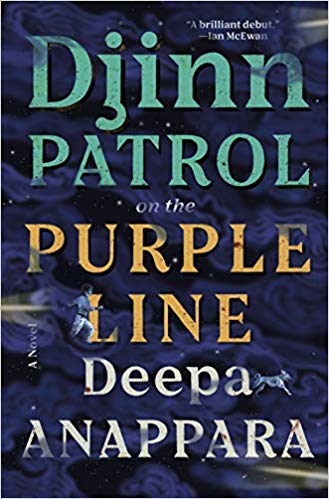
The first, Djinn Patrol on the Purple Line by Deepa Anappara won the Edgar Award for Best Novel in 2021. The Edgar Awards are given by the Mystery Writers of America and named for their patron saint, Edgar Allan Poe.

Nine-year old Jai lives with his family in India where there are too many people, dogs, and rickshaws. A smoggy sky blocks the sun, but from his doorway he can see the lights of the city’s high-rises where his mother works as a maid. Jai loves to watch reality police shows, so when one of his classmates goes missing, he enlists the help of his two best friends to try and find her. It almost seems like a game as they question people and gather clues, but when other children go missing, they begin to realize that something sinister is going on in their neighborhood.

This was a tough read but I’m glad I read it. The author worked as a reporter in India for many years. She was able to interview and talk with children who worked as scavengers or begged in the streets. She soon learned that around 180 children disappear in India every day, so she wrote this book to give them a voice and to make others aware of this problem.

The Nickel Boys by Colson Whitehead. Pulitzer Prize for Fiction in 2020.

This story takes place in Florida in the 1960’s and is based on the history of a real reform school which operated there for 111 years. Elwood Curtis, abandoned by his parents but raised by his grandmother, Elwood believes the words of Dr. Martin Luther King–he is as good as anyone. Given an opportunity to enroll in the local black college, Elwood believes his future is bright, but when someone gives him what seems to be an innocent ride, his whole world comes crashing down.

Sent to the Nickel Academy, Elwood is hopeful that he can do his time, keep up his studies, and get out soon. Unfortunately, Nickel Academy is a place of nightmares rather than reform and hope. This is only my second book by Whitehead, but I love his writing and look forward to reading more of his books. The following quote is from Whitehead on how and where he got the idea for the book.

“This book is fiction and all the characters are my own, but it was inspired by the story of the Dozier School for Boys in Marianna, Florida. I first heard of the place in the summer of 2014 and discovered Ben Montgomery’s exhaustive reporting in the Tampa Bay Times. Check out the newspaper’s archive for a firsthand look. Mr. Montgomery’s articles led me to Dr. Erin Kimmerle and her archaeology students at the University of South Florida. Their forensic studies of the grave sites were invaluable and are collected in their Report on the Investigation into the Deaths and Burials at the Former Arthur G. Dozier School for Boys in Marianna, Florida. It is available at the university’s website.” Colson Whitehead


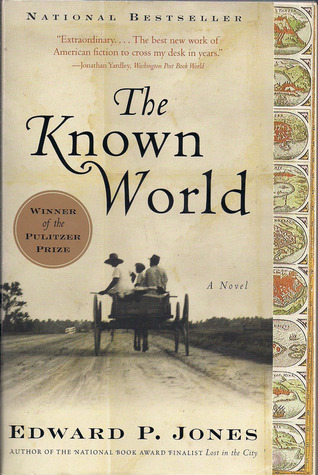
The Known World by Edward P. Jones. Won the Pulitzer for Fiction in 2004.

“A man does not learn very well, Mr. Robbins. Women, yes, because they are used to bending with whatever wind comes along. A woman, no matter the age, is always learning, always becoming. But a man, if you will pardon me, stops learning at fourteen or so. He shuts it all down, Mr. Robbins. A log is capable of learning more than a man. To teach a man would be a battle, a war, and I would lose.” Fern Elston

Wow! I enjoyed this much more than I thought I would. Again, another great piece of writing. Jones takes a few facts about Virginia in the early 1800’s & creates a county much as Faulkner did in his books. It’s a story about slavery, (including black people owning slaves), families, small towns, greed, love, hate, and everything in between. Though not as long as some books written like this, I could see it being serialized on one of the many streaming networks in the vein of Roots or Lonesome Dove. 5 stars

I have now covered nine of the twelve prize-winning books I challenged myself to read this year. (I am currently reading my twelth). It has been interesting to see which books have won prizes and which have come out on top from both the long and short lists. Obviously, much has to do with the judges which change from year to year. Does knowing a book has won a certain prize inspire you to read it? Especially (or maybe only) if it wins in a genre you prefer? Or does that even interest you at all? What does it mean for a book to win a prize? It definitely puts them on people’s radar and many which had been virtually unknown go on to become best-sellers. Fair or not?

Favorite Books of 2022 (so far)

For the first half of 2022, I read 89 books (which I know is rather extreme, even for me). Instead of waiting until the end of the year to round up my favorites, I decided to put together a list from the first half of the year. I list all the books I read each month on one of my goodreads groups–the good, the bad, and, yeah, the ugly–but I will only list my favorites here. Two of the books I already reviewed in my posts on reading prize-winning books, so feel free to skip those two (unless I haven’t already convinced you to read them).

These are books that are new to me (no rereads), and I’m listing them in the order I read them.

First up, an audio book I started during the Christmas season but didn’t finish until January: Christmas Shopaholic by Sophie Kinsella (narrator Nathalie Buscombe). Really enjoyed listening to the shenanigans of Becky Brandon nee Bloomwood. She is to host the family Christmas for the first time which is stressful enough, but everyone in her family (along with her best friend) has ideas from what to serve and how to make it to everything in between. Before long, hardly anyone is speaking to one another, but Becky is determined to make everyone happy and have the best Christmas ever.

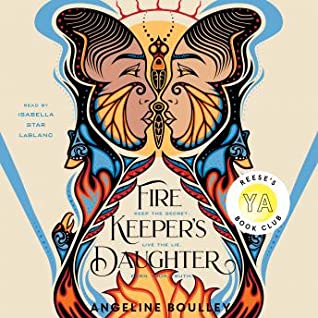
Firekeeper’s Daughter Angeline Boulley YA; indigenous; mystery. (Since I read this book it has won several awards, including the Edgar for Best Young Adult Novel, 2022). Danuis Fontaine is an unenrolled tribe member (this is important) who has a hard time fitting in with either her hometown or the nearby Ojibwe reservation. She was a star hockey player on her high school team and now wants to study medicine, but decides to enroll at a community college, so she can stay home to help her mother and grandmother. When she witnesses a murder, she is forced to help the FBI with their investigation of drug dealing on the reservation.

The Broken Girls by Simone St. James St. James. St. James is a favorite author and I greatly enjoyed this one. A dual timeline in Vermont–one in 1950 & the other 2014. Idlewild Hall is a boarding school for unwanted girls in 1950. Amid rumors that it is haunted, one of the girls disappears and little attempt is made to find her.
In 2014, journalist Fiona cannot stop thinking about the murder of her sister though it has been 20 years. The murderer was found and is in prison, but she still feels there is more to the story. Good suspense with St. James’ usual air of creepiness.

Hamnet by Maggie O’Farrell; Winner of the Women’s Prize for Fiction in 2020. (Reviewed earlier in prize winning post). I’ve read two books by O’Farrell and loved them both, so plan to read more soon. This one is based on the life of William Shakespeare and his family. Shakespeare had twins, Judith and Hamnet. We know Hamnet died when he was 12 but little else. The rest of this story comes from O’Farrell’s vivid imagination.

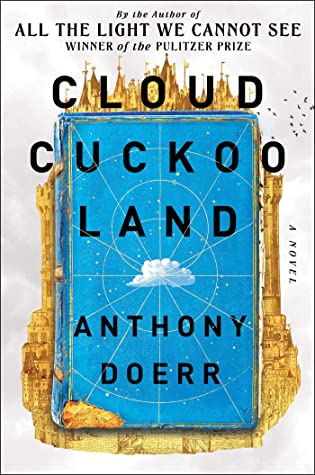
Cloud Cuckoo Land by Anthony Doerr was a finalist for the National Book Award for Fiction in 2021. I’ve read plenty of books with a dual time-line but this was different in several ways. There are three stories told: one in Constantinople in the fifteenth century; one in present-day Idaho; and one on an interstellar ship decades in the future. The common links between these stories are books, stories, and libraries. I did write down the time-lines and main characters on an index card until I got them straight in my head. Once I got into the story though, I enjoyed the ride.

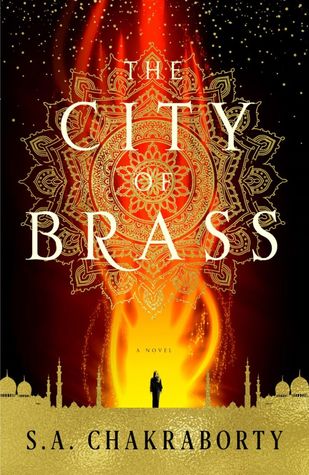
City of Brass S.A. Chakraborty. The first in a trilogy, Nahri doesn’t believe in magic in spite of the unusual powers she has and uses as a con woman in 18th century Cairo. When she accidentally summons a djinn warrior, she’s has no choice but to accept the fact that there is more to the world than she knows or believed.

Running for their lives, Nahri learns not only are their many creatures she had previously known nothing about, there are places as well, and one of them, Daevabad, the city of brass has a hold on her and the djinn is bringing her there; like it or not.


This Tender Land by William Kent Krueger. It’s the summer of 1932 in Minnesota where Native American children are forcibly taken from their parents and placed in the Lincoln Indian Training School. Albert and Odie, orphan brothers, are two white faces who are also there. Albert tries to live peacefully, but Odie stays in trouble, no matter what the punishment. As things grow worse for Odie, tragedy happens and the brothers, along with their mute friend, Mose, steal a canoe and head for the Mississippi, hoping to find a real home. To make their situation more complicated, they also bring Emmy, a small girl who has troubles of her own.

After taking a few weeks to read the first 200 pages, I flew through the last 250 in a few days. The book is not hard to get into–just such depressing subject matter, I had to put it down a few times. I didn’t think those kids would ever get a break! Overall, I really enjoyed it and appreciate the research Krueger did to give a good picture of the Depression years and the shame of the “schools” for indigenous children.

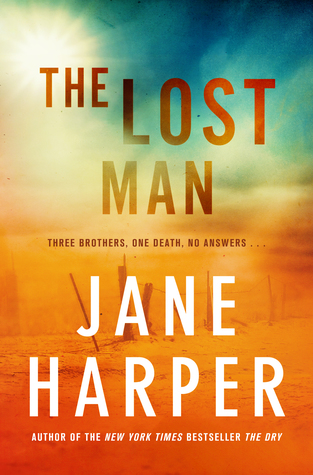
The Lost Man Jane Harper. Three brothers are working to make a living in the harsh Australian desert. One of them is found dead from the heat. What makes his death suspicious are two things: one, he knew the area and the dangers. Two, his car was nearby, fully stocked with food and water and started up with no problem. Intense family drama as everyone looks at each other with growing suspicion.

The Impossible Us Sarah Lotz Since I put this on hold with Libby, I’m sure I heard about it somewhere but had forgotten why by the time I got it. The good thing about that is, I didn’t really know what it was about and it took me by surprise in a good way. Nick, a failed writer and husband, sends off an angry email. Bee, a serial dater and dress maker, receives it. She’s not the intended recipient but she responds anyway. Some snarky banter ensues and soon Nick and Bee become friends. Eventually they discuss meeting in person, but both are concerned about messing up a good thing. Once they finally agree, it turns out they were right but in a way they could never have imagined. The only other thing I will say about this story (since some people avoid all things fantastical) is that it involves magical realism? Or something. I loved it, but if that’s not your thing, there’s the warning. Definitely not your typical romance.

Doomsday Book by Connie Willis. I reviewed this book in an earlier post about prize winning books, so this is a repeat for all you faithful readers. Feel free to skip to next book.This book won the Hugo Award for Best Novel 1993; Nebula Award for Best Novel; and Locus Award for Best Science Fiction Novel.
Doomsday Book was a bit of a slog at times, but overall, I enjoyed it. A book of time travel where a young woman, Kivrin, is sent to the Middle Ages, but, unfortunately, lands in 1348, the beginning of the Black Death. Meanwhile, back in London, an unknown virus breaks out and quarantine is placed around Oxford, making it impossible to find out what has happened to Kivrin, never mind bringing her back. I loved the characters and was amused at some of the predictions Willis made back in the 90’s (in her world, the only improvement on phones was a visual and this was supposed to be in the 2050’s), and the way a pandemic was handled in this futuristic England. The descriptions of the Black Death made me thankful the pandemic we are facing, as bad as it is, is hardly so grim.

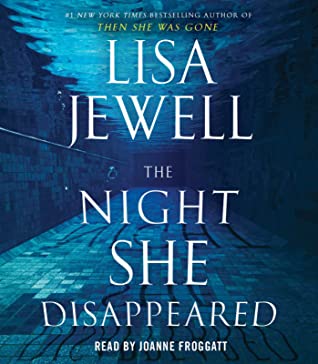
The Night She Disappeared by Lisa Jewell. Dual time-line but only two years apart. In 2017, Tallulah goes out with her boyfriend and father of her baby, leaving the baby with her mother, Kim. They never come home. The next morning, Kim frantically begins to look for her daughter but all she learns is that she was last seen going to a party in the woods called Dark Place.
In 2019, Sophie has just moved to the area with her boyfriend who is the new head teacher at a boarding school. Going for a walk, she finds a sign with an arrow, saying, “Dig here.”
I listened to the audio which is excellent and narrated by Joanne Froggatt of Downton Abbey fame. Great suspense and family drama.

So, the first half of the year has brought me some fun, suspenseful, and entertaining reading. I’m looking forward to finding and finishing more great books for this year, and believe I might break my own personal reading record. I know I will hit 100 soon and that’s at least a month before last year.

How is your reading life shaping up in 2022?

Reading Prize Winners: Part Two

I wrote in a previous post of the twelve prize-winning books I challenged myself to read this year and gave a quick review of the first three I read. Here are the next three.

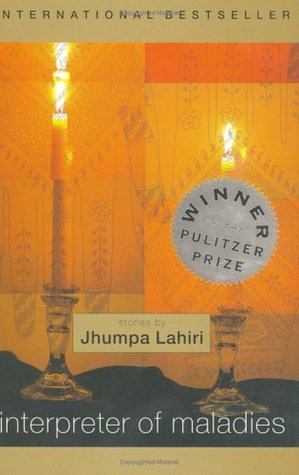
Interpreter of Maladies by Jhumpa Lahiri won the Pulitzer Prize for Fiction in 2000. It also won the Puddly Award for Short Stories in 2001 and the PEN/Hemingway Award for Debut Novel in 2000. This group of short stories portray the immigrant experience, specifically those from India to the U.S. Usually in a group of short stories, there are not only some I like more than others, there are a few I may not like it all. This book proved the exception as I found every story well-written and enjoyed them all.

Piranesi by Susanna Clarke won the Women’s Prize for Fiction in 2021. This is an odd little book (which, in fairness, I knew going in), but I can’t say I ever really warmed to it. I would have liked to have read this with a group, as I am sure it could generate some good conversation, but in spite of its short nature, I believe it would be a hard sell for the two groups I am currently in.

For most of the book, there are only two characters. Piranesi is the narrator of the story and he lives in a building which seems to be a never-ending maze. If that’s not enough, it is built on (in?) an ocean and knowing and understanding the tides is critical. Piranesi has lived there long enough to find his way around and to understand the tides.

The other character doesn’t live there but visits Piranesi twice a week to ask Piranesi to help him with some research. Piranesi only calls this man “The Other”. When Piranesi finds evidence of the existence of another person, things begin to change between P and The Other; and not in a good way.

Doomsday Book by Connie Willis won the Hugo Award for Best Novel in 1993 as well as the Locus Award for Best Science Fiction Novel. It also won the Nebula Award for Best Novel in 1992.

I admit, Doomsday Book was a bit of a slog at times, but overall, I enjoyed it. A book of time travel where a young woman, Kivrin, is sent to the Middle Ages, but, unfortunately, lands in 1348, the beginning of the Black Death. Meanwhile, back in London, an unknown virus breaks out and quarantine is placed around Oxford, making it impossible to find out what has happened to Kivrin, never mind bringing her back. I loved the characters and was amused at some of the predictions Willis made back in the 90’s (in her world, the only improvement on phones was a visual and this was supposed to be in the 2050’s), and the way a pandemic was handled in this futuristic England. The descriptions of the Black Death made me thankful the pandemic we are facing (as bad as it is) is hardly so grim.
Interesting that there are so many extremely negative reviews on goodreads for this book that won so many awards. I think sometimes people try too hard to read books that just aren’t right for them. Or maybe they just enjoy writing negative reviews.
5 stars for me.

Reading Prize Winning Books: Part 1

One of my personal reading challenges for 2022 has been to read some books that have won different awards through the years. I chose twelve, rather randomly (but mostly based on books I already own). The prizes include Pulitzers, a couple of Hugos, and a Booker. At almost the halfway point of the year, I have read six. In this post, I will list the first three I read and give a brief synopsis and review. The whole list can be found on my goodreads annual reading challenge in the group “On the Same Page”.

In January, I read Half of a Yellow Sun by Chimamanda Ngozi Adichie, an Orange Prize winner in 2007. The Orange Prize (now known as the Women’s Prize for Fiction) is awarded annually in the United Kingdom to a female author of any nationality for the best original full-length novel. Adichie’s historical fiction novel tells of the struggle in Nigeria in the 1960’s when Biafra tried to assert their independence. The characters make the story come to life though like any story concerning war, very sad and heart-breaking.

In February, I read Hamnet by Maggie O’Farrell, winner of the Women’s Prize for Fiction in 2020. I throughly enjoyed O’Farrell’s take on Shakespeare’s family life. Known details of Shakespeare’s family are sparse, but the fact that he had twins and that one of them, Hamnet, died as a young boy is well-known. O’Farrell takes this family tragedy and brings the characters and the Elizabethean time period to life. Even knowing this would be a tough read (the death of a child), I found the writing beautiful and the characters and their relationships with each other skillfully drawn. I read my first book by O’Farrell last year & thought it was amazing, so I definitely plan on reading the rest of her backlist.

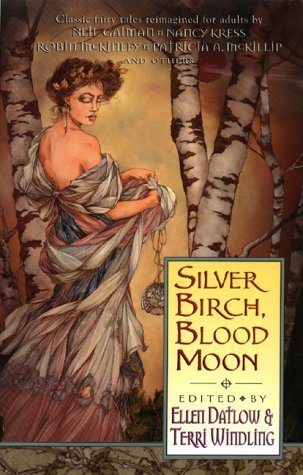
In March, I read Silver Birch, Blood Moon, a fantasy anthology edited by Ellen Datlow and Terri Windling. This won the World Fantasy Award for Best Anthology in 2000. I would say these are “dark fairy tales” but I think unless they’ve been Disneyfied, all fairy tales are fairly dark. I enjoyed these stories, written mostly by familiar authors but several were new to me. Who knew there could be so many takes on The Frog Prince?

I’ll report on the next three I’ve read next week.

My Favorite Books of 2021

It’s that time of the year when everyone is making lists of their favorites or what they consider the best of . . . My favorite reads from the past year are a bit all over the place since I read from many genres, but I suppose it’s no surprise that many of these are historical fiction. I’ve finished 142 books this year, but I didn’t try to pick out 21 of the best. (I came close though). These were not (necessarily) books published in 2021, but books I read in 2021. I will list them (in no particular order) along with a short review.

The Beacon of Alexandria by Gillian Bradshaw, first published in 1986.

Historical fiction taking place in the 4th century AD. A young woman wants to be a doctor, but women aren’t allowed to study medicine, so she disguises herself as a eunuch and leaves her home in Ephesus to go to Alexandria where she hopes to find someone who will take her on as an apprentice. She soon apprentices to a Jewish doctor, becomes caught up in church politics and has to flee again. This time she finds herself as an army doctor for the Romans, but life continues to be complicated. I have loved every book I have read by Bradshaw and this is no exception. Great characters and interesting historical background.

The Truest Pleasure by Robert Morgan (1995) takes place in North Carolina after the Civil War and into the 20th century. Ginny’s father has returned from the Civil War but keeping up their farm in the western North Carolina mountains is a huge task for the two of them. When she meets Tom (whose father didn’t return from the war), their attraction for each other and the land are enough for them to marry. Though Ginny wonders at times if Tom was really more attracted to her father’s land than her, they continue to work at their marriage. Their struggles come when Tom becomes obsessed with making money, and Ginny wants to spend time at Pentecostal tent meetings. Both see the other’s passion as foolishness.

The Night Watchman Louise Erdrich (2020; Pulitzer Prize for Fiction 2021). My first book by Lousie Erdrich. Erdrich based her story on her grandfather and his fight to stop a bill in Congress which wanted to terminate Native Americans in the name of freedom. It is 1953 and Thomas Wazhashk, a Chippewa Council member and a night watchman at a jewel bearing plant near the Turtle Mountain Reservation in North Dakota learns of a bill that threatens the rights of Native Americans to their land. He meets with others on the council to try and decide what they can do to stop this. Another main character, Pixie or Patrice, also works at the jewel bearing plant and desires to do something with her life besides get married and have kids. She has an older sister, Vera, who has disappeared in the city of Minneapolis, so Patrice decides to try to find her. What she finds is exploitation and soon needs to escape herself. Great characters and a fascinating story.

The Vanishing Act of Esme Lennox by Maggie O’Farrell (2013). I’ve heard a lot about O’Farrell (even before she won the Women’s Prize for Fiction last year), but this was my first book by her, and I couldn’t put it down.

While taking care of everyday business at her vintage clothing shop, Iris Lockhart receives a letter, then a phone call. Cauldstone Hospital is closing and they need to know what she wants to do with her great-aunt Esme. Iris is sure there is some mistake as she has never heard of this woman. She soon learns that her grandmother’s claims of being an only child were false and that her sister had been committed (and ignored) to this hospital over sixty years ago. Once she meets Esme and does some research, she is horrified to learn how little it took for a family to get rid of an unwanted and embarrassing relative. 

O’Farrell tells Esme’s story through flashbacks, some from Esme’s viewpoint and others through her sister’s whose mind is now clouded with dementia. I found her storytelling compelling and engaging, though, like Iris, I was also horrified to think of the many (mostly) women  who may have ended up in institutions such as this with no one to plead their cause. I will definitely be reading more from O’Farrell.

The White Woman on the Green Bicycle Monique Roffey (2009). This is the story of a marriage and also a snapshot of the history of Trinidad. I lived in Trinidad for a couple of years (the years portrayed at the end of the book) and I wish I had been able to read this then. I’m sure it would have given me a better understanding of the country’s history and politics.

Still, in spite of the unusual way it was told (the last years are told first), I found the story of George and Sabine compelling, sad, and relatable. From England, George is offered a job with his company in Trinidad and he promises his wife they will only be there for a couple of years. George immediately falls in love with the country, and Sabine–does not. She grits her teeth and determines to stick it out, but as the years go by, the strain is felt on their marriage. Fiction shortlist for Orange Prize in 2010.

The Ten Thousand Doors of January Alix E. Harrow (2019). Loved this stand alone fantasy. January is of mixed race and questionable origin being raised by a white man in London while her father travels the world finding unusual artifacts for this wealthy man. Is he a benefactor or a prison warden? January finds a door to another world early in her childhood but her guardian insists it is in her mind and when she goes back to find it, it has been destroyed. When January is 16, everything she knows is being questioned and her life and sanity become endangered. I could write more & more about this book, but if you want to read a good stand-alone fantasy, just read it!

Cutting for Stone Abraham Verghese (2009). Marion and Shiva Stone are twin brothers born in Ethiopia in 1954. Orphaned by their mother’s death and their father’s disappearance, they are raised by two doctors from the hospital where they were born, and not surprisingly, they both become interested in medicine though in different fields. Revolution and untold secrets cause Marion to have to flee to America where he learns more of his father’s history.
 

A fictionalized version of what might have happened when Agatha Christie first rode the Orient Express. Trying to escape the shame and hurt of her divorce, Christie rides incognito and soon meets two other women with secrets of their own. Together, they help each other out and even become involved in an archaeological dig when they reach Baghad.

I listened to several excellent audio books this year which was in no small part due to the excellent narrators. The first of my top five audio books: The Invisible Life of Addie LaRue by Victoria Schwab (2020), narrated by Julia Whelan. In France, some 300 years ago, Addie is about to be married to a man not of her dreams. She runs into the forest and calls out for help though she has been warned never to call to the gods of the night. When a man in black offers to give her the life she wants in exchange for her soul, Addie gladly accepts, not understanding the consequences of such an agreement. She will have a (very) long life but will not be remembered by anyone who meets her.

Dark Tides by Philippa Gregory (2020), narrated by Louise Brealey. I reviewed the first in this two book series last year (Tidelands) which I also listened to on audio. Midsummer Eve 1670 at a warehouse on the River Thames, Alinor receives two unexpected visitors and neither are entirely welcome. James Avery is the lover who deserted her years earlier. The other is a Venetian woman who claims to be the widow of Alinor’s son, Rob. Alinor refuses to see the first and though outwardly she accepts the widow’s claims–inwardly, she does not believe her son is dead. Her daughter, however, is taken in by this glamourous Venetian, so Alinor must bide her time to learn what has truly happened to her son.

Born a Crime: Stories from a South African Childhood by Trevor Noah (2016). Though unfamiliar with Noah’s comedy routines, I had heard he read this memoir himself and did a great job. I totally agree that his reading was excellent and often humorous, but it is much deeper than just a comedy routine. Born to a black mother and a white father in apartheid South Africa, Noah’s birth was literally a crime. Noah tells what it was like growing up where his mother and grandmother often had to hide him to keep him from being taken away and themselves arrested. His mother plays a key role in his life and is a delightful character as well. Noah gets into many escapades, but his mother makes sure he gets an education and never wavers from making him learn and to always do his best.

When the Stars Go Dark by Paula McLain (2021), narrated by Marin Ireland (one of my favorite narrators). Anna is a missing persons detective. When a tragedy occurs in her life, she takes off and goes to a small town where she had felt comfortable and loved as a foster child in high school. One of the first things she sees there is a poster for a missing teen. Even though she is there to escape her own grief, she soon becomes involved in this case. She meets old friends and uncovers old secrets.

Honorable mentions: Silence of the Girls by Pat Barker (2018).

Gone Girl by Gillian Flynn (2012). Another that was excellent on audio. Narrated by Julia Wheland and Kirby Heyborne.

September by Rosamunde Pilcher (1990).

Shadow of the Wind by Carlos Ruiz Zafron (2001).

Wintercombe by Pamela Belle (1988).

The last three were rereads, something I seemed to do more of this year. Happily, these three were still enjoyable and fun to read.

Happy New Year!